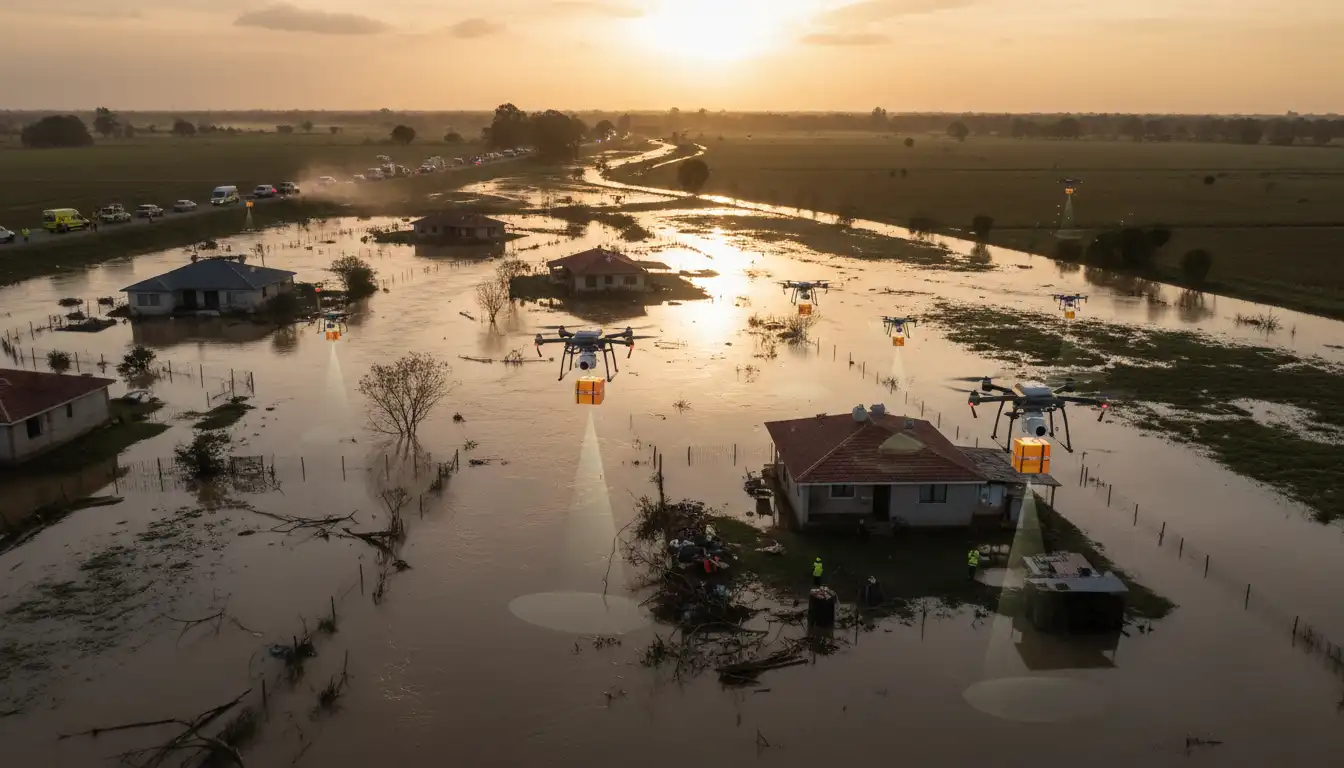

Environmental Monitoring and Disaster Response with Drone Swarms
Environmental monitoring and disaster response are becoming increasingly dependent on advanced technologies, and one of the most promising innovations is the use of drone swarms. A drone swarm is a coordinated group of unmanned aerial vehicles (UAVs) that can communicate, collaborate, and complete missions faster and more efficiently than a single drone. For governments, NGOs, and private organizations, drone swarms offer a powerful and cost‑effective tool to protect ecosystems, monitor environmental changes, and respond quickly to natural or human‑made disasters.
What Are Drone Swarms?
Drone swarms are not just many drones flying at the same time. They rely on algorithms, artificial intelligence, and communication protocols that allow them to:
- Share real‑time data
- Avoid collisions
- Divide tasks among individual drones
- Adapt to changing weather or mission conditions
Instead of controlling each drone manually, operators can manage the entire swarm through a central system or even semi‑autonomous software. This approach significantly reduces human workload and allows teams to scale up operations in large or hard‑to‑reach areas.
Role of Drone Swarms in Environmental Monitoring
Environmental monitoring requires frequent, precise, and large‑scale data collection. Traditional methods such as satellite imagery or ground patrols can be expensive and slow. Drone swarms help bridge this gap in several ways:
- High‑Resolution Aerial Mapping
Swarms can fly at low altitude with synchronized flight paths to generate detailed maps of forests, wetlands, coastlines, and urban environments. Multispectral and hyperspectral cameras make it possible to measure vegetation health, detect water pollution, or identify illegal logging activities. - Continuous and Real‑Time Data Collection
They can stream real‑time data to cloud platforms, enabling authorities to track deforestation, glacier retreat, coastal erosion, or air quality changes as they happen. - Monitoring Remote and Dangerous Areas
Some regions are too remote, expensive, or risky for human teams to visit frequently. Drone swarms can access mountain ranges, dense rainforests, polar regions, or areas with toxic emissions. This capability reduces human exposure to hazards while still delivering accurate environmental intelligence. - Wildlife and Biodiversity Protection
Drone swarms support conservation efforts by tracking animal movements, spotting poaching activities, and monitoring habitat conditions. Using thermal imaging or night‑vision sensors, they can detect wildlife at night without disturbing natural behavior.
Drone Swarms in Disaster Response
In disaster scenarios, time is critical. Earthquakes, floods, wildfires, landslides, and industrial accidents often cause massive damage across large territories. Drone swarms enhance disaster response operations in several key phases:
- Rapid Damage Assessment
Immediately after a disaster, a swarm can be launched to create a situational overview within minutes. High‑resolution images and 3D models help emergency teams understand which buildings are damaged, where roads are blocked, and which regions are still at risk. - Search and Rescue Operations
Equipped with thermal cameras, loudspeakers, and spotlights, drone swarms can systematically scan collapsed structures, flooded zones, or burned areas to locate survivors. Autonomous path‑planning allows them to cover large search grids much faster than ground crews alone. - Logistics and Supply Delivery
In areas where infrastructure has been destroyed, drone swarms can deliver medical supplies, food, water, or communication devices. Smaller drones can carry lightweight but critical items, while larger UAVs might transport heavier loads. Coordinated delivery routes ensure efficient use of battery and airspace. - Early Warning and Risk Mitigation
Before a disaster occurs, drone swarms can be used for early warning systems. For instance, they can monitor river levels for potential floods, measure gas leaks near industrial facilities, or detect hot spots in forests that could trigger wildfires. Acting as an additional layer of sensing, they strengthen the resilience of vulnerable communities.
Key Technologies Behind Drone Swarms
The effectiveness of drone swarms in environmental monitoring and disaster management depends on several core technologies:
- Artificial Intelligence and Machine Learning
AI helps drones recognize patterns in imagery, such as damaged infrastructure, smoke plumes, or unhealthy vegetation. Machine learning models can also optimize flight paths, prioritize targets, and classify detected objects or anomalies automatically. - Swarm Coordination Algorithms
Inspired by the behavior of birds, fish, and insects, these algorithms allow decentralized control. Each drone can make local decisions based on rules and shared information, leading to emergent group behavior that appears coordinated without needing constant human input. - Advanced Sensors and Payloads
Environmental and disaster‑response missions often require thermal cameras, LiDAR, gas sensors, radiation detectors, or high‑precision GPS units. These payloads turn drones into flying measurement platforms capable of capturing detailed and specialized datasets. - Reliable Communication Networks
To function as a swarm, drones need robust communication links. Mesh networks, 4G/5G connectivity, and satellite communication enable real‑time data sharing between the drones and ground control centers, even in remote locations.
Benefits and Challenges
The adoption of drone swarms brings clear benefits:
- Faster decision‑making due to real‑time data
- Reduced risks to human responders
- Higher coverage in large and complex terrains
However, there are also important challenges:
- Regulatory Barriers – Airspace regulations often limit the number of drones and require line‑of‑sight operations. Policies for autonomous swarms are still evolving.
- Data Management – Massive amounts of imagery and sensor data require strong cloud infrastructure, storage, and analytics tools.
- Cybersecurity and Safety – Ensuring that drones and communication channels are protected from hacking is critical, especially in sensitive disaster zones or border areas.
- Public Acceptance and Privacy – Communities may have concerns about surveillance and data use. Transparent communication and strict data protection policies are essential.
Future Outlook
As AI, battery technology, and sensor hardware continue to improve, drone swarms are expected to become even more central to climate change adaptation, environmental governance, and multi‑hazard response strategies. Integration with satellite data, ground‑based sensors, and digital twins will create truly intelligent monitoring ecosystems. In the near future, fully autonomous swarms may be able to detect early warning signals, deploy themselves, and collaborate with robots on the ground to support both emergency services and long‑term environmental planning.
By combining scalability, flexibility, and real‑time awareness, drone swarms are transforming how societies observe the planet and respond to crises. Organizations that invest in this technology today will be better prepared to protect communities, ecosystems, and critical infrastructure in an increasingly uncertain world.