
Swarm Robotics: How Small Robots Can Solve Big Global Problems
Introduction: The Power of Collective Intelligence
Swarm robotics is an emerging field that shows how many small, simple robots can work together to tackle large, complex global challenges. Inspired by nature—especially the collective behavior of ants, bees, and birds—swarm robotic systems rely on coordination, communication, and local decision‑making rather than one powerful, central machine. As climate change, resource scarcity, and population growth intensify, swarm robotics is becoming a promising tool for creating scalable, flexible, and cost‑effective solutions.
Beyond Traditional Robotics: Why Swarms?
In traditional robotics, a single complex robot is designed to handle many tasks. This approach often leads to high costs, limited adaptability, and a single point of failure. If that robot breaks, the entire system fails. Swarm robotics flips this logic. Instead of one sophisticated robot, you deploy hundreds or thousands of small, relatively inexpensive robots. Each unit is simple, but when they coordinate through distributed algorithms and local interactions, the group can achieve tasks that are impossible for an individual robot.
Key Advantages of Swarm Robotics
Scalability
One of the most important advantages of swarm robotics is scalability. Because the robots are modular, you can easily add or remove units depending on the size of the problem. For example, if a city needs to monitor air pollution across a wider area, it can simply deploy more robots in the swarm. The underlying multi‑robot coordination algorithms do not need to change; the system organically adapts to the new scale. This makes swarm robotics ideal for global problems that differ greatly in size and complexity from one region to another.


Robustness and Resilience
Another crucial property is robustness. In a swarm, failure of a few robots does not stop the mission. The rest of the robots can reorganize and continue working. This resilience is especially valuable in disaster scenarios, harsh environments, or remote locations, where maintenance and replacement are difficult. For tasks like earthquake search and rescue, wildfire monitoring, or nuclear plant inspection, swarm robotics offers a level of reliability that single, monolithic systems cannot easily match.
Applications in Addressing Global Problems
Environmental Monitoring and Climate Action
One of the most promising applications lies in environmental monitoring and climate action. Swarm robots can autonomously explore forests, oceans, and agricultural fields, collecting real‑time data on temperature, humidity, soil health, biodiversity, and pollution. For instance, fleets of aquatic swarm robots can track plastic waste across oceans or monitor coral reef health, while aerial swarms can map deforestation or illegal logging. By providing dense, continuous data, swarm systems enable more accurate climate models, earlier warnings, and better policy decisions.
Precision Agriculture for Sustainable Food Production
In agriculture, swarm robotics supports the vision of precision farming. Instead of treating an entire field uniformly, farmers can use swarms of ground and aerial robots to analyze every square meter of soil and crops. These robots can identify pest outbreaks, nutrient deficiencies, or water stress, and respond locally with targeted treatment. This leads to higher yields, reduced pesticide usage, and more efficient water and fertilizer consumption. For a world facing population growth and resource limitations, this kind of granular control is essential to achieving sustainable food production.
Smart Cities and Infrastructure Management
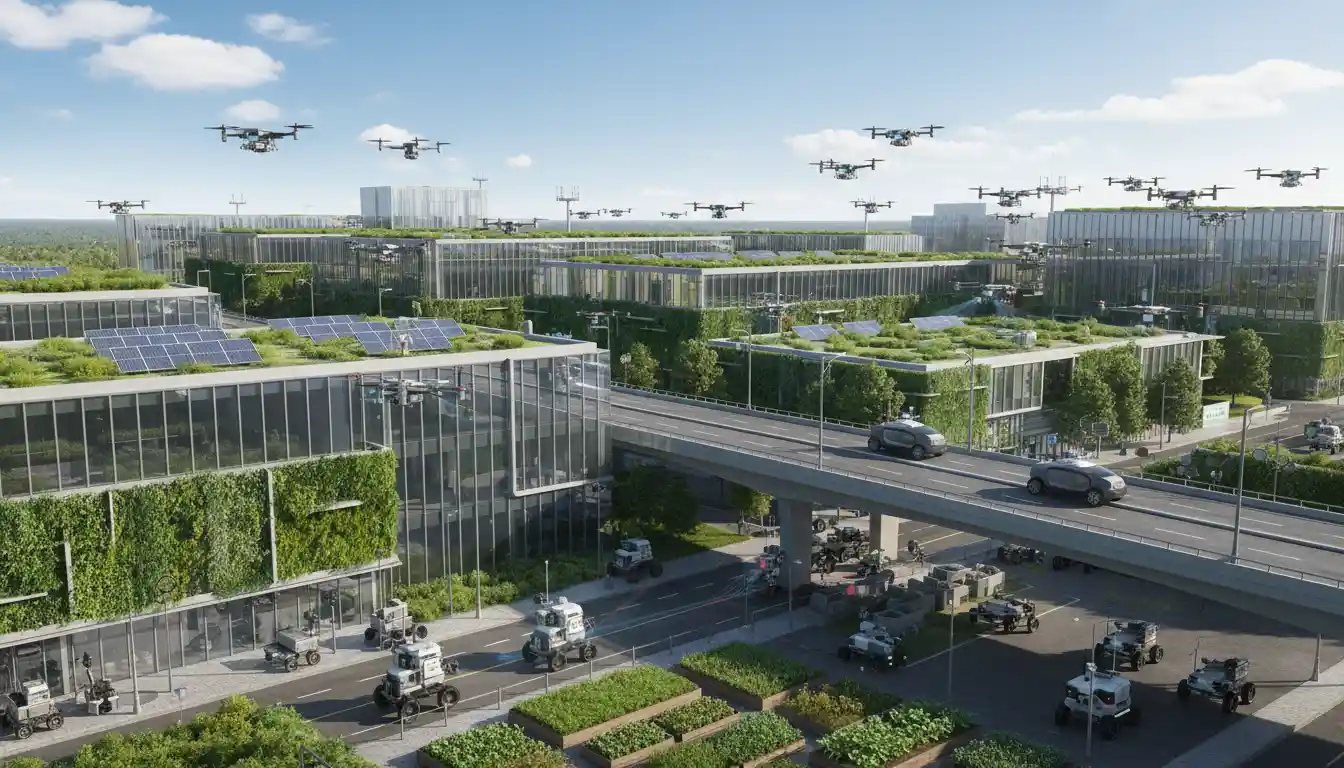
Swarm robotics also has significant potential in smart cities and infrastructure management. Small robots can continuously inspect bridges, roads, tunnels, and pipelines for cracks, corrosion, or leaks. Instead of waiting for visible damage or scheduled manual inspections, a swarm can perform ongoing maintenance checks, predict failures, and reduce the risk of catastrophic accidents. In dense urban areas, swarms of aerial drones could help optimize traffic flow, emergency response, and air quality management by providing detailed, up‑to‑date information.
Disaster Response and Search & Rescue
Another global problem where swarm robotics can make a difference is disaster response. After earthquakes, floods, or industrial accidents, time is critical. Human rescuers often face dangerous conditions, limited visibility, and incomplete information. Swarm robots equipped with sensors, cameras, and communication capabilities can quickly spread over the affected area, mapping debris, detecting survivors, and identifying hazardous zones. Because they operate collaboratively, they can cover large areas faster and with more redundancy than a small number of human‑controlled robots. This shortens rescue times and reduces risks for human teams.
Optimizing Global Supply Chains and Logistics
Beyond physical tasks, swarm robotics also influences global supply chains and logistics. In large warehouses or distribution centers, swarms of mobile robots can sort, transport, and organize goods far more flexibly than fixed conveyor systems. They can adapt to sudden changes in demand, seasonal peaks, or supply disruptions by reallocating robots in real time. On a global scale, such agility helps reduce waste, maintain availability of essential goods, and respond more efficiently to crises like pandemics or geopolitical shocks.
Challenges and Future Directions
Ethical and Regulatory Considerations
However, realizing the full potential of swarm robotics requires overcoming several challenges. Ethical and regulatory questions are at the forefront. Large‑scale autonomous systems operating in public spaces raise issues around privacy, safety, data ownership, and accountability. Who is responsible if a swarm of delivery drones causes an accident? How is collected environmental data stored and used? To address these concerns, governments, researchers, and companies must work together to develop transparent standards, safety protocols, and governance frameworks.
Technical Hurdles: Communication, Energy, and Algorithms
From a technical perspective, reliable communication, energy efficiency, and robust swarm intelligence algorithms remain active research areas. Swarm robots must be able to make decisions with limited bandwidth and uncertain information, especially in remote or crowded environments. Advances in edge computing, low‑power electronics, and adaptive communication protocols are helping to close these gaps. At the same time, breakthroughs in machine learning and bio‑inspired algorithms allow swarms to learn from experience and continuously improve their collective behavior.
Education and Public Understanding
Education and public understanding also play an important role. To ensure that swarm robotics develops in an inclusive, socially beneficial way, people must be informed about both its opportunities and its risks. Universities and industry need to invest in interdisciplinary training, combining robotics, AI, ethics, environmental science, and policy. This holistic approach will help create responsible innovators who design swarms not just for efficiency, but also for equity, sustainability, and long‑term resilience.
Conclusion: A Collaborative Future
Ultimately, swarm robotics shows how small, cooperative systems can address big global issues more effectively than isolated, centralized solutions. By leveraging the power of collective intelligence, decentralization, and adaptability, swarms of small robots can monitor the planet, manage resources, support crisis response, and maintain critical infrastructure. The key is to design these systems in ways that respect human values, protect the environment, and enhance our collective capacity to respond to the complex challenges of the 21st century. As technology matures, swarm robotics will likely become a core component of sustainable, data‑driven global problem solving.