
Asteroid Mining Robots: The Future of Space Resources
1. What Are Asteroid Mining Robots?
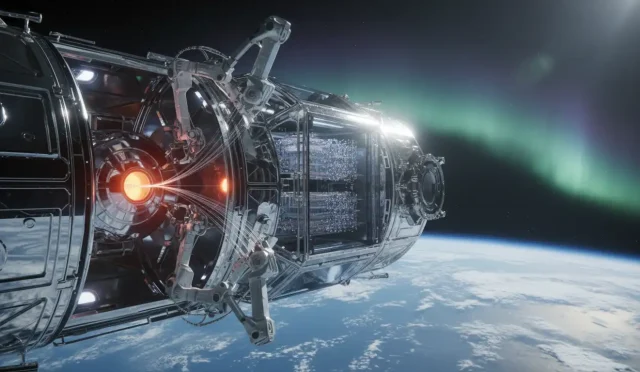
Asteroid mining robots are autonomous machines designed to find, extract, and process valuable materials from asteroids. As Earth’s natural resources become harder and more expensive to mine, these robots offer a new way to access metals, minerals, and water in space. They operate in extreme conditions, using AI, advanced sensors, and specialized tools to work where humans cannot easily survive.
Asteroids are remnants from the early solar system and often contain higher concentrations of metals than typical terrestrial ores. By sending robotic systems instead of human miners, space agencies and private companies can reduce risk and cost while opening a completely new frontier of resource extraction.
2. Why Asteroids Are Valuable for Future Resources
Asteroids are rich in critical materials such as nickel, iron, cobalt, and platinum group metals. A single metallic asteroid a few hundred meters wide could hold more platinum than has ever been mined on Earth. This makes asteroid mining an attractive long‑term strategy for securing industrial and technological supply chains.
In addition to metals, some asteroids contain significant amounts of water ice. Water can be used directly for life support in space or split into hydrogen and oxygen to create rocket fuel. Accessing these materials beyond Earth is essential for building a sustainable space economy and reducing reliance on our planet’s fragile ecosystems.
3. How Asteroid Mining Robots Work
Asteroid mining robots typically follow a multi‑stage process that includes prospecting, landing, mining, and processing:
- Prospecting: Small robotic probes survey target asteroids, measuring their composition, density, and surface structure. Instruments like spectrometers and radar help identify regions rich in metals or water ice.
- Navigation and Landing: Using autonomous guidance and AI, spacecraft approach near‑Earth asteroids and perform precise maneuvers to match their spin and trajectory. Landing systems must anchor on low‑gravity, irregular surfaces without bouncing off.
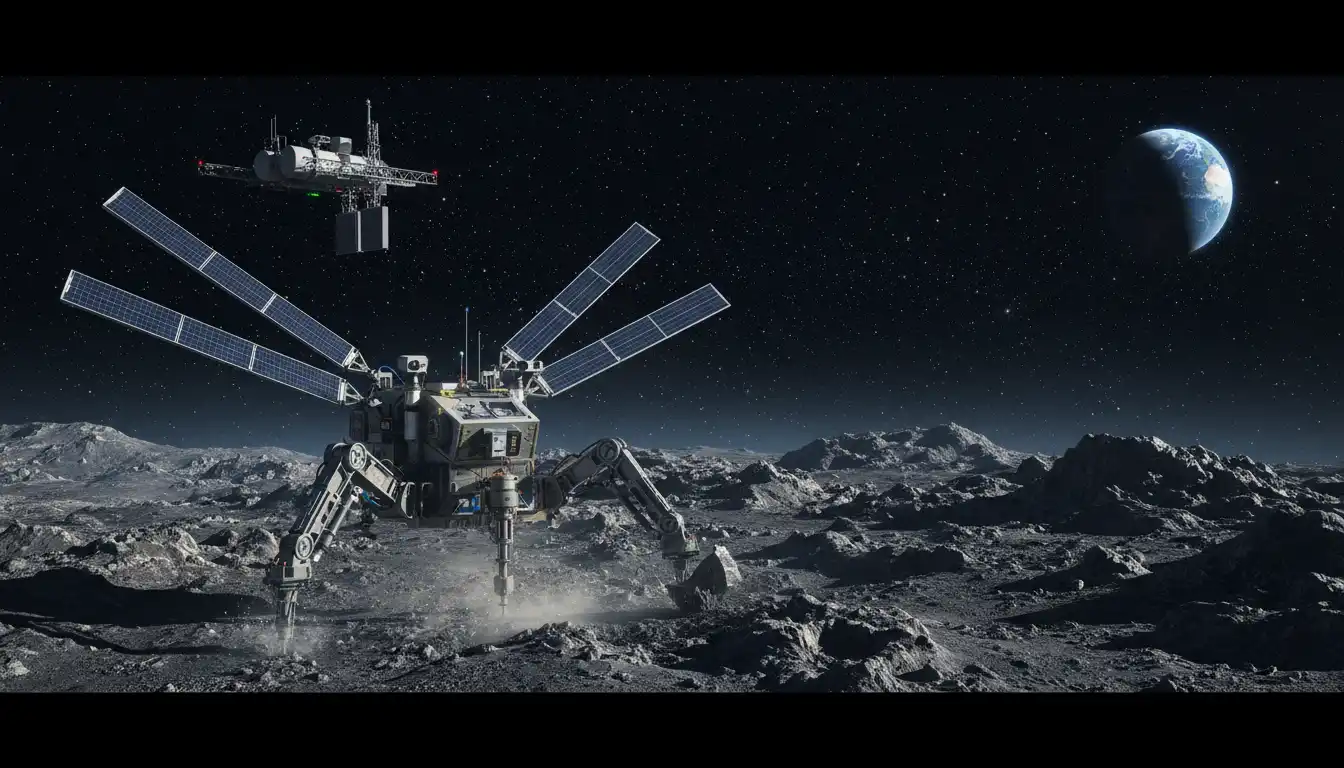
- Excavation: Once attached to the asteroid, mining robots drill or scoop material from the regolith. They collect samples, analyze them on‑board, and adjust their strategy based on real data.
- Processing: In some mission concepts, robots heat or chemically treat asteroid material to separate valuable components. The refined products can then be stored, used as fuel, or sent to other locations in space.
Because real‑time human control is limited by communication delays, these robots rely heavily on autonomous decision‑making and robust software to operate safely and efficiently.
4. The Role of AI and Autonomy in Space Mining
Artificial intelligence is central to the effectiveness of asteroid mining robots. Due to distance and signal delay, operators on Earth cannot micromanage every task. Instead, AI systems handle:
- Path planning and obstacle avoidance on rugged asteroid terrain
- Real‑time adjustment of drilling forces to avoid dangerous recoil in microgravity
- Fault detection, diagnosis, and basic self‑repair routines
- Energy management for solar panels, batteries, and thermal systems
- Coordination between multiple robots working together as a swarm
Machine learning models trained on simulations and past missions help robots adapt to unexpected conditions, such as unusual rock hardness or shifting regolith. This high level of autonomy is what makes large‑scale, off‑world mining realistically achievable.
5. In‑Situ Resource Utilization (ISRU) and Space Infrastructure
A key concept connected to asteroid mining robots is in‑situ resource utilization (ISRU). Rather than launching everything from Earth, future missions will use materials found in space to support operations. For example:
- Water extracted from asteroids can be converted into rocket fuel at orbital fuel depots.
- Metals can be turned into ingots or 3D‑printing feedstock for off‑world manufacturing.
- Structural components for satellites, space stations, and lunar bases could be produced directly in orbit.
By integrating asteroid mining robots with ISRU technologies, space agencies and companies can dramatically cut launch costs and enable long‑duration missions to the Moon, Mars, and beyond. This combination forms the foundation of a scalable space economy infrastructure.
6. Environmental and Economic Benefits for Earth
Asteroid mining has the potential to reduce the environmental impact of traditional mining on Earth. Many of the metals targeted in space are used in green technologies, such as electric vehicle batteries, solar panels, and advanced electronics. Obtaining these materials from asteroids can:
- Decrease deforestation, soil erosion, and water pollution caused by open‑pit mines
- Reduce social conflicts and human rights issues linked to certain terrestrial mining regions
- Stabilize supply chains for critical minerals needed in high‑tech and renewable energy sectors
Economically, opening a new frontier of commercial space mining could create entirely new markets, jobs, and industries. Countries and companies investing early in asteroid mining robots may gain a strategic advantage in the global space economy.
7. Technical Challenges and Engineering Solutions
Despite its promise, asteroid mining faces serious technical challenges. Engineers must address:
- Microgravity Excavation: Traditional drilling methods can push robots away from the surface. Solutions include harpoons, anchors, and low‑force excavation tools.
- Dust Management: Fine regolith dust can interfere with instruments and moving parts. Sealed mechanisms, electrostatic repulsion, and smart material choices are being developed.
- Thermal and Radiation Protection: Mining robots are exposed to extreme temperature swings and high radiation. They need robust shielding, thermal control systems, and radiation‑hardened electronics.
- Reliability and Maintenance: With no human technicians nearby, robots must be extremely reliable and capable of remote or autonomous repair. Modular designs make it easier to upgrade or replace components.
Step by step, demonstration missions are validating these technologies, moving asteroid mining robots from concept to practical reality.
8. Legal, Ethical, and Regulatory Considerations
The rise of asteroid mining robots also forces the global community to reconsider existing space law. Treaties like the Outer Space Treaty were not originally designed for private resource extraction. Key questions include:
- Who owns resources extracted from asteroids?
- How can nations prevent monopolies or conflicts over valuable targets?
- What responsibilities do companies have to avoid damaging scientifically important objects?
Emerging national laws and international discussions aim to balance commercial freedom with shared benefits and responsible behavior. Clear, fair regulations will be critical to ensuring that asteroid mining robots contribute positively to humanity’s long‑term interests.
9. The Future of Asteroid Mining Robots and Human Civilization
Over the next few decades, we can expect more test missions focused on prospecting, small‑scale extraction, and in‑orbit processing. Each success will bring us closer to fully operational asteroid mines run by autonomous robot fleets.
As costs drop and technologies mature, asteroid mining robots could:
- Supply vital resources for permanent lunar and Martian bases
- Enable large‑scale construction of space habitats and solar power satellites
- Support a truly multiplanetary civilization with diversified resource sources
In this vision, asteroids become an extension of humanity’s resource environment, and robotic mining systems are the tools that make it possible. Far from being just a science‑fiction idea, asteroid mining robots are emerging as a realistic and potentially essential solution to the resource challenges of the future.