
Unwritten Rules of EV Charging Etiquette in the USA: How to Share Superchargers and Public Stations Politely
As electric vehicles spread rapidly across the United States, public charging stations and fast chargers like Tesla Superchargers are becoming busier than ever. More drivers now rely on shared infrastructure, which makes EV charging etiquette in the US increasingly important. While you may not find these rules written on a sign, there is a growing set of common expectations among EV owners about how to behave at charging locations.
Understanding and following these unwritten EV charging rules helps reduce conflicts, shortens wait times, and ensures everyone gets the energy they need. It is not just about plugging in and walking away; it is about being considerate, efficient, and aware of other drivers. Below are the key guidelines for Supercharger etiquette and public EV charging etiquette that every EV owner in the US should know.
1. Don’t Hog the Charger: Move When You’re Done
One of the most basic rules of electric car charging etiquette is simple:
Unplug and move your vehicle as soon as your charging session is complete.
At popular fast‑charging locations—especially along busy highways—drivers plan their trips assuming they can access a charger quickly. If your car is already at 80% or 100% and you leave it sitting in a charging bay, you are blocking others from using a scarce resource.
- Set a timer on your phone or in your car’s app to remind you when charging is nearly complete.
- On DC fast chargers and Tesla Superchargers in the USA, stop the session once you have enough range to reach your next station or destination.
- Avoid “topping off” to 100% if it is not necessary; the last 10–20% is usually much slower and frustrates people waiting.
Many networks even charge “idle fees” if your car remains plugged in after charging is finished. Even if there is no fee, leaving your car in a charging spot after charging is considered bad manners in the EV community.
2. Don’t Use a Charging Spot Like a Parking Space
Another core part of public EV charger etiquette is recognizing that charging bays are not regular parking spaces.
If you are not actively charging, you should not park at a charging stall, even for a “quick” errand. This is especially important at:
- Urban quick‑charge hubs
- Mall parking lots with limited Level 2 EV chargers
- Popular EV charging stations on road trips
Think of it this way: when you park at a gas pump without filling up, other drivers will be annoyed. The same logic applies to EV chargers. Some drivers refer to this as “ICEing” when a gasoline car blocks a spot, but an EV that parks without charging is just as problematic.
3. Follow First-Come, First-Served — But Be Flexible
Most EV charging in public places follows a first‑come, first‑served approach. The car that arrives first and plugs in first gets the spot. However, there are ways to be polite and flexible:
- If you arrive and there are several spots open, try not to park in the most accessible or best‑positioned stall if you know others may need it (for example, leave wheelchair‑accessible areas open).
- If you see another EV arrive just after you in obvious need—such as a towing truck dropping them off with 0% battery—consider offering to swap places if you still have a comfortable range buffer.
Seasoned drivers often adopt a community‑minded attitude at EV charging hubs. A small gesture of cooperation can prevent a stranded driver from needing a tow.
4. Avoid Unplugging Other Vehicles (Except in Clear Cases)
One of the most controversial points in EV charging etiquette in public is whether it is ever acceptable to unplug someone else’s car.
In general:
- Do not unplug another vehicle unless it is clearly indicated that you are allowed to (for example, a note on the dash or a sign stating that unplugging is okay after a certain state‑of‑charge).
- Some networks physically lock the connector while the car is charging, making it impossible to unplug without authorization.
- At shared workplace chargers, some drivers leave a tag or note: “You may unplug me after 80%” or provide contact info.
If you are desperate for a charge and all stalls are taken, it is far better to wait or ask the other driver (if present) than to assume. Unexpectedly stopping someone’s charging session can cause real problems on long trips.
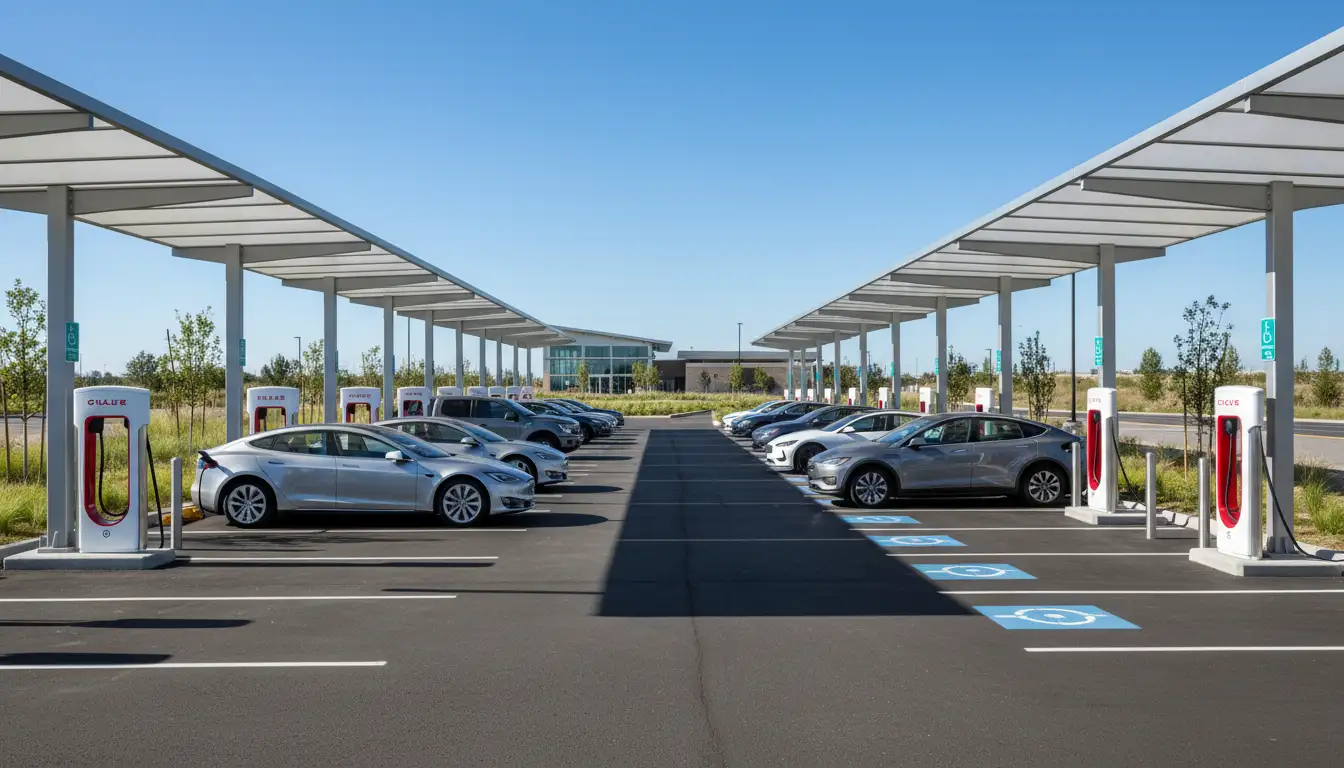
5. Share Power Wisely at Tesla Superchargers
Supercharger etiquette in the USA has a few special nuances because of how some older Tesla Superchargers share power between stalls.
On certain sites, paired stalls (for example, 1A and 1B) split power. If you plug into a stall that shares power with someone already charging, both of you may charge more slowly. Good practice includes:
- If possible, choose a stall that is not paired with an active one.
- If you must use a paired stall, understand charging speeds might be slower and be patient.
- Avoid occupying a paired stall unnecessarily when other unpaired stalls are open.
Tesla’s in‑car navigation often shows Supercharger availability and charging speed, but being mindful of how the site is laid out is still part of being a considerate driver.
6. Stay Nearby and Be Reachable
Even if you plan to run an errand while your car charges, try to remain close enough that you can:
- Return quickly if someone needs the spot
- Move your car when your session ends
- Respond if the charger malfunctions or your app alerts you to a problem
Staying within walking distance is a good rule of thumb, particularly at busy EV charging locations. If you will be farther away, shorten your charging session to what you absolutely need instead of filling your battery completely.
Whenever possible, monitor your vehicle through the manufacturer’s app or the charging network’s app. Many US networks send a push notification when charging is finished, helping you stick to good EV charging behavior.
7. Keep Cables Neat and Protect the Equipment
Good charging station etiquette includes taking care of the hardware itself:
- Coil or return the cable neatly when you finish, instead of leaving it on the ground.
- Make sure the connector is seated properly in its holster so it does not get damaged.
- Avoid driving over cords or bending them sharply.
- Do not slam screens or yank connectors if the session fails; instead, stop the session and start again calmly.
Public charging infrastructure in the USA is still growing, and damage to a single connector can take a station offline for days or weeks. Every EV driver benefits when equipment is treated gently and left tidy for the next person.
8. Respect Charging Speed and Use the Right Station
Not every EV charging spot is meant for long sessions. To keep traffic flowing smoothly:
- Use DC fast charging (Level 3) for quick top‑ups on road trips, not for hours‑long parking.
- Use Level 2 chargers at hotels, workplaces, or long‑stay locations where your car will be parked for several hours.
- Avoid plugging into a DC fast charger if you plan to leave your car for a long lunch or an extended shopping trip.
Matching your needs to the right charging speed improves the overall experience at EV charging stations in the US and reduces congestion at high‑speed chargers.
9. Be Courteous When Waiting in Line
When a station is full, EV charging etiquette continues even before you plug in:
- Form an orderly queue in the order of arrival. If there is confusion, communicate clearly and politely with other drivers.
- Do not block traffic lanes or entrances while waiting.
- If you are waiting and a new stall opens, the next car in line—not the one closest to the spot—should take it.
Friendly communication goes a long way. Most EV drivers understand that public infrastructure is still developing and are willing to cooperate if everyone is respectful.
10. Communicate Politely and Support New EV Drivers
Finally, many people using public chargers in the USA are new EV owners who may not yet understand all the nuances of EV charging etiquette in the United States. Instead of reacting with frustration:
- Offer help if someone seems confused about starting a session.
- Politely explain local customs, such as moving your car when you reach 80%.
- Share tips about nearby stations or apps like PlugShare that show EV charging station reviews and availability.
Building a culture of patience and cooperation makes the EV transition smoother for everyone. Over time, these unwritten EV charging rules become second nature and help create a better experience for drivers across the US.
Example Product to Make Charging Easier
To make your charging sessions smoother and protect your car’s interior, you can consider a high‑quality charging cable organizer and trunk storage solution sold on Amazon. Search on Amazon.com for a product like “EV cable organizer and trunk storage box” to keep your EV charging cables neat and prevent clutter in your cargo area. A good organizer helps you follow etiquette by keeping cables clean, easy to handle, and quickly accessible at any EV charging station in the USA.