
How U.S. Public Utilities Are Preparing for Widespread DC Fast-Charging Corridors
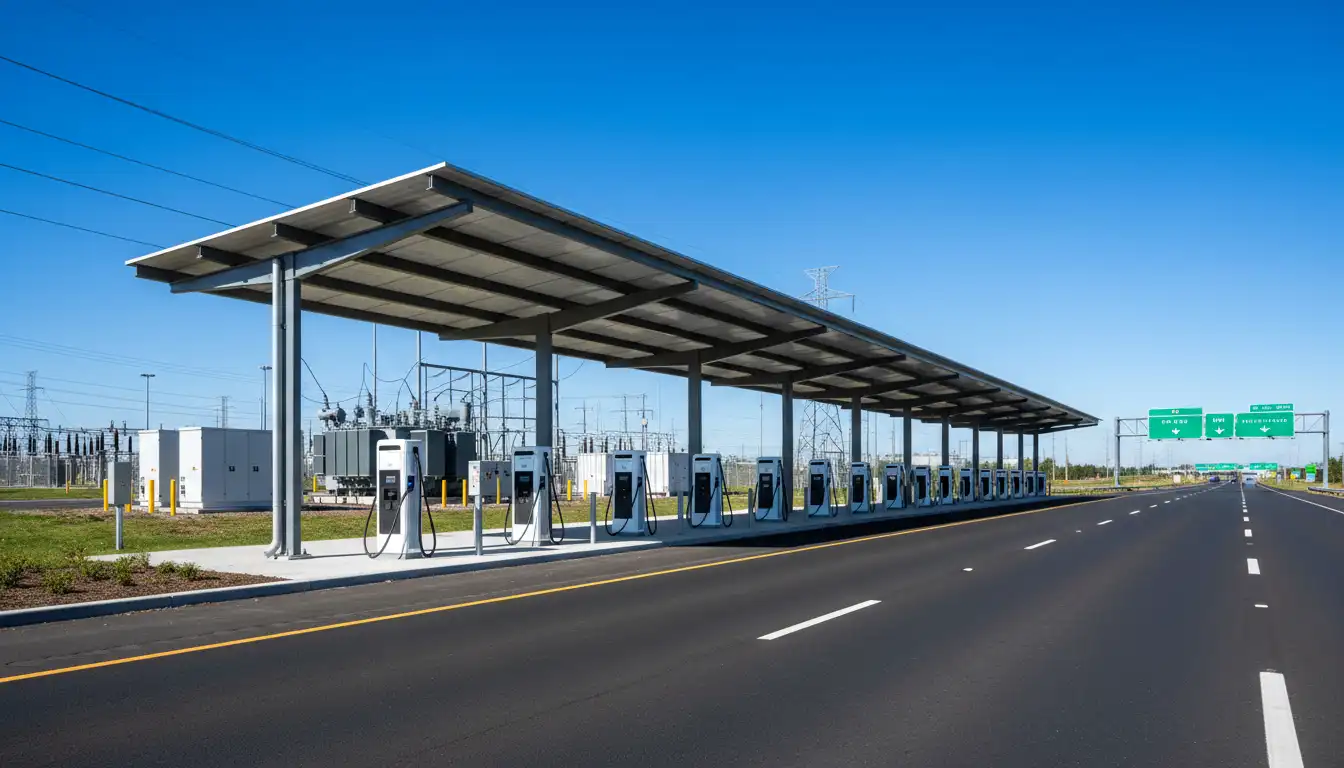
Electric vehicles are moving from early adoption to mainstream transportation, and that shift is changing the job description of U.S. public utilities. For decades, utilities focused on predictable demand patterns: morning ramps, evening peaks, seasonal heating and cooling swings. DC fast charging (DCFC) corridors disrupt that rhythm. A single site can add a large, intermittent load that behaves more like a small industrial customer than a row of homes.
To keep reliability high while enabling faster EV travel, utilities are preparing in practical, coordinated ways. They are upgrading distribution infrastructure, planning new transmission capacity, improving interconnection processes, and investing in smarter systems that can respond to real-time conditions. They also collaborate with state regulators, charging providers, and transportation agencies to align incentives and timelines. Below is an explanatory look at what’s happening and why it matters.
1) Utilities start with corridor-level load forecasting, not just “more EVs”
Utilities don’t plan DC fast chargers one plug at a time anymore. They build corridor-level forecasts that blend travel demand, vehicle adoption, and charging behavior. Instead of assuming every EV charges at home, they model highway patterns: weekend surges, holiday travel peaks, freight routes, and seasonal tourism.


They also distinguish between “installed” capacity and “coincident” demand. A station might advertise 8 stalls at 350 kW each, but real usage depends on how many vehicles arrive simultaneously and how long they stay. This forecasting helps utilities size upgrades sensibly, avoid overspending, and still meet reliability targets.
From a planning standpoint, utilities increasingly treat high-traffic highway charging hubs like a new class of grid customer. They use scenario modeling to answer questions such as: What happens if multiple sites ramp up in the same county? Which substations hit constraints first? How much capacity needs to be available by 2027 versus 2030? Good forecasts reduce surprises and accelerate buildouts.
2) Distribution upgrades: substations, feeders, and transformers get priority
DCFC corridors usually require distribution system upgrades. Utilities often need to:
- Reconductor or replace feeders to handle higher continuous current
- Add or upgrade distribution transformers
- Expand or modernize substations
- Improve protection systems and voltage regulation equipment
A key challenge is timing. Charging developers want speed: secure the site, pull permits, install equipment, and energize quickly. Utility upgrades may require long-lead equipment, engineering studies, and construction windows.
To reduce delays, many utilities create “make-ready” programs that standardize the design and construction approach for EV charging. With make-ready, the utility often builds or funds the electrical infrastructure up to the customer meter, enabling faster, more predictable deployments.
3) Interconnection gets streamlined to reduce “time-to-power”
Interconnection for DC fast charging can become a bottleneck, especially when developers lack clarity on upgrade costs or schedules. Utilities are responding with clearer rules, better queue management, and more transparent study results.
Common improvements include:
- Dedicated EV interconnection pathways and simplified application forms
- Published capacity maps showing where spare headroom exists
- Standard timelines for studies and construction milestones
- Pre-approved equipment lists and “repeatable” station designs
This is where grid modernization becomes tangible. When utilities digitize processes and improve data sharing, they cut the uncertainty that makes corridor deployment expensive and slow.
4) Utilities deploy hosting capacity maps and proactive “where to build” guidance
A major shift is proactive planning. Utilities increasingly publish hosting capacity information to show where the distribution system can support new loads with minimal upgrades. For corridor developers, that data can determine whether a site becomes viable this year or gets pushed out by several construction seasons.
Utilities also work with DOTs and local governments to identify priority charging areas. When planners align land availability, traffic patterns, and grid capacity, they reduce stranded investments and improve utilization. The goal is to ensure a consistent charging experience along travel routes, not just within large urban areas.
5) Rate design evolves: demand charges, time-of-use, and EV-friendly tariffs
DC fast charging can trigger high peak demand charges, especially during early years when utilization is low. Utilities and regulators recognize that this can slow adoption and discourage corridor buildout. As a result, many jurisdictions consider new or revised tariffs designed for EV infrastructure.
Typical approaches include:
- Time-of-use rates that reward charging when the grid is less stressed
- Transitional demand charge relief for new stations
- Subscription-style demand products that reduce bill volatility
- Rates that reflect local feeder constraints and system conditions
Utilities aim to balance affordability for charging operators with fairness for all ratepayers. Rate design also becomes a lever to encourage “right-time” charging and reduce peak system costs.
6) Managed charging and smart charging—yes, even for fast chargers
When people hear managed charging, they often think only of home charging. But corridor sites can also participate in demand management and grid services. Utilities and charging networks increasingly integrate software that can:
- Modulate power across stalls based on real-time grid conditions
- Shift some energy to off-peak periods where feasible
- Reduce ramp rates to support local voltage and thermal constraints
- Coordinate with on-site batteries to limit grid draw
This doesn’t mean drivers lose fast charging. It means the site optimizes how it delivers power—smoothing peaks, improving efficiency, and avoiding unnecessary grid stress. Smart charging also helps utilities prevent localized overloads during travel surges.
7) Energy storage becomes a practical tool, not a niche add-on
Battery storage at DCFC sites can reduce the need for immediate large grid upgrades. It can also shave peaks and improve economics under certain tariff structures. Utilities view storage as part of an integrated design: the grid connection provides steady power, while storage handles short, high-power bursts.
That said, storage isn’t a universal substitute for grid capacity. It works best when:
- Grid upgrades are delayed or expensive
- The station experiences sharp peaks and low-to-moderate average utilization
- The utility wants resiliency benefits (e.g., backup power for critical travel corridors)
In some regions, utilities partner with developers or offer programs that encourage storage deployment where it provides the most grid value.
8) Reliability and resilience planning expands to include transportation electrification
Utilities traditionally plan resilience around storms, wildfires, and equipment failures. With DCFC corridors, they also consider transportation reliability: people increasingly depend on charging access the way they depend on fuel stations.
To support resilience, utilities may:
- Build redundancy into feeder supply where feasible
- Improve outage restoration strategies near corridor hubs
- Encourage microgrids or backup generation for key sites (in limited cases)
- Harden infrastructure in high-risk areas
They also coordinate with emergency management agencies because charging availability can influence evacuation routes and disaster response logistics.
9) Supply chain and workforce development become strategic priorities
Transformers, switchgear, and other components can have long lead times. Utilities are responding with better procurement planning and inventory strategies. They also invest in workforce skills: engineers who understand high-power electronics, field crews trained for new interconnection standards, and planners who can model dynamic loads.
This is one of the least visible, most important parts of preparation. A corridor plan fails if the utility can’t source equipment or mobilize crews fast enough.
10) Utilities coordinate with federal and state programs without depending on them
Public funding and policy support—especially corridor-focused initiatives—can accelerate deployment. Utilities coordinate with state energy offices, transportation departments, and charging providers to align projects and reporting requirements.
Still, utilities can’t rely only on grants. They plan for long-term system readiness because EV adoption keeps rising even when incentives change. The best-prepared utilities build flexible roadmaps that work across multiple policy environments.
11) Data sharing and performance metrics improve accountability
Corridor success depends on uptime, power delivery consistency, and customer experience. Utilities and charging operators increasingly share data (within privacy and contractual limits) to improve planning and operations. Utilities want to know how stations actually behave, not just what they are rated for.
Better data enables:
- More accurate load forecasting
- Faster troubleshooting and fault isolation
- Targeted upgrades instead of blanket spending
- Evidence-based rate and program design
This also helps regulators evaluate outcomes and adjust policies without guesswork.
12) The big picture: utilities are shifting from “connecting customers” to “enabling a new mobility system”
DC fast charging corridors sit at the intersection of power and transportation. Utilities are learning that the corridor isn’t just a set of electrical connections. It is a mobility backbone that depends on planning discipline, rapid execution, and ongoing operational coordination.
The most successful preparation strategies share a common theme: utilities move upstream. They don’t wait for a charging developer to arrive with a permit-ready site and then react. They map capacity, modernize processes, develop EV-ready tariffs, and build upgrade pipelines so corridors can scale with fewer delays.
Amazon.com Product Recommendation (1 item)
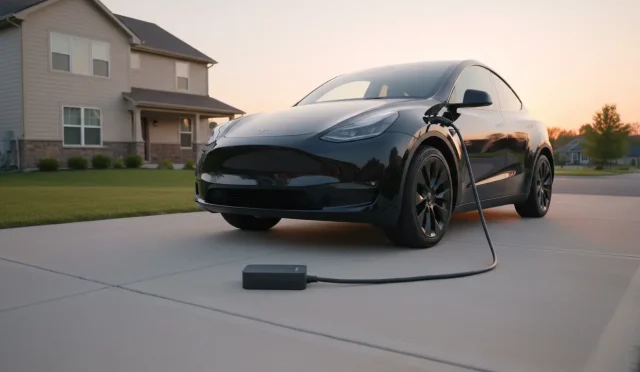
For EV drivers planning corridor trips, a practical accessory is a reliable Level 2 portable charger for destinations where DCFC isn’t available or as backup charging at hotels/campgrounds.
Recommendation: a portable Level 2 EV charger (32A–40A) with NEMA 14-50 plug