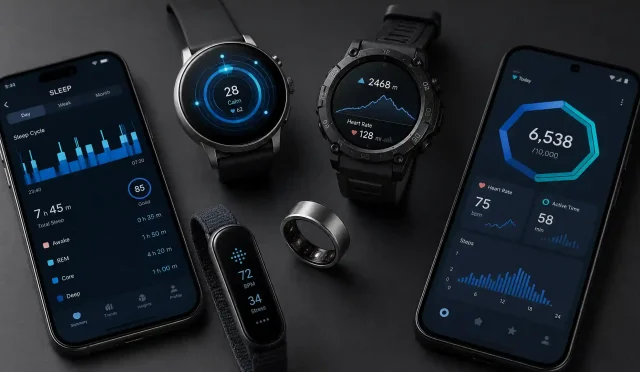

The Future of Health Tracking: Smart Rings vs. Smartwatches
Health tracking has shifted from a niche hobby to an everyday habit. People now expect wearable technology to do more than count steps—they want sleep tracking, stress signals, recovery guidance, and long-term trends that actually influence behavior. In that race, two categories dominate the conversation: smart rings and smartwatches.
Both can deliver meaningful fitness metrics, but they win in different moments of your day. If you choose the wrong form factor, you’ll stop wearing it—and the best wearable is the one you keep on.
This guide compares smart rings vs smartwatches in a practical, real-life way so you can pick the device you’ll wear consistently and trust over time. (Not medical advice—wearables support wellness decisions, not diagnoses.)


Why wearables are becoming “always-on” health companions
Modern wearables aim for continuous monitoring rather than occasional check-ins. That shift matters because your body changes hour to hour:
- Your resting heart rate trends can reveal fatigue or improvement
- Heart rate variability can reflect recovery balance (when interpreted carefully)
- Stress monitoring can help you notice patterns between meetings, caffeine, sleep, and mood
- Nighttime data can show how late meals, alcohol, or temperature affect your sleep
The real future isn’t “more sensors.” It’s better habits powered by better feedback loops—and comfort plays a huge role in whether that loop sticks.
Smart rings: the “invisible” wellness wearable
A smart ring’s biggest advantage is simple: you forget you’re wearing it. That makes it ideal for people who value comfort, minimal distraction, and consistent nighttime use.
Where smart rings shine
1) Sleep-first design
Many rings focus heavily on sleep stages and recovery insights. Because you don’t feel a ring pressing into your wrist while you sleep, you’re more likely to keep it on every night. Consistent nights build reliable baselines.
2) Battery life that supports consistency
A ring often lasts multiple days, so you don’t get stuck in a daily “charge panic.” Strong battery life increases compliance, especially if you travel or forget chargers.
3) Better “all-day, all-night” wearability
Rings fit naturally with office attire, formal events, and low-profile lifestyles. If you dislike screens or notifications, the ring experience feels calmer.
Where smart rings struggle
1) Limited workout tools
Rings can track activity, but they typically don’t rival watches for live workout screens, lap pacing, GPS-driven distance, or sport modes. If you train seriously, you may want a watch for richer exercise detail.
2) No screen, fewer real-time cues
A ring won’t replace the instant feedback of a watch: you won’t glance down for heart rate zones mid-run or see prompts during strength sessions.
3) Sizing and fit matter a lot
A ring’s sensor accuracy depends on fit. Weight changes, swelling, and temperature shifts can affect comfort and readings. Getting the right size matters more than people expect.
Smartwatches: the all-in-one health and life dashboard
A smartwatch is both a wearable and a mini command center. It tracks health while also delivering daily utility—notifications, timers, music control, navigation, and sometimes NFC payments.
Where smartwatches shine
1) Workout performance and sport features
If you want structured training, smartwatches lead. They offer robust workout detection, heart rate zones, pace screens, and often better motion tracking for exercise.
2) A real-time screen changes behavior
The display isn’t just convenience—it’s behavior design. Seeing “stand up,” “close your rings,” or “slow down” can nudge you into healthier micro-decisions.
3) Lifestyle utility beyond health
Smartwatches reduce phone-checking, enable quick replies, and support daily routines. For many people, the watch becomes the device they interact with the most.
Where smartwatches struggle
1) Comfort, especially during sleep
Some people simply won’t sleep with a watch. If your wrist feels restricted or you dislike the bulk, your nighttime data suffers.
2) More frequent charging
Many watches require daily charging. If you forget, you lose key trends and your data becomes patchy.
3) Distraction risk
Notifications can increase stress rather than reduce it. If you want calm, you must tune settings intentionally.
Accuracy and sensors: what matters most (and what doesn’t)
People often ask which is “more accurate,” but the smarter question is: accurate for what outcome?
- For nightly trends like resting heart rate and heart rate variability, consistency and stable wear matter most. Rings can win because they stay on.
- For active workouts, watches often win because they give real-time tracking and can pair with external sensors.
- For oxygen-related metrics like blood oxygen, both categories can provide estimates, but treat them as trend indicators—not clinical tools.
- For stress signals, both rely on proxies (HRV, skin temperature, motion). Use them to spot patterns, not to label yourself as “stressed” or “not stressed.”
If your goal is daily behavior improvement, your best device is the one that produces clean trends because you actually wear it.
The comfort and lifestyle test (the decision shortcut)
Instead of comparing spec sheets, run this quick lifestyle test:
Choose a smart ring if you…
- Prioritize sleep and recovery
- Want minimal distraction and no screen
- Value multi-day battery life
- Prefer a subtle, jewelry-like form factor
- Want a calm, background wellness wearable
Choose a smartwatch if you…
- Train frequently and want performance feedback
- Need real-time workout screens and prompts
- Want notifications, timers, and NFC payments
- Like using fitness metrics to guide daily actions
- Want a device that blends health + productivity
Many people eventually use both: a ring for sleep/recovery and a watch for training. But if you’re buying one device, pick the one you’ll wear at night and during your most common activities.
Subscription costs, data privacy, and long-term value
The future of wearables isn’t just hardware—it’s analytics.
- Some platforms gate advanced insights behind subscriptions. Factor that cost into your “real” device price.
- Read privacy settings: where does your biometric data go, and can you export or delete it?
- Consider ecosystem lock-in (iPhone vs Android integrations), especially for smartwatches.
Long-term value comes from months of consistent data—not from one week of intense tracking.
Health insights that actually feel useful
Great wearables don’t just measure; they interpret in a way you can act on.
Look for features like:
- Readiness score or daily recovery scoring that adjusts training expectations
- Clear recovery insights that connect sleep, strain, and routine
- Gentle stress monitoring that highlights triggers (late caffeine, long meetings)
- Menstrual cycle tracking (if relevant) that helps contextualize sleep and energy changes
You want guidance that encourages sustainable routines, not guilt-driven gamification.
Bottom line: the future is personalized, not one-size-fits-all
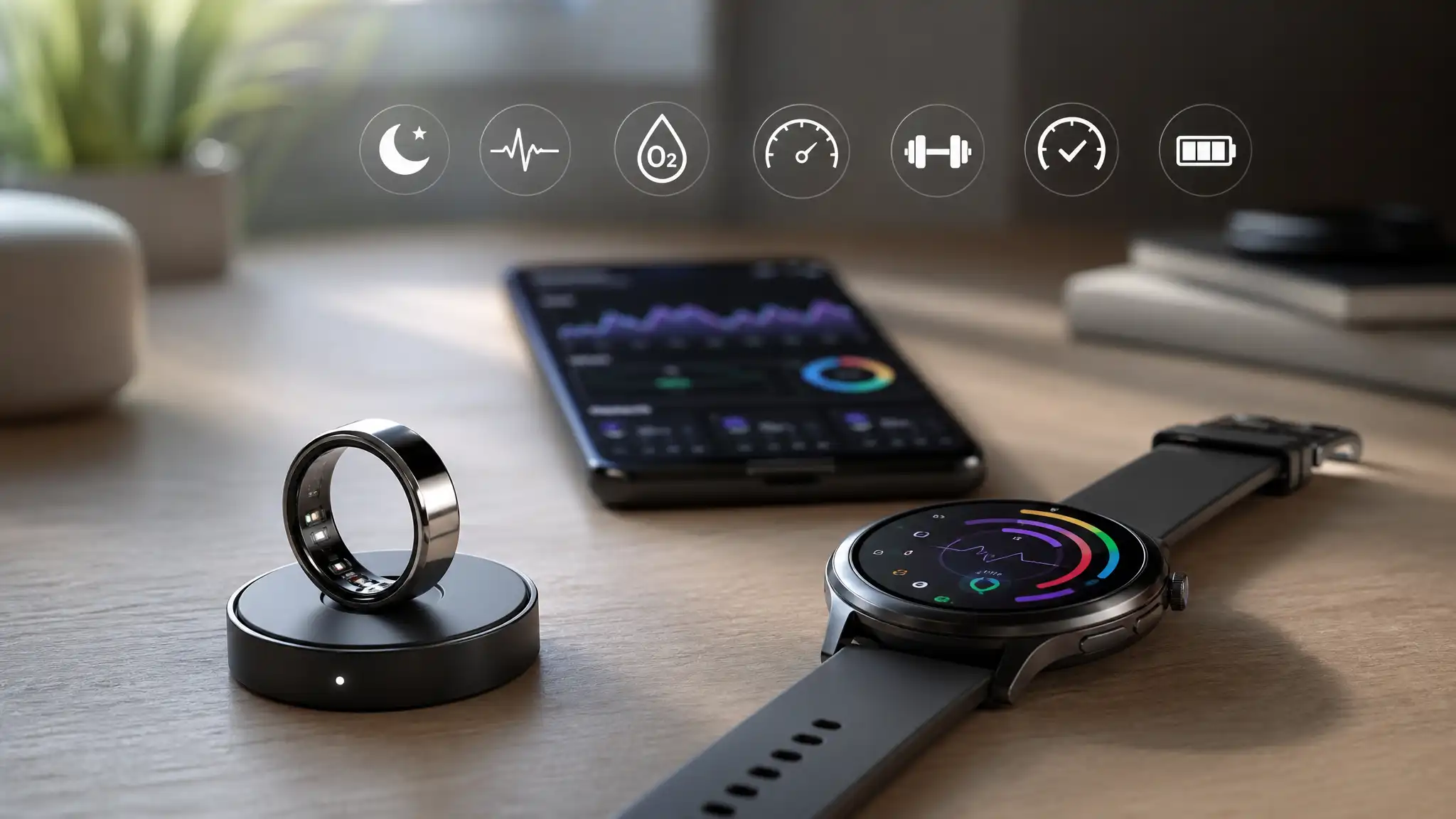
Smart rings push health tracking toward “invisible” consistency—especially for sleep and recovery. Smartwatches push it toward “interactive” coaching and performance. The best choice depends on how you live:
- If you want calm, comfort, and nightly trends, lean ring.
- If you want training tools and daily utility, lean watch.
Either way, focus on repeatable habits. Wearables work best when they support your lifestyle instead of trying to replace it.
Amazon.com product recommendation (1)
Oura Ring Gen4 — A strong pick if your top priorities are sleep tracking, recovery insights, and a low-distraction form factor you can wear 24/7. (Check sizing carefully.)