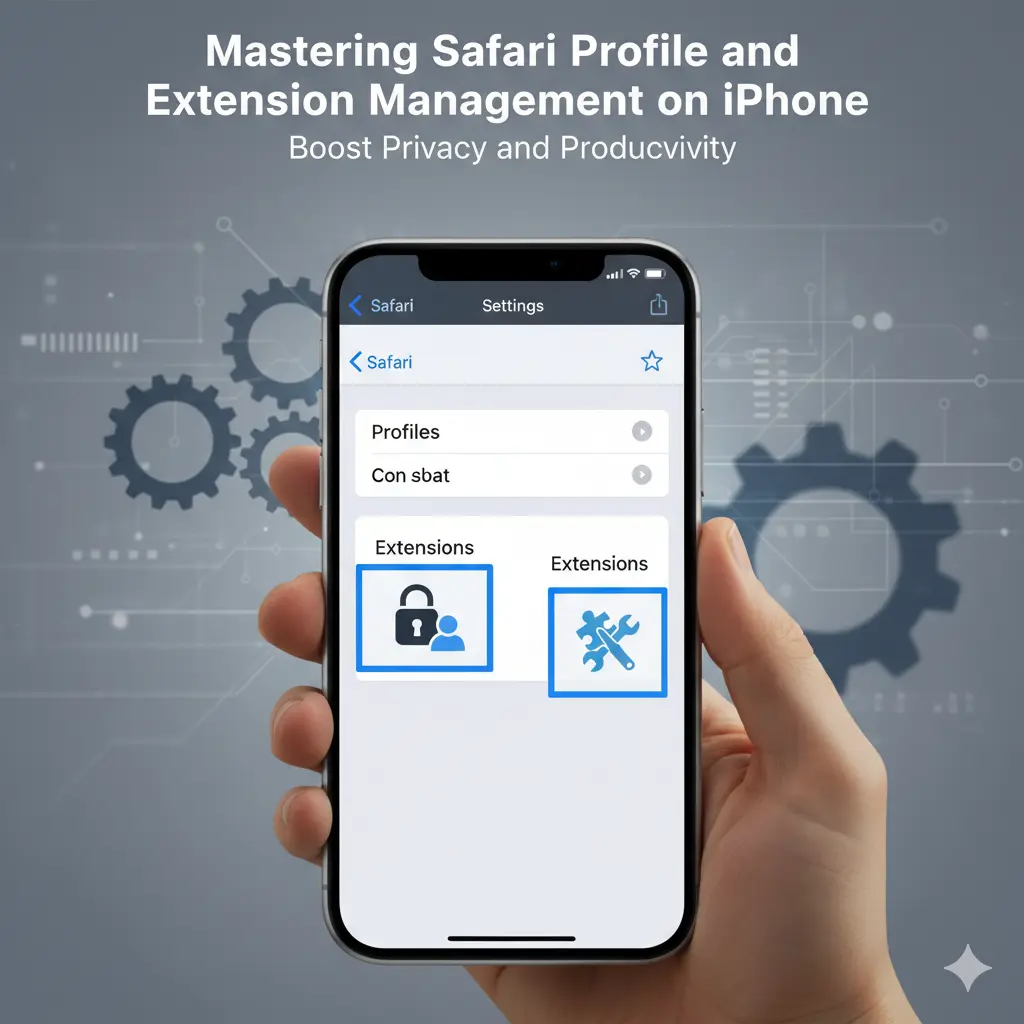

Mastering Safari Profile and Extension Management on iPhone: An Advanced Guide
In the evolving world of mobile browsing, Safari on iPhone stands out as a powerful and versatile tool. With the introduction of advanced profile and extension management features, users can now customize their browsing experience like never before. This article delves deep into how to effectively manage Safari profiles and extensions on your iPhone, enhancing productivity, privacy, and overall user experience.
Understanding Safari Profiles on iPhone
Safari profiles allow users to create distinct browsing environments within the same app. This means you can separate your work, personal, and other browsing activities without mixing cookies, history, or saved passwords. On iPhone, managing these profiles efficiently can streamline your workflow and protect your privacy.
Profiles are especially useful for users who share their device or want to keep different browsing contexts isolated. For example, you can have one profile for social media and entertainment, and another for professional research and email.

Setting Up and Switching Safari Profiles
To set up profiles on Safari for iPhone, you need to access the browser’s settings. While Safari doesn’t natively support multiple profiles like desktop browsers, you can simulate this by using different iCloud accounts or leveraging third-party apps that integrate with Safari.
Switching between profiles involves logging in and out of these accounts or using app-specific browsers that sync with Safari. This method ensures that your browsing data remains compartmentalized, reducing the risk of cross-contamination between personal and professional data.
Advanced Safari Extension Management on iPhone
Safari extensions on iPhone have evolved significantly, allowing users to add functionalities that enhance browsing efficiency. From ad blockers and password managers to productivity tools and custom themes, extensions can transform your Safari experience.
Managing these extensions effectively is crucial to maintaining browser speed and security. Too many active extensions can slow down your browser or create vulnerabilities.
How to Install and Manage Safari Extensions
To install Safari extensions on your iPhone, navigate to the App Store and search for Safari extensions. Once installed, you can enable or disable them through Safari’s settings under the “Extensions” menu.
Advanced users should regularly review their active extensions, update them to the latest versions, and remove any that are no longer needed. This practice not only optimizes performance but also minimizes security risks.
Tips for Optimizing Safari Profiles and Extensions
- Use Profiles to Separate Sensitive Browsing: Keep financial or confidential browsing in a dedicated profile to enhance security.
- Limit Extensions to Essential Tools: Avoid installing unnecessary extensions that can bloat your browser.
- Regularly Update Extensions: Developers often release updates to patch security flaws and improve functionality.
- Clear Cache and Cookies per Profile: This helps maintain privacy and prevents data leakage between profiles.
- Leverage Content Blockers: Use ad blockers and trackers blockers to speed up browsing and protect your data.
- Backup Profile Data: Use iCloud or other cloud services to back up your browsing data for easy recovery.
Privacy and Security Considerations
Managing profiles and extensions on Safari is not just about convenience; it’s also about safeguarding your privacy. Each profile can have its own privacy settings, including cookie management, tracking prevention, and permissions for extensions.
Be cautious about the permissions you grant to extensions. Only install extensions from trusted developers and review their privacy policies. Regularly audit your profiles and extensions to ensure they comply with your security standards.
Future of Safari Profile and Extension Management on iPhone
Apple continues to enhance Safari’s capabilities with each iOS update. Expect more native support for multiple profiles and more powerful extension APIs that allow deeper customization and integration.
For power users, mastering these features now will prepare you for a more personalized and secure browsing experience in the future.
Conclusion
Safari on iPhone offers robust tools for managing profiles and extensions, enabling users to tailor their browsing experience to their unique needs. By understanding how to set up profiles, install and manage extensions, and maintain security, you can unlock the full potential of Safari on your iPhone.
Embrace these advanced management techniques to boost your productivity, protect your privacy, and enjoy a seamless browsing experience.