
How AI‑Powered Inventions Are Reshaping Everyday Life in the US and Around the World
Artificial intelligence is no longer a futuristic concept reserved for research labs and sci‑fi movies. Today, AI‑powered inventions are seamlessly woven into daily life in the United States and across the globe. From the way we work, travel, learn, and stay healthy to how we shop and communicate, AI is quietly transforming everyday routines, often in ways we barely notice.
This article explores how AI‑driven innovations are reshaping daily life worldwide, highlighting real‑world applications, benefits, and challenges, while staying focused on long‑term, sustainable and human‑centric development.
1. Smart Homes: From Convenience to Intelligent Living
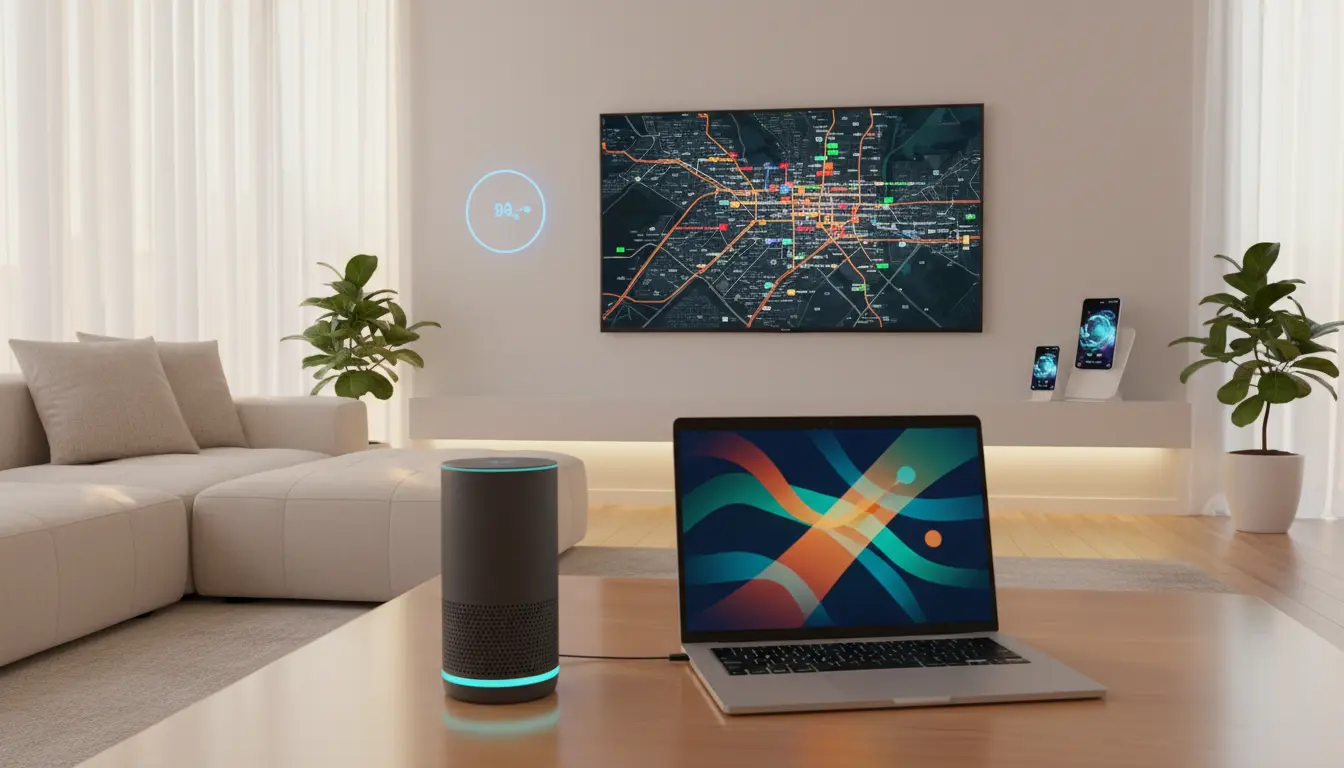
One of the most visible impacts of AI is in our homes. Smart speakers, voice assistants, and connected devices are turning traditional houses into intelligent living spaces.

AI‑powered thermostats learn your schedule and temperature preferences, automatically adjusting heating and cooling to save energy. Smart lighting systems dim or brighten based on occupancy and natural light. Home security cameras use computer vision to distinguish between familiar faces, delivery drivers, and potential intruders, sending real‑time alerts to your phone.
In the US, adoption of smart home devices has grown rapidly, but the trend is global. In Asia and Europe, AI‑based energy management systems are helping households reduce electricity consumption and lower costs. Over time, these AI inventions do more than add comfort; they promote sustainability by optimizing how resources are used in everyday life.
2. AI at Work: Automation, Productivity, and New Professions
At the workplace, AI‑powered tools are transforming the nature of many jobs. Algorithms can analyze large datasets in seconds, summarize complex documents, and automate repetitive tasks like data entry, scheduling, and customer support.
While there are legitimate concerns about job displacement, AI is also creating entirely new professions: prompt engineers, AI ethicists, data annotators, and human‑in‑the‑loop operators. The key trend is not simply replacement but collaboration, where humans and AI work together to achieve higher efficiency and better outcomes.
3. Healthcare: Personalized, Preventive, and More Accessible
Healthcare is one of the most promising fields for AI‑powered innovation. In the United States and other technologically advanced countries, AI is already improving medical diagnosis and patient care.
Machine‑learning algorithms can analyze medical images, such as X‑rays and MRIs, detecting early signs of diseases like cancer with remarkable accuracy. AI‑based screening tools help identify diabetic retinopathy, heart problems, and neurological disorders earlier than traditional methods.
Beyond hospitals, AI‑powered wearables and health apps track heart rate, sleep quality, physical activity, and even stress levels. These devices analyze patterns and send alerts when they detect irregularities, encouraging preventive care. In rural or underserved regions around the world, telemedicine platforms combined with AI assistants help doctors reach more patients and support clinical decisions.
Yet as AI becomes more deeply embedded in healthcare, questions about data privacy, algorithmic bias, and regulatory oversight become critical. Responsible, transparent AI development is essential to maintain trust and protect patient rights.
4. Education: Personalized Learning for All Ages
AI‑powered inventions are reshaping education by making learning more personalized, flexible, and inclusive. Intelligent tutoring systems adjust the difficulty of exercises based on a student’s performance, offering additional support where it is needed most. Language‑learning apps use AI to evaluate pronunciation, grammar, and fluency, giving instant feedback that helps learners improve more quickly.
In classrooms in the US, Europe, and Asia, AI tools help teachers track student progress and identify those who may need extra help. Globally, online education platforms use AI to recommend courses, adapt content to different learning styles, and support lifelong learning for adults.
Importantly, AI can also assist students with disabilities by providing real‑time captioning, text‑to‑speech, and other accessibility features. When designed with inclusion in mind, AI‑powered innovations can expand educational opportunities rather than restrict them.
5. Transportation and Mobility: Safer, Smarter, and More Efficient
AI is revolutionizing how people move within cities and across borders. Navigation apps powered by AI analyze traffic patterns in real time, suggesting the fastest routes and reducing congestion. Ride‑hailing platforms match drivers and passengers more efficiently using predictive algorithms.
Autonomous vehicles are still in the testing phase in many countries, but even partially self‑driving features like lane‑keeping, adaptive cruise control, and automatic emergency braking already enhance road safety. Fleet operators and logistics companies use AI to optimize delivery routes, reduce fuel consumption, and lower emissions.
On a global scale, AI‑driven traffic management systems help large cities manage public transport, traffic lights, and even parking. As these systems expand, transportation becomes not only more convenient but also more sustainable.
6. Shopping, Finance, and Digital Services: Hyper‑Personalized Experiences
E‑commerce, banking, and digital entertainment are among the sectors where everyday users encounter AI the most, often without realizing it.
Recommendation engines suggest products, movies, music, or news articles based on your past behavior and preferences. AI chatbots answer questions about orders, refunds, and account issues at any time of day. In finance, AI algorithms analyze transaction patterns to detect fraud, offer budget insights, and even build personalized investment portfolios.
In both the US and international markets, AI makes services more tailored and responsive. At the same time, it raises important questions about data usage, consent, and digital well‑being. Striking the right balance between personalization and privacy is a major challenge for regulators and businesses worldwide.
7. Global Challenges: Ethics, Regulation, and Digital Inequality
While AI‑powered inventions bring significant benefits, they also introduce complex global challenges. Different regions and countries have distinct approaches to regulating AI, particularly around data protection, surveillance, and algorithmic bias.
There are growing debates about how to ensure AI systems are transparent, fair, and accountable. The risk of deepfakes, misinformation, and automated decision‑making in sensitive areas such as hiring, lending, and law enforcement has triggered demand for robust ethical frameworks.
Another critical issue is the digital divide. Not everyone has equal access to AI‑driven technologies or the high‑speed internet required to use them. Without careful policy and inclusive design, AI could widen existing inequalities between and within countries.
8. The Future: Human‑Centered AI in Everyday Life
Looking ahead, AI‑powered inventions will continue to spread into almost every aspect of daily life. Smart cities will use AI to manage energy, waste, water, and public safety. AI companions and virtual assistants will likely feel more natural, emotional, and conversational.
However, the most successful AI future will be one in which technology serves human values instead of overriding them. This means designing AI systems that are transparent, respectful of privacy, environmentally sustainable, and culturally sensitive. It also means educating citizens about how AI works so they can participate in informed discussions and decisions.
Across the United States and around the world, AI‑powered inventions are already reshaping daily life—not as a distant revolution, but as an ongoing evolution that happens every time we speak to a virtual assistant, receive a personalized recommendation, or benefit from a smarter public service. The challenge and opportunity for societies everywhere is to guide this transformation in a way that empowers people, protects their rights, and creates a more inclusive and sustainable future.