
Apple M4 Chip Performance: What It Means for Creators
Apple continues to reshape the creative workflow with every new chip generation, and the Apple M4 chip performance marks another major step forward. For creators, performance is not just about benchmark scores. It affects how fast videos render, how smoothly timelines play back, how quickly photos process, and how efficiently creative apps handle demanding tasks. Whether you edit 4K footage, design detailed graphics, produce music, or work with AI-assisted tools, the Apple M4 chip changes what is possible on a lightweight machine.
The biggest reason creators care about the M4 is simple: it blends speed, power efficiency, and intelligent processing in a way that feels practical in day-to-day work. Instead of only chasing raw power, Apple focuses on performance that actually improves professional workflows. That makes the M4 especially relevant for video editors, photographers, designers, music producers, and digital artists who need fast results without sacrificing portability.
Why the Apple M4 Chip Matters More Than a Simple Upgrade
At first glance, many people assume the M4 is just another annual refresh. In reality, it represents a more refined balance between CPU speed, GPU power, Neural Engine capability, and battery efficiency. For creators, that balance matters more than a single impressive number on a spec sheet.
Creative professionals often run multiple heavy applications at the same time. A video editor may use Final Cut Pro while keeping a browser, cloud storage app, frame review tools, and messaging software open. A photographer may jump between Adobe Lightroom and Photoshop while handling large RAW photo editing files. A music producer may layer tracks, effects, and virtual instruments inside Logic Pro. In these situations, the M4 does not only help with bursts of speed. It helps maintain smooth performance across the entire session.
That is why Apple silicon performance has become such a powerful talking point in the creator economy. It supports real-world multitasking rather than isolated tests.
Faster Workflows for Video Editors
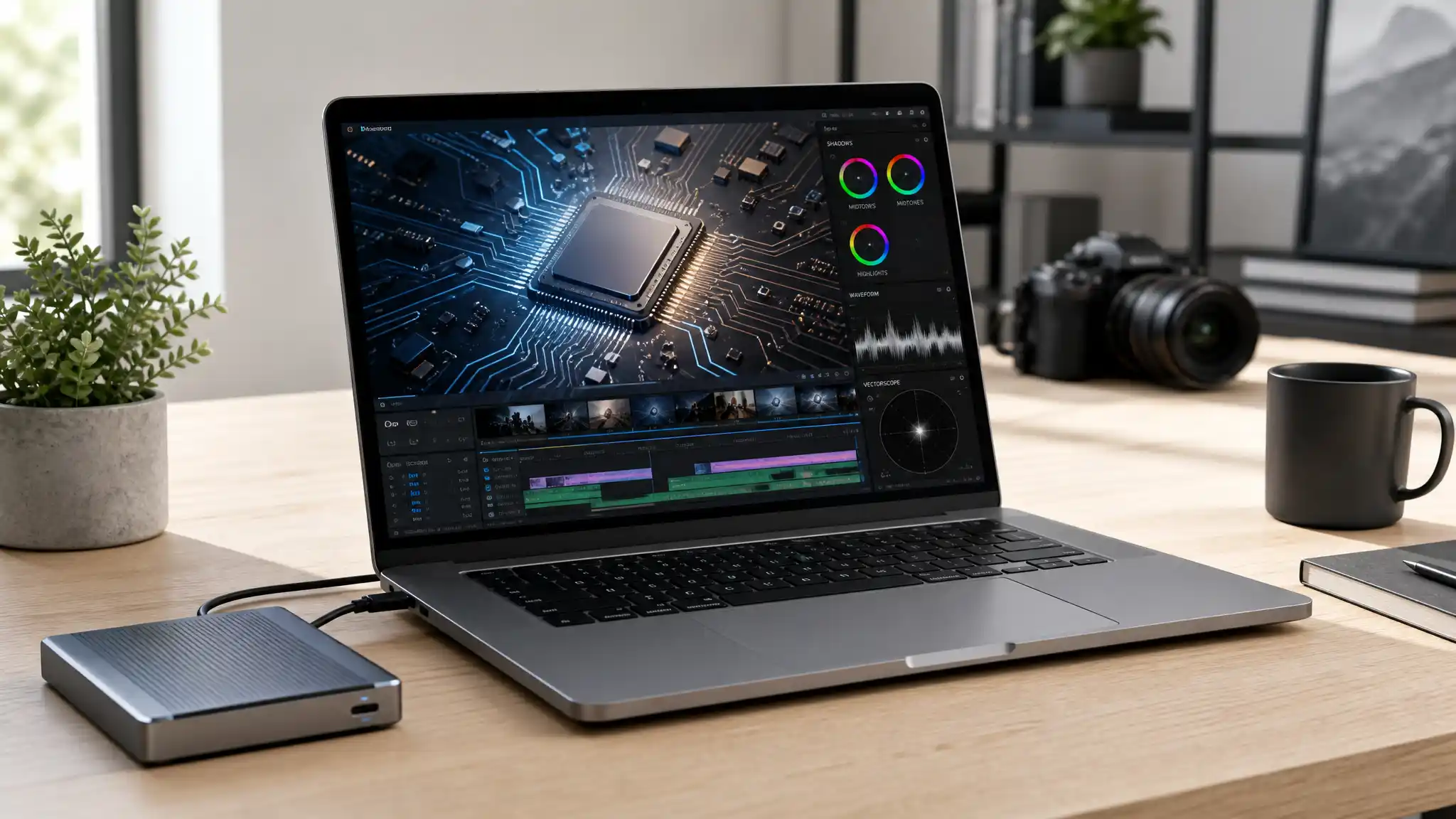
Video creators are among the biggest winners of the M4 generation. Modern video editing demands more than CPU strength. Editors need fast media decoding, responsive timeline playback, smoother effects previews, and efficient export performance. The Apple M4 chip performance addresses each of these needs in a meaningful way.
When creators work with 4K video editing or even more demanding formats, playback stability becomes critical. Dropped frames interrupt concentration and slow down decision-making. The M4 helps reduce these bottlenecks by improving processing efficiency and graphical responsiveness. That means editors can scrub through footage more confidently, add transitions with less lag, and preview edits with greater consistency.
For creators who produce content for YouTube, commercial campaigns, courses, or social media, time matters. Faster rendering and export speed can save hours every week. Those savings add up quickly for freelancers, agencies, and in-house creative teams. Instead of waiting on the machine, creators spend more time refining the story, color, pacing, and sound.
The M4 also supports the growing demand for mobile production. Many creators now edit while traveling, working on set, or moving between studios. A device powered by the M4 can support portable creative workstation needs without forcing users to give up speed for battery life.
Better Performance for Photographers and Designers
Photographers and visual designers often work with massive files, layered compositions, and precision adjustments. These tasks require both computational speed and stable memory behavior. The M4 improves performance in ways that directly affect editing comfort.
In photo workflows, speed shows up in small but important moments. Images import faster. Previews generate more quickly. Batch edits feel more fluid. AI-based masking and enhancement tools respond with less delay. When you edit hundreds of images from an event, campaign, or client shoot, those small gains become a major productivity advantage.
Graphic designers also benefit from the GPU performance boost and stronger app responsiveness. Large canvases, complex typography systems, multi-layer illustrations, and high-resolution assets place constant pressure on the machine. The M4 helps creative software stay responsive even when projects grow more demanding.
This matters because design is an iterative process. Creators test layouts, undo decisions, compare versions, and fine-tune details. Slow hardware interrupts that creative rhythm. The M4 helps protect the momentum that designers need to stay in flow.
AI Tools Become More Practical for Everyday Creation
One of the most important shifts in modern creative work is the rise of AI-powered workflows. Today, creators use AI for image selection, background cleanup, voice isolation, transcription, caption generation, content ideation, and smart editing assistance. The stronger Neural Engine in Apple’s silicon strategy makes these tasks more practical on-device.
For creators, on-device AI features offer two clear benefits. First, they often feel faster because they reduce the need to send every task to the cloud. Second, they help protect sensitive project files, private client assets, and unreleased media. This is especially valuable for professionals working with confidential campaigns, brand materials, or pre-release creative content.
The Apple M4 chip performance becomes even more meaningful in this context. It is not just about editing faster. It is about supporting the next generation of creative tools that depend on machine learning. As more apps add intelligent automation, creators will benefit from a chip that can handle those features efficiently without draining power too quickly.
Battery Life and Efficiency Matter to Creators More Than Ever
Raw performance gets attention, but battery life and thermal efficiency often decide whether a laptop feels professional in the real world. The M4 stands out because it continues Apple’s pattern of delivering strong performance per watt. That is a major advantage for creators who work outside a traditional desk setup.
A filmmaker reviewing footage on location, a photographer editing in transit, or a designer working from a client site needs a laptop that stays cool, quiet, and productive. If performance drops under sustained use, the workflow suffers. If battery drains too quickly, the device becomes less dependable. The M4 helps solve both issues by improving power efficiency while maintaining strong output for demanding tasks.
This also changes the value equation for creative buyers. Many creators do not want the heaviest machine available. They want a system that travels well, lasts longer, and still handles professional apps with confidence. That is where the M4 becomes especially compelling.
What the M4 Means for Music Producers and Audio Creators
Music production rarely gets the same spotlight as video editing, but it places equally serious demands on a system. Audio creators run multiple plugins, instruments, sample libraries, and real-time effects. Latency, stutter, and instability can ruin a productive session.
The M4 helps music producers by supporting smoother project handling and stronger overall responsiveness. Sessions with many tracks, layered instruments, and complex processing chains benefit from better system efficiency. Logic Pro users, podcasters, sound designers, and composers can all gain from this more stable performance environment.
For voice creators and audio editors, the M4 also supports faster file handling and cleaner multitasking. That matters when recording, editing, mixing, exporting, and publishing content within tight production windows.
Is the Apple M4 Enough for Professional Creators?
For many creators, yes. The more important question is not whether the M4 is powerful, but whether it is powerful enough for the type of work they actually do every day. For video editors handling standard professional workloads, photographers processing large libraries, designers building high-resolution assets, and music producers working on advanced sessions, the answer is often yes.
Of course, some creators still need more. High-end 3D rendering, advanced visual effects work, massive simulation tasks, and extremely heavy multi-stream productions may push users toward more specialized or higher-tier hardware. But that does not reduce the significance of the M4. In fact, it highlights its biggest strength: it brings a highly capable level of professional performance to a broader range of creators.
That is why the M4 feels less like a niche processor and more like a mainstream creative engine.
Final Verdict
The Apple M4 chip performance means one thing above all for creators: less friction. It shortens waiting time, improves responsiveness, and supports the kind of smooth multitasking that creative professionals need every day. It strengthens video editing, accelerates photo work, supports AI-driven tools, and delivers better efficiency for mobile workflows.
For content creators, designers, musicians, and photographers, the M4 is not only about speed. It is about consistency, portability, and creative freedom. It helps professionals stay focused on ideas instead of technical slowdowns. That is the real story behind the M4.
As creative software keeps evolving toward smarter automation, higher resolution assets, and more demanding production pipelines, Apple’s M4 positions itself as a strong foundation for the next wave of digital creation. For many users, it may be the chip that makes professional-grade creative work feel more accessible, more mobile, and more efficient than ever before.
Amazon.com Product Recommendation
Recommended product: Samsung T9 Portable SSD 2TB
Why it fits this topic: creators using Apple M4 devices often need fast external storage for 4K footage, photo libraries, project backups, and portable editing workflows.