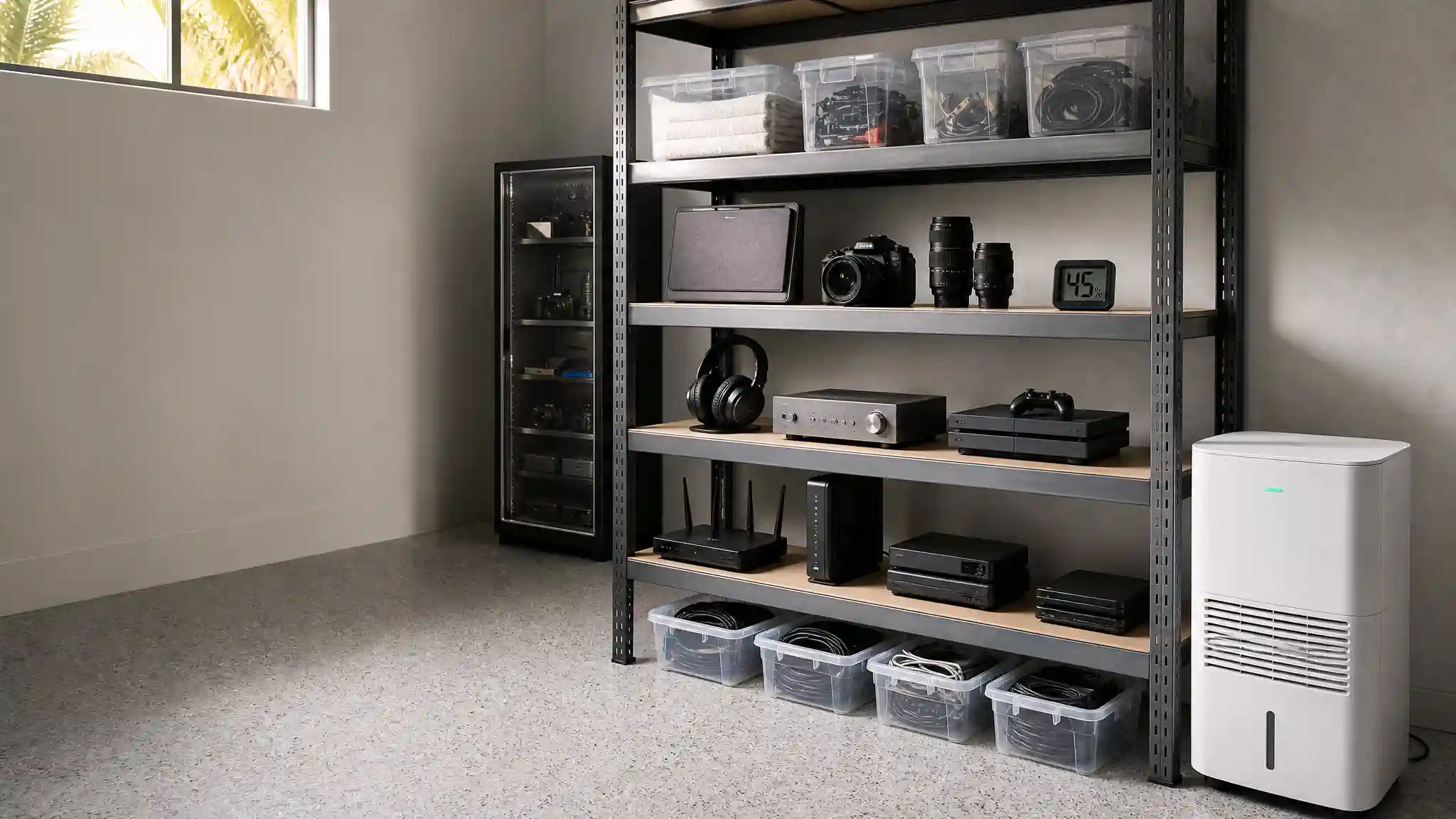

Best Dehumidifiers for Storing Electronics in Humid Florida
Florida humidity can turn a clean storage room into a costly risk zone for electronics. When moisture settles on circuit boards, connectors, batteries, and metal contacts, it can accelerate corrosion and cause intermittent failures. A reliable dehumidifier does more than make a room feel comfortable. It creates a controlled environment that helps protect electronics from humidity before damage becomes visible.
Why Florida Electronics Storage Needs Active Moisture Control
High relative humidity is the central issue. Even when a room looks dry, humid air can remain trapped around boxed equipment and inside cabinets. Temperature changes can create condensation on electronics. That moisture may affect laptops, cameras, televisions, gaming consoles, audio equipment, networking gear, and spare components.
For most stored electronics, aim to maintain relative humidity between 40% and 50%. This range supports moisture control without making the area excessively dry. A digital hygrometer lets you confirm actual conditions rather than relying on a dehumidifier display alone. Place one sensor near the equipment and another near the unit, because humidity can vary across a larger room.


Choose the Right Dehumidifier Type
A compressor dehumidifier is usually the strongest choice for a warm Florida garage, utility room, or storage area. These units remove substantial moisture and perform efficiently in warm conditions. Look for a model with an adjustable humidistat, automatic restart, and a continuous drain option. Continuous drainage prevents an unexpectedly full bucket from stopping moisture removal while you are away.
For a small closet, media cabinet, or sealed storage box, a compact dehumidifier may be enough. However, do not expect a miniature unit to control a large, humid room. Use it only in the enclosed space it can realistically serve. For valuable cameras, lenses, hard drives, or test instruments, an electronic dry cabinet offers more precise protection. This sealed cabinet combines a humidity sensor, shelves, and quiet active drying to protect sensitive gear directly.
Match Capacity to the Storage Space
Select capacity based on the room, not simply the number of devices. A small closet may need a compact unit, while a garage or storage room needs a higher-capacity machine. Florida conditions often demand more moisture removal than a similarly sized room in a dry climate. Open doors, concrete floors, poor insulation, and outdoor air leaks all increase the load.
Measure the square footage, then consider the room’s moisture sources. A dehumidifier for garage use should handle humid outdoor air, vehicles that bring in rainwater, and unsealed walls. A basement dehumidifier can also work well in a lower-level storage room, but verify its coverage rating and drainage setup. Choose a unit with capacity margin instead of running a small machine continuously at maximum effort.
Prioritize Features That Protect Equipment
An accurate humidistat gives you control over the humidity target. Set the appliance near 45% RH, then observe the reading for several days. A built-in pump or drain hose connection provides the best low-maintenance setup when a floor drain or suitable drain route is available. If you must use a bucket, select automatic shutoff and check it frequently.
Choose auto defrost and automatic restart after interruptions.
Build a Better Electronics Storage System
A dehumidifier works best as part of a complete humidity control plan. Store electronics on shelves rather than directly on a concrete floor. Leave space between boxes and walls so air can circulate. Use airtight storage containers for smaller valuables, but avoid sealing items that already contain moisture. Let wet or recently outdoor-used equipment dry first.
Add silica gel packets inside cases, drawers, and sealed containers as a secondary defense. Replace or recharge them according to their indicator and instructions. Silica gel cannot solve a damp room by itself, yet it offers targeted protection around cameras, cables, batteries, and accessories. Use corrosion protection practices too: keep original dust covers, place gear in padded cases, and inspect metal terminals periodically.
Avoid common mistakes. Do not place the dehumidifier against a wall or behind stacked boxes, because restricted airflow reduces performance. Do not run a drain hose upward unless the unit has a pump designed for that task. Do not rely on an air conditioner alone, since cooling cycles may not provide steady moisture removal. Finally, do not store electronics in cardboard boxes for long periods if the room remains damp; plastic bins with secure lids offer stronger moisture resistance.
Monitor Results and Maintain the Unit
Check humidity readings weekly at first and after major weather shifts. Empty and clean the water bucket if you do not use continuous drainage. Clean the filter on the schedule recommended by the manufacturer, and inspect the hose for kinks or leaks. If RH remains above 55%, improve door seals, reduce outside-air infiltration, or move to a larger unit.
Pay attention to warning signs. A musty odor, fogged plastic containers, tarnished connectors, mold on cardboard, or water droplets indicate that the storage environment needs immediate attention. Act early. Preventive moisture control costs far less than replacing corroded circuit boards or recovering data from a damaged drive.
Make a Practical Choice for Florida Storage
The best dehumidifier for electronics storage in humid Florida balances removal capacity, accurate humidity settings, reliable drainage, and the realities of the space. Use a compressor model for an entire garage or storage room, and add a dedicated dry cabinet for smaller high-value items. This layered approach keeps ambient humidity down while giving delicate equipment additional protection.
Product recommendation: For cameras, lenses, compact electronics, and other valuable items that fit inside a dedicated enclosure, consider the TECHTONGDA 50L Dehumidifying Dry Cabinet Box on Amazon. Its listing states that it offers adjustable 25% to 60% relative-humidity control, a humidity sensor, sealed glass door, adjustable shelves, and quiet thermoelectric operation. Confirm price and suitability before purchase on Amazon.com.