
OLED TVs continue to be the gold standard for home theater in 2025. Thanks to self-emissive pixels that can turn completely off, OLED panels deliver perfect blacks, infinite contrast, precise pixel-level luminance control, and stunning color volume. This year’s models push brightness higher, reduce image retention risk, and add next‑gen gaming and smart features. If you’re deciding between premium flagships and value‑driven options, this guide explains what matters most, how the latest MLA/QD‑OLED technologies compare, and which sizes and models fit different rooms and budgets.
Why OLED Still Leads in 2025
- Perfect black levels and contrast: Each pixel emits its own light, enabling true black without blooming.
- Exceptional HDR impact: With deeper blacks and higher peak brightness on new panels, specular highlights pop while preserving near‑black shadow detail.
- Wide viewing angles: Colors and contrast remain consistent off‑axis, ideal for living rooms with multiple seating positions.
- Ultra-fast response times: Near‑instant pixel transitions make motion remarkably clean for sports and gaming.
Mini‑LED LCDs have improved a lot, especially in brightness, but even the best full‑array local dimming sets struggle to match OLED’s pixel‑level precision. For most viewers who watch in moderate to dim rooms, OLED remains the most cinematic option.
Panel Technologies: WOLED, MLA, and QD‑OLED
- WOLED (White OLED): The most common OLED stack used by many brands. 2025 panels are brighter and more efficient than past generations.
- MLA (Micro Lens Array): A lens layer that boosts perceived brightness by improving light extraction. It can increase peak nits and sustain brighter small highlights without as much ABL (Automatic Brightness Limiter) impact.
- QD‑OLED: Uses blue OLED emitters with quantum dots for red/green conversion. Known for excellent color purity and high luminance in bright colors, with superb viewing angles.
Both MLA WOLED and QD‑OLED deliver excellent HDR punch in 2025. QD‑OLED often shows slightly more color brightness, while MLA WOLED can be a touch more efficient in mixed scenes. At the couch, differences are subtle; calibration and processing play big roles.


Key Buying Factors
- Brightness and HDR
- Look for models with high peak brightness (especially in 2–10% windows) for impactful HDR highlights.
- Check how often ABL dims large bright scenes; newer premium OLEDs handle full‑field brightness better than older ones.
- Color Accuracy and Tone‑Mapping
- Out‑of‑box accuracy is improving, but Filmmaker Mode or Cinema modes are typically best.
- Dynamic tone mapping varies by brand—some lift midtones for more “pop,” while others preserve creator intent. Choose based on your taste.
- Gaming Features
- HDMI 2.1 with 4K120, VRR (including G‑SYNC/FreeSync compatibility), ALLM, and low input lag are now standard on better models.
- Game optimizer dashboards, black level boosting, and HGIG support enhance consistency for console and PC gaming.
- Smart TV Platform
- Interfaces (webOS, Tizen, Google TV) affect app selection, UI speed, and voice control. Consider your preferred ecosystem.
- Sizes and Viewing Distance
- 55–65 inches fits most living rooms. 77–83 inches amplifies immersion for home theater. 42–48 inches suits desks or compact spaces.
- Burn‑In Mitigation
- Modern OLEDs include pixel shift, logo dimming, panel refresh, and smarter static element detection. For mixed use, long‑term risk is very low.
Best Use Cases by Viewer Type
- Movie lovers in dim rooms: OLED offers unmatched black levels and shadow detail—choose a flagship for reference‑grade HDR.
- Sports fans: OLED’s fast response and superb off‑axis viewing keep motion clean and colors uniform for group viewing.
- Gamers: With ultra‑low lag and full HDMI 2.1 features, OLED is the top choice; consider brightness and ABL if you play in daylight.
- Bright rooms: If you battle direct sun, pick the brightest OLEDs (MLA/QD‑OLED) and use an anti‑reflective screen with higher peak luminance.
Picture Processing and Motion
Beyond panel tech, the image processor determines upscaling quality, artifact handling, noise reduction, and motion interpolation. Premium 2025 processors do a better job with compressed streaming content, maintaining detail without over‑sharpening. For motion, many users prefer minimal interpolation to avoid the “soap opera effect,” relying on OLED’s inherent fast response for clarity.
Audio Considerations
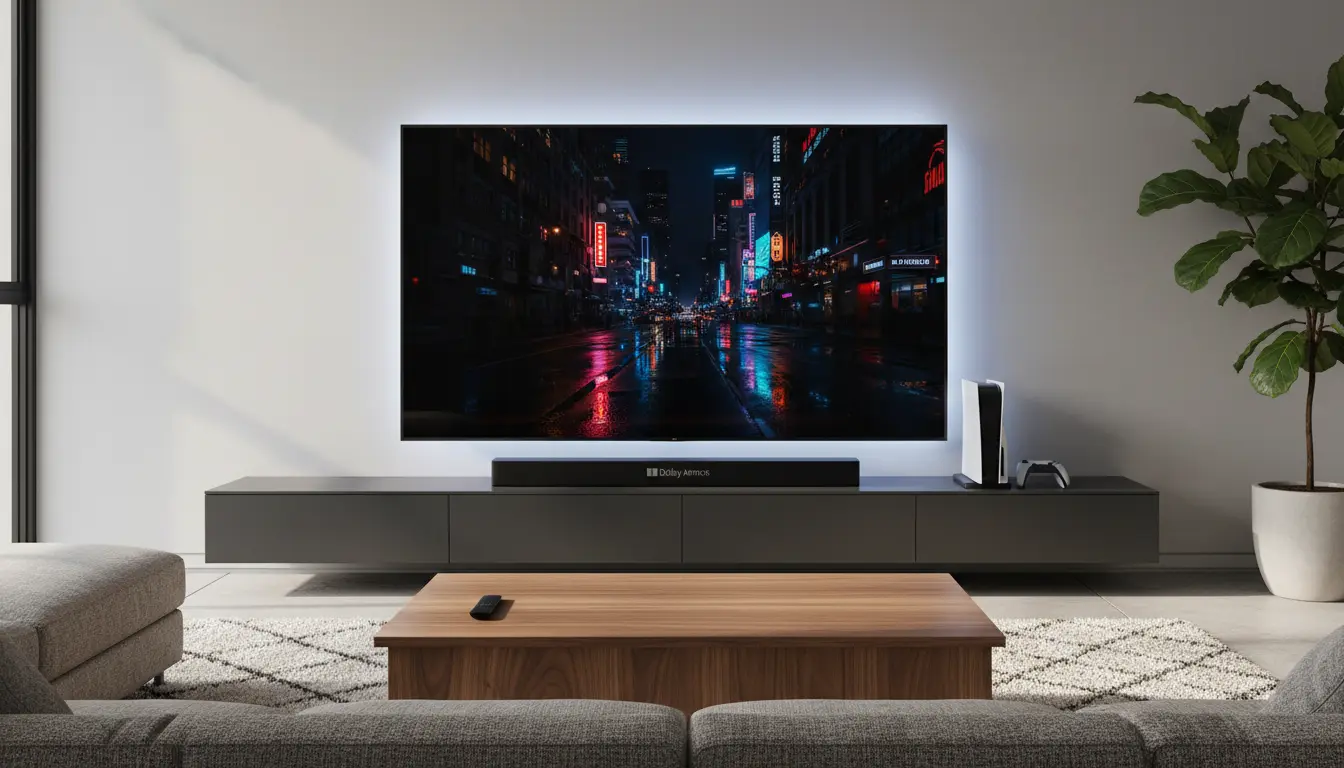
While some flagship OLEDs integrate panel‑vibration speakers or enhanced soundbars, most setups benefit from an external sound system. Pair your TV with a Dolby Atmos soundbar or an AVR and speaker kit for cinematic immersion. eARC support ensures lossless audio passthrough.
Connectivity and Smart Features
Expect at least four HDMI ports (often two to four with full HDMI 2.1 bandwidth), Wi‑Fi 6/6E for smoother streaming, and robust app stores. Voice assistants and smart home integrations are common. Gamers should verify 48 Gbps HDMI ports for 4K120 with HDR and VRR on multiple inputs if they connect more than one next‑gen device.
Calibration and Picture Modes
- For accuracy: Use Filmmaker/Cinema modes with Warm color temperature.
- Adjust motion smoothing: Set to Low or Off for films; a touch of de‑judder can help sports.
- HDR tone mapping: Try HGIG when a console game supports it; otherwise, brand‑specific dynamic mapping can add highlight detail.
A professional calibration can extract the last 5–10% of performance, but many 2025 OLEDs look excellent with careful user tweaks.
Energy Efficiency and Longevity
2025 OLEDs incorporate more efficient emitters and algorithms to reduce power draw, especially in SDR. Pixel refresher cycles and logo dimming extend panel life. For typical mixed content viewing, panel longevity is excellent; avoid leaving static UI screens up for many hours.
How to Choose the Right Size
- 2.0–2.5x screen height is a good rule of thumb for cinematic immersion with 4K content.
- If your seating is 2.5–3 meters from the TV, 77 inches can be a sweet spot; smaller rooms can go 55–65 inches.
Budget vs Premium
- Value OLEDs: Offer core OLED benefits at lower prices, often with slightly less brightness and fewer premium audio features. Still fantastic for movies and gaming.
- Premium flagships: Higher brightness (MLA/QD‑OLED), improved heat management, more advanced processors, and better anti‑reflective treatments. Ideal for bright rooms or reference HDR enthusiasts.
Setup Tips for the Best Experience
- Use an anti‑glare placement and avoid direct sunlight if possible.
- Enable HDMI Ultra/Enhanced mode for 4K120 and HDR on each input.
- Turn on eARC for lossless Dolby Atmos passthrough to your sound system.
- Run the panel’s pixel refresher as scheduled; don’t interrupt it.
The Bottom Line
In 2025, OLED remains the most cinematic TV tech for most homes. With brighter panels, refined processing, excellent gaming features, and comprehensive burn‑in protections, the latest OLEDs deliver a premium experience that’s hard to beat. Decide based on your room brightness, content mix, and budget, but rest assured: whether you choose a high‑value OLED or a top‑tier flagship, you’re getting world‑class picture quality.
Top 3 OLED TV Picks for 2025
1) LG G4 OLED (MLA WOLED) — Balanced Brightness and Cinematic Accuracy
The LG G4 OLED stands out with its new MLA (Micro Lens Array) panel, offering stunning peak brightness and perfect blacks while minimizing ABL limitations. Colors are highly accurate in Filmmaker Mode, and the webOS interface is smooth and intuitive. With four HDMI 2.1 ports (4K120, VRR, ALLM) and ultra‑low input lag, it’s ideal for both movie lovers and gamers. Its flush‑to‑wall “Gallery Design” makes it a centerpiece in modern living spaces.
2) Samsung S95D QD‑OLED — Vivid Colors and Excellent Reflection Control
Samsung’s S95D continues to push QD‑OLED technology forward with remarkable brightness, rich color volume, and superb off‑axis performance. HDR content pops with intense specular highlights, while gamers enjoy 4K120/144Hz, VRR, and superb motion clarity. The new anti‑reflective coating also helps maintain contrast in bright rooms, making it perfect for daytime viewing or multi‑use living spaces.
3) Sony A95L (or 2025 equivalent) QD‑OLED — Elite Processing and Film Accuracy
Sony’s flagship QD‑OLED uses the brand’s advanced Cognitive Processor XR for outstanding image processing. It delivers near‑reference color accuracy, natural motion handling, and exceptional tone‑mapping for Dolby Vision content. It’s also ready for gaming with HDMI 2.1, VRR, and ALLM. For cinephiles who want out‑of‑the‑box excellence and high‑end cinematic realism, this TV is a top contender.