
Best Power Products for Remote Workers and Digital Nomads
Staying powered up is one of the biggest challenges for remote workers and digital nomads. Whether you work from a van, hop between co‑working spaces, or run your business from beach cafés, your laptop, phone, and accessories must stay charged all day. The right power products for remote workers and digital nomads can make the difference between a productive workday and lost income due to dead batteries.
In this guide, you’ll discover the key power solutions you need on the road: high‑capacity power banks, compact travel adapters, portable power stations, and smart charging accessories. We’ll also look at what features actually matter in real life—so you don’t waste money on gadgets that look great on paper but fail when you’re mid‑call with a client.
Why Reliable Power Matters for Digital Nomads
When you live or travel full‑time on the road, your workday is unpredictable. You may find yourself:

- Uploading large files on a long train ride
- Taking video calls in airports with limited outlets
- Working from cafés where power sockets are already in use
- Camping off‑grid with no access to conventional electricity
In all these cases, portable power solutions keep your devices running. A single high‑capacity power bank or compact travel power strip can protect you from lost deadlines, missed meetings, and unnecessary stress. Reliable power is not a luxury; it’s part of your professional toolkit.
Essential Types of Power Products for Remote Work
1. High‑Capacity Power Banks
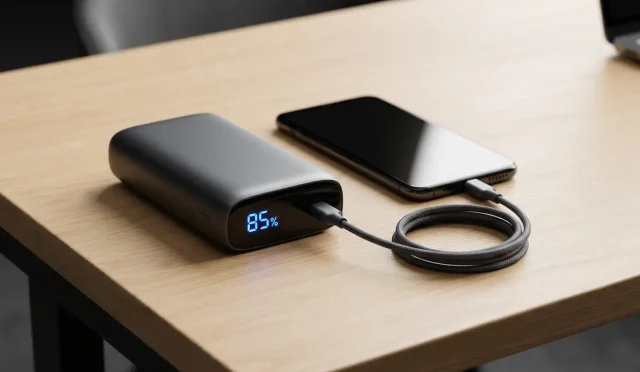
For most digital nomads, a high‑capacity power bank is the number one must‑have. Look for:
- Capacity (mAh or Wh): Higher capacity means more laptop and phone charges. For serious remote work, aim for at least 20,000–25,000mAh.
- Output power (W): Modern laptops, especially MacBooks and ultrabooks, often need 60W–100W USB‑C PD (Power Delivery) for fast and stable charging.
- Multiple ports: If you run a phone, tablet, and laptop, you need at least 2–3 output ports.
- Pass‑through charging: This lets you charge the power bank and your devices at the same time—perfect when you only have one wall outlet.
For long travel days, a TSA‑approved power bank with strong output and multiple ports can replace the need to hunt for outlets at every stop.
2. Travel Adapters and Compact Power Strips
If you work internationally, a universal travel adapter is essential. Key features:
- Support for multiple plug types (US, EU, UK, AU and more)
- Built‑in USB‑A/USB‑C ports so you can charge multiple devices at once
- Surge protection to keep your tech safe from unstable power grids
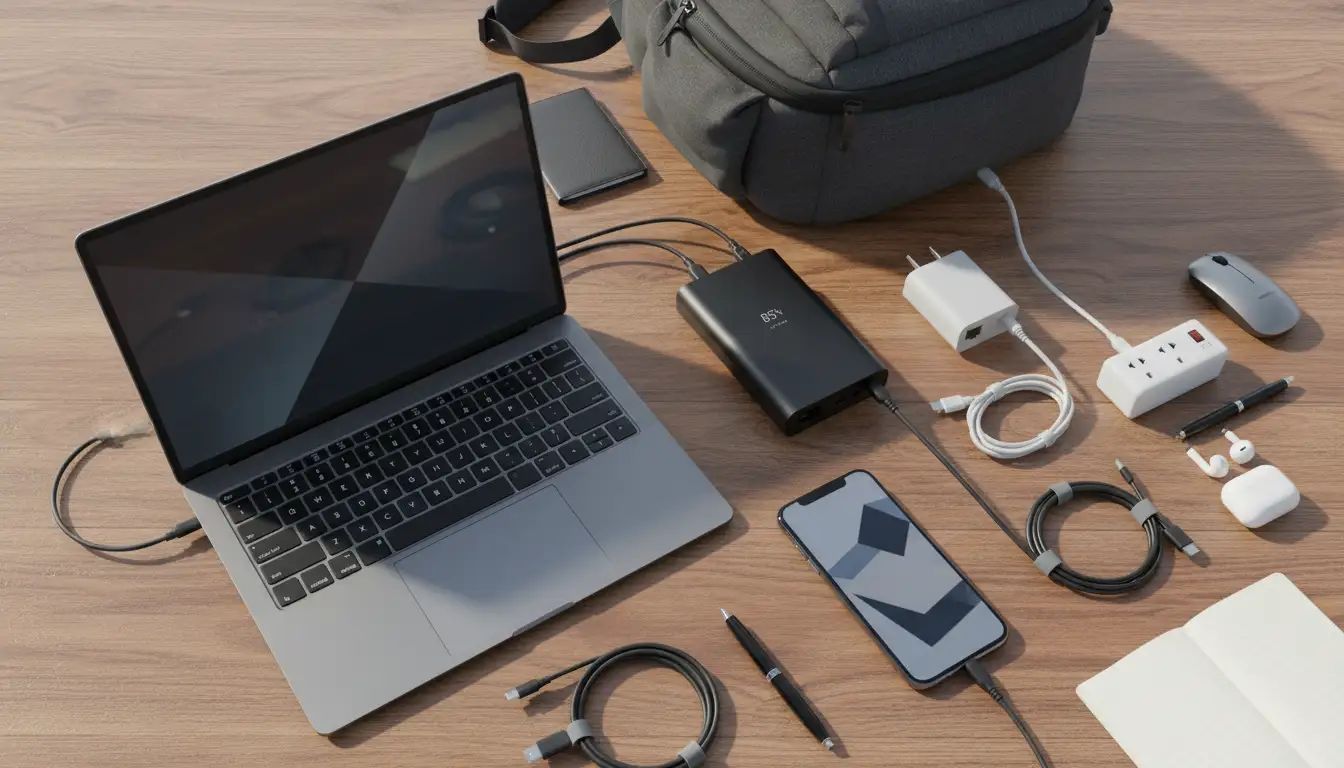
Pair this with a compact travel power strip that has a short cable and several outlets. This combination lets you turn one hard‑to‑reach wall socket into a mini charging station for all your devices.
3. Portable Power Stations for Off‑Grid Work
If you spend time in vans, cabins, or off‑grid locations, a portable power station can power more than just laptops and phones. Smaller models can handle:
- Laptops and monitors
- Camera batteries and drones
- Wi‑Fi routers
- Small LED lights
Look for units with pure sine wave AC outlets, USB‑C PD ports, and optional solar panel input if you plan to stay off‑grid for longer periods.
Key Features to Look for in Power Products
Fast and Efficient Charging
For remote workers, time is money. You don’t want to spend hours waiting for your laptop to reach a usable level. Prioritize:
- USB‑C PD 65W–100W for modern laptops
- High‑wattage multi‑port output so you can power several devices without major slowdowns
- Smart power management that automatically optimizes distribution between devices
Portability and Build Quality
Digital nomads move constantly, so your gear needs to be:
- Compact and lightweight enough to fit in a daypack or carry‑on
- Durable, with solid casing and good heat management
- Designed to withstand frequent plugging, unplugging, and travel vibration
A power product that’s slightly heavier but more robust often lasts longer and feels safer to rely on during critical work sessions.
Safety and Certification
You’ll often plug in your most important (and expensive) devices. Make sure your gear includes:
- Over‑voltage and over‑current protection
- Temperature control and short‑circuit protection
- Certifications in your main markets (e.g., CE, FCC, UL, etc.)
These features reduce the risk of damage to your laptop or phone and give you peace of mind when charging overnight.
Power Management Tips for Remote Workers
Even the best digital nomad power solutions work better when you manage your energy usage carefully. A few practical habits:
- Charge strategically: Top up your power banks whenever you have stable access to outlets—co‑working spaces, hostels, trains, and airports.
- Prioritize essentials: During long travel days, keep your laptop and phone at the top of your charging list; secondary devices can wait.
- Lower your power draw: Dim your screen, close heavy apps, and turn off Bluetooth or unused Wi‑Fi networks while on battery power.
- Use device‑specific cables: Quality USB‑C and Lightning cables support faster, more stable charging with less heat and loss.
These small adjustments can extend your effective battery life and reduce how often you need to recharge.
Recommended Power Product for Digital Nomads
For a practical, real‑world option that fits the needs of most remote workers, consider the Anker Prime Power Bank, 26,250mAh 3‑Port Portable Charger with 300W Max Output, Two‑Way Charging, TSA‑Approved, App Control, for MacBook, iPhone 17/16 Series, and More (Base Not Included) on Amazon.
Why it stands out for digital nomads:
- 26,250mAh capacity: Enough to recharge a laptop and phone multiple times, ideal for long flights and bus rides.
- Up to 300W total output: Plenty of power for modern MacBooks and other USB‑C laptops, plus phone and tablet charging at the same time.
- Three ports: You can run your primary work setup—laptop, phone, and another device—without swapping cables constantly.
- Two‑way fast charging: The power bank itself recharges quickly, so short time near an outlet is enough to get you through another full workday.
- TSA‑approved: You can bring it in your carry‑on luggage, which is crucial for frequent flyers.
- App control: You can monitor battery levels and charging behavior more precisely, helping you plan your work sessions around available power.
For many remote workers and digital nomads, this type of high‑end power bank becomes a central part of their mobile office, supporting productivity wherever they choose to work.