
Best Speakers for Movies and TV Series: A Complete Guide
Choosing the best speakers for movies and TV series can completely transform your home entertainment experience. Explosions feel more powerful, dialogues become clearer, and background details you never noticed before suddenly come to life. In this guide, we’ll explore how to choose the best speakers for cinematic sound at home, the different types of speaker systems, and what features truly matter if you want an immersive, theater-like experience in your living room.
Why Your Speaker Choice Matters for Movies and TV
Modern movies and TV shows are mixed with highly detailed soundtracks: subtle ambience, directional sound effects, and layered musical scores. Built‑in TV speakers are simply not designed to reproduce this complexity. They often lack:
- Deep, impactful bass
- Clear dialogue
- Precise surround effects
A dedicated speaker system solves these issues by providing a wider soundstage, better dynamics, and accurate positioning of sound. If you watch a lot of movies and series, upgrading your speakers is one of the most effective ways to improve your setup without changing your TV.
Key Features to Consider When Choosing Speakers
When searching for the best speakers for movies and TV, focus on these fundamental factors:
- Soundstage and Imaging
A wide soundstage makes your room feel like it’s filled with sound, rather than everything coming from the TV. Good speakers create the illusion of sound moving across the screen and around you, so car chases, crowd scenes, and big battle sequences feel more realistic. - Dialogue Clarity
For movies and series, dialogue clarity is crucial. Many users complain that they can’t hear voices clearly while background music is too loud. A high-quality center channel speaker can greatly improve dialogue intelligibility by focusing on midrange frequencies where human voices sit. - Frequency Response and Bass Performance
Full-range speakers or a dedicated subwoofer are essential for reproducing low‑frequency effects like explosions, thunder, or musical bass lines. Look for speakers that can handle a wide frequency range with minimal distortion. A powered subwoofer extends bass depth, adding impact and realism. - Room Size and Speaker Power
A compact soundbar may be sufficient for small rooms, while larger spaces benefit from floorstanding speakers or a full surround setup. Consider:- Small rooms: 2.1 system or mid‑range soundbar
- Medium rooms: 3.1 or 5.1 system
- Large rooms: 5.1.2 or 7.1 system with Dolby Atmos support
- Connectivity and Compatibility
Make sure your speakers or AV receiver support HDMI ARC/eARC, optical input, or Bluetooth depending on your TV and streaming devices. For immersive formats like Dolby Atmos or DTS:X, you’ll need compatible hardware.
Types of Speaker Systems for Movies and Series
There are several speaker configurations suitable for enjoying films and TV shows at home. Your choice will depend on your budget, space, and performance expectations.
1. Soundbars: Simple and Space‑Saving
Soundbars are compact speaker systems that sit under or in front of your TV. They are ideal if you want cleaner sound without complicated wiring.
- Advantages:
- Easy setup
- Minimal cables and clutter
- Often include wireless subwoofers
- Limitations:
- Narrower soundstage than separate speakers
- Virtual surround is good but not as convincing as true surround speakers
Premium soundbars with Dolby Atmos can simulate height effects using upward‑firing drivers, making them a strong choice for users who want immersive sound with minimal effort.
2. 2.1 and 3.1 Speaker Systems: A Big Step Up
A 2.1 system consists of two front speakers and a subwoofer, while a 3.1 system adds a dedicated center speaker. These configurations offer a more cinematic experience than TV speakers or basic soundbars.
- 2.1 System:
- Better stereo separation
- Stronger bass
- Good entry point for movie lovers
- 3.1 System:
- Enhanced dialogue clarity through the center channel
- More stable sound across the listening area
- Easier to upgrade to full surround later
3.1 setups are particularly attractive if you watch a lot of TV series where dialogue and subtle sound details are important.
3. Full Surround Sound: 5.1, 7.1, and Beyond
For true home theater performance, 5.1 or 7.1 surround systems are the most popular choices. These setups include:
- Front left and right speakers
- Center channel speaker
- Two or four surround speakers
- One or more subwoofers
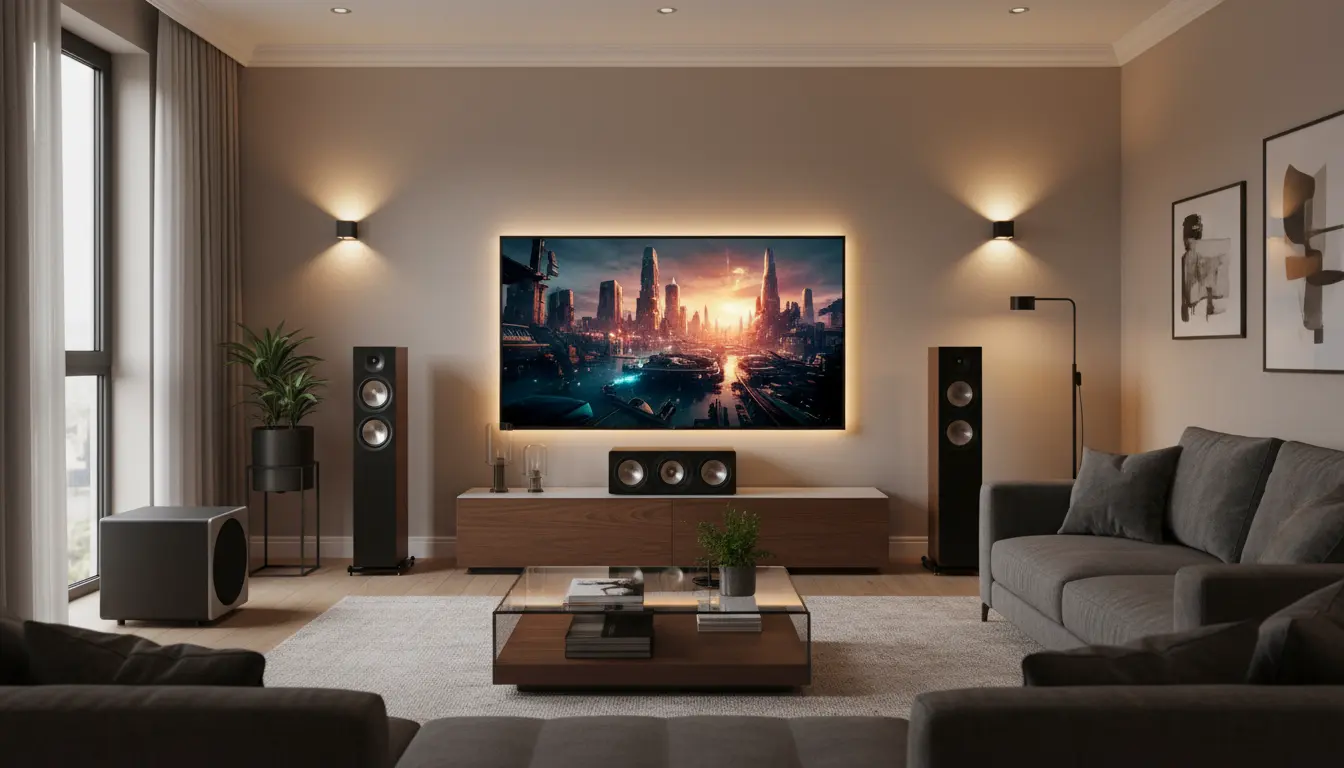
5.1 systems provide basic surround sound, while 7.1 systems add extra rear speakers for more precise spatial effects. With proper placement, surround speakers can deliver immersive soundscapes where footsteps, rain, crowds, and vehicles move realistically around the room.
4. Dolby Atmos and 3D Audio Systems
If you want the most advanced cinematic sound, consider a Dolby Atmos or similar 3D audio system. These add height speakers or upward‑firing drivers to create a vertical dimension of sound.
- Helicopters feel like they’re above you
- Rain sounds like it’s falling from the ceiling
- Expansive environments become more believable
You can get Atmos through soundbars, in‑ceiling speakers, or upward‑firing modules placed on top of your existing speakers.
How to Place Your Speakers for the Best Results
Even the best speakers for movies and TV won’t perform well if they’re poorly positioned. Correct placement improves imaging, balance, and overall realism.
- Front Left and Right Speakers
- Position them at ear height when seated
- Create an equilateral triangle with your main listening position
- Angle (toe‑in) them slightly toward the listener
- Center Channel Speaker
- Place it directly above or below your TV
- Tilt it toward ear level
- Ensure it’s not obstructed by furniture
- Surround Speakers
- Place them to the sides or slightly behind your main seating position
- Mount them at or slightly above ear level
- Aim them across the room rather than directly at listeners for a more diffuse sound
- Subwoofer
- Start by placing it near the front wall
- Avoid corners that cause boomy, uncontrolled bass
- Experiment with placement; even small changes can significantly improve bass quality
Proper speaker placement can make an affordable system sound surprisingly high‑end, especially for movies and series with complex soundtracks.
Calibrating Your Speakers for Home Theater
Once your speakers are set up, calibration ensures each channel is balanced and timed correctly. This is especially important in multi‑speaker systems.
- Use an AV Receiver with Auto‑Calibration:
Many receivers include automatic room correction (like Audyssey, Dirac, or similar). A small microphone measures test tones and adjusts levels and delays. - Manual Fine‑Tuning:
- Match volume levels between speakers
- Set the correct crossover frequency for the subwoofer
- Test with familiar movie scenes that include dialogue, music, and effects
Proper calibration ensures that sound effects travel smoothly around the room, dialogue remains centered, and bass is tight yet powerful.
Budget Planning and Long‑Term Upgradability
You don’t need to buy the most expensive system to enjoy cinematic sound. Instead, think in terms of a long‑term upgrade path:
- Start with a quality 2.1 or 3.1 system
- Add surround speakers later
- Upgrade to Atmos by adding height modules
- Replace or add subwoofers as your room or expectations grow
By prioritizing core components like the front speakers and center channel, you can build a system step‑by‑step without sacrificing quality.
Final Tips for Choosing the Best Speakers for Movies and TV
- Focus on dialogue clarity and soundstage width
- Match your system size to your room dimensions
- Prioritize real surround over virtual effects when possible
- Ensure good connectivity: HDMI ARC/eARC, optical, or compatible wireless options
- Invest in solid speaker placement and calibration for maximum performance
The right system will reveal new layers in your favorite films and series, bringing cinema‑grade sound into your home in a natural, organic way.
Klipsch Reference Theater Pack 5.1 Channel Surround Sound System
The Klipsch Reference Theater Pack 5.1 Channel Surround Sound System is an excellent real‑world example of the best speakers for movies and TV. Designed for cinematic surround sound in living rooms and media rooms, it combines compact satellite speakers, a powerful subwoofer and a tuned center channel for clear dialogue, immersive effects and punchy, controlled bass. Sold as a complete 5.1 home theater package on Amazon.com, it’s a strong choice for users who want a simple, high‑quality surround sound system for streaming TV series, Blu‑ray movies and gaming without building a setup piece by piece.