
Best TVs for Watching Movies and Shows in a Dark Room
Creating a true “cinema experience” at home starts with choosing the right TV for dark‑room viewing. When the lights are off, every weakness in picture quality becomes obvious: poor black levels, blooming around bright objects, or washed‑out colors can ruin immersion. In this guide, we’ll walk through the key features that matter most in a dark room, compare popular panel technologies, and highlight what to look for so you can pick the best TV for movie nights and binge‑watching your favorite series.
Why Dark‑Room Performance Matters
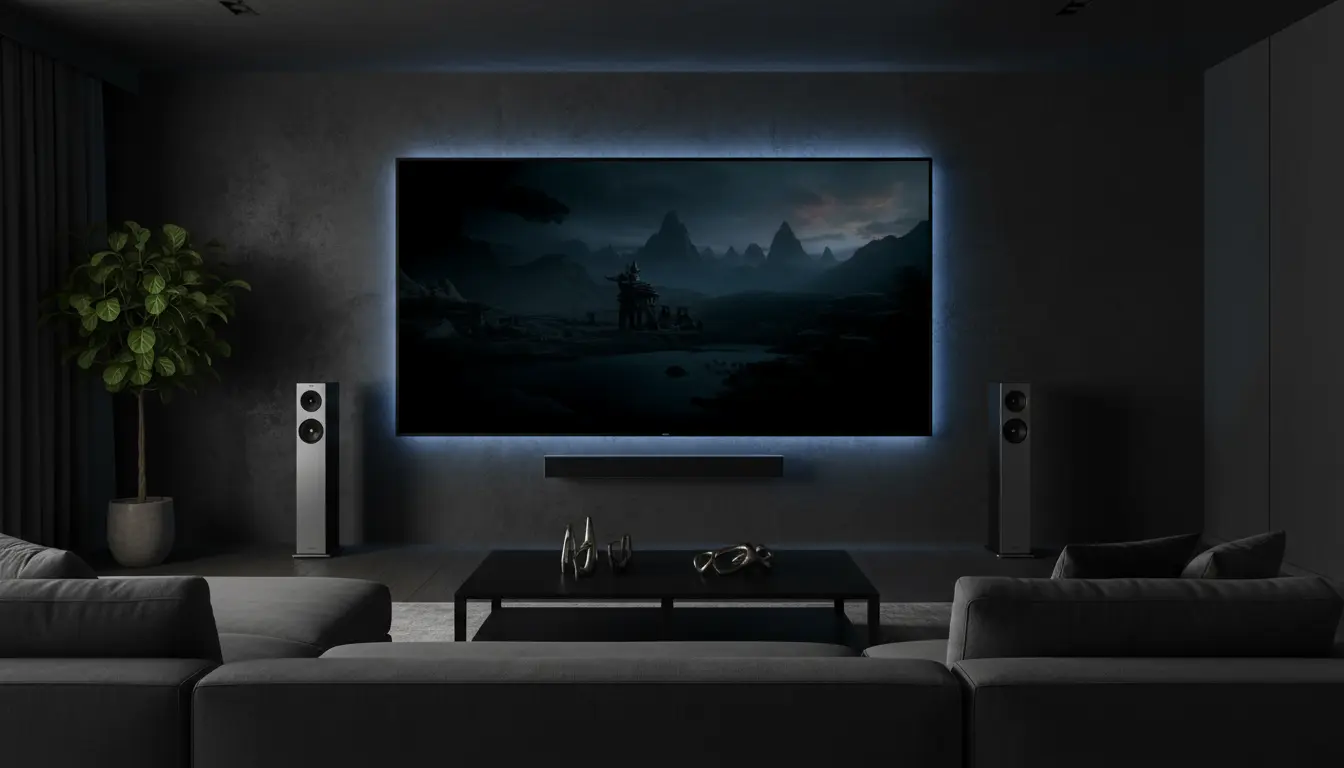
In a bright living room, even average TVs can look acceptable because ambient light reduces perceived contrast. In a dark room, however, the TV’s native contrast ratio and black level performance are fully revealed. Deep blacks, subtle shadow detail, and controlled highlights are what make movies feel cinematic and atmospheric. That’s why choosing a TV optimized for low‑light environments is essential if you care about film accuracy and immersion.
Poor dark‑room performance can lead to:
- Greyish blacks instead of deep, inky blacks
- Crushed shadow detail, where dark scenes lose texture and nuance
- Blooming or halos around bright objects on dark backgrounds
- Eye fatigue, as your eyes struggle with inconsistent brightness
A TV designed with high contrast, precise dimming, and good tone mapping will avoid these issues and deliver a richer, more realistic image.
OLED vs. LED/LCD: Which Is Better in a Dark Room?
For dark‑room movie watching, the main decision is between OLED and LED/LCD (including QLED and Mini‑LED). Each has strengths, but their behavior in a fully dark environment is quite different.
OLED TVs
OLED (Organic Light Emitting Diode) TVs are often considered the benchmark for dark‑room performance. Each pixel emits its own light and can turn completely off, creating near‑infinite contrast.
Advantages of OLED for dark rooms:
- Perfect blacks: Individual pixels can shut off entirely, producing true black with no light leak.
- No blooming: Bright objects on a black background stay sharply defined, ideal for space scenes, night shots, and HDR movies.
- Excellent viewing angles: Image quality remains consistent even when you’re seated off‑center.
- Instant response time: Motion looks clean and smooth, which is great for action movies and sports.
Potential drawbacks:
- Peak brightness is lower than the best Mini‑LED sets, which can matter in very bright rooms (less of an issue in the dark).
- Burn‑in risk, though modern OLEDs manage this well with pixel‑shifting and other protections.
If your primary use is watching films and TV series in a dim or dark room, OLED is usually the top recommendation for the most cinematic contrast and black levels.
LED/LCD, QLED, and Mini‑LED TVs
High‑end LED/LCD TVs, especially those using full array local dimming (FALD) or Mini‑LED backlights, can also deliver impressive dark‑room performance. They rely on a backlight behind an LCD layer, which means they can’t match OLED’s per‑pixel control, but new technologies have improved them significantly.
Advantages of premium LED/LCD in dark rooms:
- Very high peak brightness: Great for impactful HDR highlights and mixed‑use viewing in brighter environments.
- Less risk of burn‑in: Better suited if you also watch a lot of static content or use the TV as a monitor.
- Good value at larger sizes: Often more affordable than OLED at 75 inches and above.
Limitations:
- Blooming and halos: Because dimming zones are larger than individual pixels, bright elements can glow against dark backgrounds, which is more noticeable in a dark room.
- Blacks can look dark grey: Especially on edge‑lit or low‑zone models, which is why full array local dimming and high native contrast are crucial.
In summary, OLED is the best choice for pure dark‑room cinematic performance, while Mini‑LED/QLED can be a strong alternative if you need higher brightness, lower cost at very large sizes, or reduced burn‑in concerns.
Key Features to Look for in a Dark‑Room TV
When comparing models, focus on these critical specs and characteristics rather than just marketing terms.
1. Contrast Ratio and Black Levels
For dark‑room viewing, contrast ratio (the difference between deepest black and peak white) is king.
- Look for TVs with high native contrast (especially VA‑panel LCDs) or self‑emissive panels like OLED.
- Avoid low‑contrast IPS panels if dark‑room performance is your top priority, unless you absolutely need wide viewing angles and accept weaker blacks.
2. Local Dimming Performance
On LED/LCD TVs, local dimming is one of the most important features for dark‑room use.
- Prefer full array local dimming or Mini‑LED over edge‑lit designs.
- More dimming zones typically means better control of light, deeper blacks, and less blooming.
- Check reviews that specifically test local dimming in dark scenes, as implementation quality varies widely between brands and models.
3. HDR Capability and Tone Mapping
For movies and high‑end series mastered in HDR10, Dolby Vision, or HDR10+, good HDR performance is crucial. In a dark room, poor HDR can look either too dim or too blown‑out.
- Look for TVs that support popular HDR formats and have reliable tone mapping, preserving detail in both shadows and highlights.
- Adequate peak brightness (especially on LED/LCDs) helps HDR highlights stand out, even in a dark environment.
- OLEDs, despite their modest peak brightness compared to Mini‑LED, often deliver excellent HDR thanks to perfect blacks and precise control.
4. Color Accuracy and Calibration Modes
Dark‑room movie nights benefit from accurate color reproduction that respects the creator’s intent.
- Choose TVs that offer a Filmmaker Mode, Cinema, or Movie picture preset, which usually disables overly aggressive processing and aims for reference standards.
- Some premium models come factory‑calibrated with low color error out of the box.
- Basic calibration (or using recommended settings from reputable review sites) can further fine‑tune grayscale, color temperature, and gamma for dark‑room conditions.
5. Screen Size and Seating Distance
In a dark room, you can comfortably sit closer to a larger screen without eye strain, increasing immersion.
- A common guideline is that the ideal viewing distance is around 1.5–2.5 times the screen’s diagonal.
- For a cinematic experience with 4K content, many home cinema enthusiasts prefer 55–77 inch screens or even larger, depending on room size.
Make sure the TV size matches your seating distance so you can fully appreciate 4K detail and HDR effects.
6. Reflection Handling and Room Setup
Even in a dark room, some ambient light may come from small lamps, LEDs, or street lights. Good reflection handling and an anti‑glare coating can help maintain strong contrast.
In addition to choosing the right panel:
- Position the TV so it doesn’t face bright windows or light sources directly.
- Use blackout curtains or shades for serious movie rooms.
- Consider dimmable warm lighting behind or around the TV to reduce eye strain without washing out the image.
Optimizing Your TV for Dark‑Room Movie Nights
After buying a TV with strong dark‑room performance, proper setup makes a big difference.
- Use Cinema/Filmmaker Mode: These profiles usually offer the most accurate picture for dim lighting.
- Lower overall brightness slightly: Overly bright settings can cause eye fatigue in a dark environment.
- Adjust gamma: A gamma closer to 2.4 often works well for movie watching in dark rooms, enhancing perceived depth and contrast.
- Disable unnecessary processing: Turn off excessive noise reduction, edge enhancement, and overly aggressive motion smoothing (or use a mild setting if you prefer smoother motion).
- Enable local dimming or OLED contrast features: Ensure these are set to medium or high, depending on your preference and the model’s behavior.
Taking a few minutes to tune these settings, or following trusted calibration guides, will help you get the most out of your TV when the lights go down.
Conclusion
If you want the most immersive, cinema‑like experience at home, prioritize dark‑room performance when choosing your next TV. OLED models deliver unmatched black levels and contrast, making them the top choice for movie enthusiasts. High‑end Mini‑LED and full array local dimming TVs can be excellent alternatives, especially if you need more brightness or are concerned about static content.
By focusing on contrast ratio, local dimming, HDR handling, color accuracy, and proper setup, you can turn your living room or dedicated media space into a true home theater. The right TV, calibrated for dark‑room viewing, will bring out every detail, from the faintest shadow in a thriller to the brightest explosion in an action blockbuster.
LG 65-Inch Class OLED AI 4K B5 Series Smart TV (OLED65B5PUA) – 65-inch OLED TV
Product page on Amazon:
Why it’s a great choice for dark rooms:
- OLED panel: Each pixel is self‑emissive, which means it can switch off completely for perfect blacks and an almost infinite contrast ratio—ideal for dark-room movie watching.
- Perfect Black and Perfect Color: Delivers deep, inky blacks and rich colors without losing shadow detail in dark scenes, creating a truly cinematic look.
- Dolby Vision and Filmmaker Mode: Ensures accurate HDR performance and preserves the director’s intent with more natural color, contrast, and motion handling.
- Dolby Atmos support: Adds immersive surround sound, making movie nights feel closer to a real theater experience.
- 120 Hz refresh rate and low response time: Great if you also plan to use the TV for gaming in a dark home theater setup.