
Dishwasher-Safe Pots and Pans for Easy Cleaning: The Best Options for a Low-Effort Kitchen
Keeping cookware spotless shouldn’t feel like a second job. If you cook often, the right pots and pans can save serious time—especially when they’re truly dishwasher-safe and built to handle repeated wash cycles without losing performance. In this guide, you’ll learn what “dishwasher-safe” really means for cookware, which materials hold up best, what features to prioritize, and how to extend the life of your favorite pieces—all while keeping your cleanup routine fast and simple.
Why Dishwasher-Safe Cookware Matters
Dishwashers remove grease efficiently, but they also expose cookware to harsh detergents, high heat, and long wash cycles. Over time, those conditions can dull finishes, weaken coatings, or cause discoloration if the cookware isn’t designed for it. When you choose cookware that’s made for dishwasher use, you reduce scrubbing, protect your investment, and keep your kitchen workflow smooth.
The biggest benefit is consistency: you cook, you load, you run the cycle, and you’re done. That reliability makes a difference for families, busy professionals, and anyone who wants a cleaner kitchen without extra effort.



What “Dishwasher-Safe” Really Means (And What It Doesn’t)
Brands often label items “dishwasher-safe,” but the term can be broad. In practice, dishwasher-safe means the cookware can survive dishwasher conditions without structural damage. It doesn’t always guarantee the finish will look brand-new forever.
To choose wisely, treat dishwasher-safe as a baseline—not the only standard. You want cookware that stays effective after frequent washing, not just cookware that technically won’t fall apart.
Best Materials for Dishwasher-Safe Pots and Pans
Material choice affects durability, heat performance, and how well cookware tolerates detergent and moisture. Here are the top options for easy-clean kitchens:
1) Stainless Steel: The Most Reliable All-Rounder
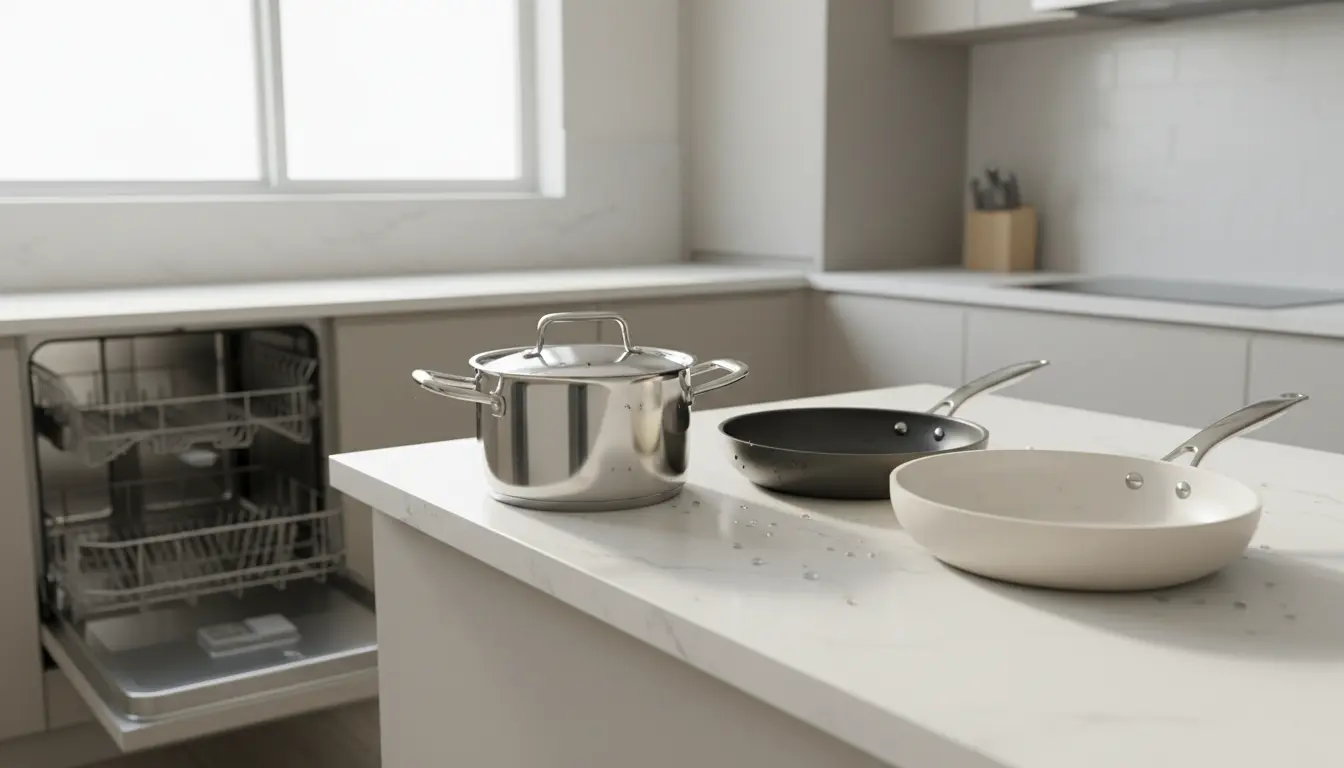
Stainless steel cookware handles dishwasher cycles better than most materials. It resists rust, stays stable under heat, and cleans up well. If you want cookware that lasts for years with minimal fuss, stainless steel cookware is often the safest bet.
Look for tri-ply cookware (or “fully clad” construction), where aluminum is sandwiched between stainless layers. This design improves heat distribution and reduces hot spots.
Best for: daily cooking, searing, sautéing, boiling
Dishwasher performance: strong, especially for high-quality sets
2) Hard Anodized Cookware: Tough, But Choose Carefully
Hard anodized cookware has an electrochemically hardened surface that resists scratching and corrosion better than standard aluminum. Many brands rate it as dishwasher safe, but long-term dishwasher use can still dull the exterior or reduce the life of a nonstick layer if present.
If you love the convenience of nonstick for eggs or delicate foods, hard anodized nonstick can work—just prioritize reputable brands and avoid harsh cycles when possible.
Best for: low-stick cooking, fast weekday meals
Dishwasher performance: good, but gentler cycles help longevity
3) Ceramic Nonstick Cookware: Easy Release, Extra Care Needed
Ceramic nonstick cookware offers smooth food release and a clean look. Some are dishwasher safe, but ceramic coatings can wear faster with repeated exposure to strong detergents and high heat drying. If you want ceramic, choose high-quality options and avoid overheated cooking to protect the coating.
Best for: light cooking, low oil meals
Dishwasher performance: variable; quality matters
4) Cast Iron (Including Enamel): Not Ideal for Dishwashers
Traditional cast iron should never go in the dishwasher. It will strip seasoning and promote rust. Enameled cast iron is more resistant, but dishwashers can dull the enamel and stress the finish. If you want long-term beauty and performance, wash enamel by hand.
Best for: slow cooking, braises, oven-to-table
Dishwasher performance: generally not recommended
5) Nonstick Frying Pan (PTFE): Convenient, But Protect the Coating
A nonstick frying pan can be rated dishwasher-safe, yet the coating still degrades faster in a dishwasher than with gentle hand washing. If you prioritize maximum lifespan, hand wash nonstick when you can. If your priority is convenience, pick a premium nonstick that tolerates dishwashers better and replace it when it stops performing.
Best for: eggs, pancakes, quick reheats
Dishwasher performance: acceptable, but not best for long-term
Key Features to Look for When Buying Dishwasher-Safe Cookware
Dishwasher safety is not only about material. Pay attention to construction details that prevent warping, staining, or loosening over time.
Fully Clad or Impact-Bonded Base
A strong base is critical. Fully clad cookware tends to resist warping and distributes heat evenly. Impact-bonded bases can also work well if thick and well-made.
Riveted Handles That Stay Tight
Handles go through thermal expansion and heavy water pressure in dishwashers. Riveted cookware usually holds up better than cheap welded joints. Check for solid, smooth rivets that won’t trap food residue.
Dishwasher-safe handles and lids
Some cookware uses silicone accents or mixed materials that don’t love high heat drying. Verify that lids and handles are also designed for dishwasher use, not just the pan body.
Warp-resistant cookware design
Thin pans bend more easily—especially if they go from hot stove to cool water or endure intense dry cycles. Choose warp resistant cookware with thicker gauge metal for stability.
A durable finish that resists staining
Even stainless can show rainbow discoloration or spots. High-quality stainless steel resists staining better and cleans up with minimal maintenance.
How to Keep Dishwasher-Safe Pots and Pans Looking New
Even the best cookware benefits from smart habits. These steps keep performance high while staying low-effort.
- Let pans cool before loading. Sudden temperature changes can stress metal and coatings.
- Avoid overcrowding the dishwasher rack. Crowding increases scratching, especially around edges.
- Skip aggressive “sanitize + high heat dry” daily. High heat accelerates wear on coatings and handles.
- Use a mild detergent if possible. Strong detergents can dull anodized surfaces or fade markings.
- Separate steel tools from nonstick. Avoid contact that can nick a nonstick coating.
- Remove stuck-on starch before the cycle. Rice, pasta, and potatoes can bake on in the drying stage.
Common Dishwasher Problems (And How to Fix Them)
Even with the right cookware, you might see cosmetic changes. Here’s what they mean and what to do.
Cloudy film on stainless steel
This can come from mineral deposits or detergent residue. Use a vinegar rinse or a stainless-safe cleaner to restore shine.
Rainbow discoloration
Heat causes it; it’s harmless. Gentle polishing returns the finish.
Nonstick losing its release
If eggs start sticking, the coating may be wearing. Reduce high heat cooking, avoid abrasive tools, and consider hand washing to extend life.
Pitting or small spots
Often caused by salt sitting on the surface too long. Add salt after water heats, and avoid leaving salty liquids in the pan overnight.
Which Cookware Type Is “Best” for Easy Cleaning?
There’s no single winner for every kitchen, but the most dependable option is usually a stainless steel cookware set with a solid base and secure handles. Stainless steel is the closest thing to “set it and forget it” cookware for dishwasher users.
If you want effortless food release, add one high-quality nonstick frying pan to your lineup—but treat it as a convenience tool rather than a forever pan.
Recommended Product on Amazon.com (1 item)
- All-Clad D3 Stainless Steel 10-Piece Cookware Set (commonly listed on Amazon.com): A durable tri-ply cookware set known for excellent heat control and strong long-term performance, with dishwasher-safe stainless steel construction.