
How U.S. Homeowners Can Future‑Proof Electrical Panels for Multiple EVs
As electric vehicles (EVs) become mainstream in the United States, many homeowners are discovering that their current electrical panels are not designed to handle the growing demand. Installing a single Level 2 charger may be simple enough, but what happens when your household adds a second or third EV? Future‑proofing your electrical panel today can save you from costly upgrades, limited charging capacity, and safety issues tomorrow.
This guide explains how U.S. homeowners can prepare their electrical systems for multiple EVs, what upgrades to consider, and how to plan strategically with both budget and long‑term flexibility in mind.
Why Multiple EVs Change the Game
A standard Level 2 EV charger typically requires a 240‑volt circuit and draws between 30 and 50 amps. Many American homes already run close to the limits of a 100‑amp panel with existing loads such as:
- Electric ranges and ovens
- Electric dryers
- HVAC systems and heat pumps
- Electric water heaters
- Hot tubs, pools, or home workshops
When you add one EV charger, you may still be able to squeeze within your panel’s capacity. However, adding multiple EVs can quickly push your electrical system beyond what it was originally designed to support. This is where future‑proofing becomes essential.
Step 1: Assess Your Current Electrical Capacity
Before planning for additional EVs, start with a clear understanding of your existing infrastructure:
- Check your main panel rating
Most older U.S. homes have 60‑amp or 100‑amp panels, while newer homes often have 150‑amp or 200‑amp service. Look at the main breaker; its rating (e.g., 100A, 150A, 200A) indicates your maximum service capacity. - Have a licensed electrician perform a load calculation
A professional can perform a NEC‑compliant load calculation to determine how much spare capacity you have for EV charging today and what you’ll need for tomorrow’s additional vehicles. - Identify existing high‑demand circuits
Large appliances and electric heating systems consume significant power. Mapping your loads will help you spot opportunities for smart load management rather than a full service upgrade.
Step 2: Consider Upgrading to a 200A or Higher Service
If you’re serious about owning multiple EVs over the next decade, upgrading your service can be one of the most impactful decisions you make.
- 200‑amp service is increasingly considered the baseline for EV‑ready and solar‑ready homes in the U.S. It typically supports:
- Two Level 2 EV chargers
- Standard household loads
- Space for future electrification (induction cooking, heat pumps, etc.)
- 320A or 400A service may be worth considering if you:
- Plan to electrify everything (space heating, water heating, cooking)
- Intend to install a large solar PV system and battery storage
- Anticipate three or more EVs needing regular home charging
While upgrading service can be costly—especially if utility infrastructure needs modification—it is often cheaper and less disruptive to do it once with a long‑term plan than to repeat incremental upgrades every few years.
Step 3: Install a Modern, EV‑Ready Panel
A future‑ready electrical panel is more than just a bigger box. When evaluating a new panel, consider:
- Extra breaker spaces for additional EV circuits, solar inverters, or home batteries.
- Busbar rating that safely supports your intended maximum amperage.
- Compatibility with smart breakers or integrated energy monitoring, allowing you to track and manage EV charging loads in real time.
Some manufacturers now offer EV‑ready or “energy management” panels that integrate metering, load control, and even solar or battery interfaces. While these panels may carry a premium, they streamline future expansions and make your home more resilient and efficient.
Step 4: Use Load Management Instead of Oversizing Everything
Not every homeowner needs a massive electrical upgrade. Smart load management can help you support multiple EVs on modest service, minimizing cost while still meeting your charging needs.
Common strategies include:
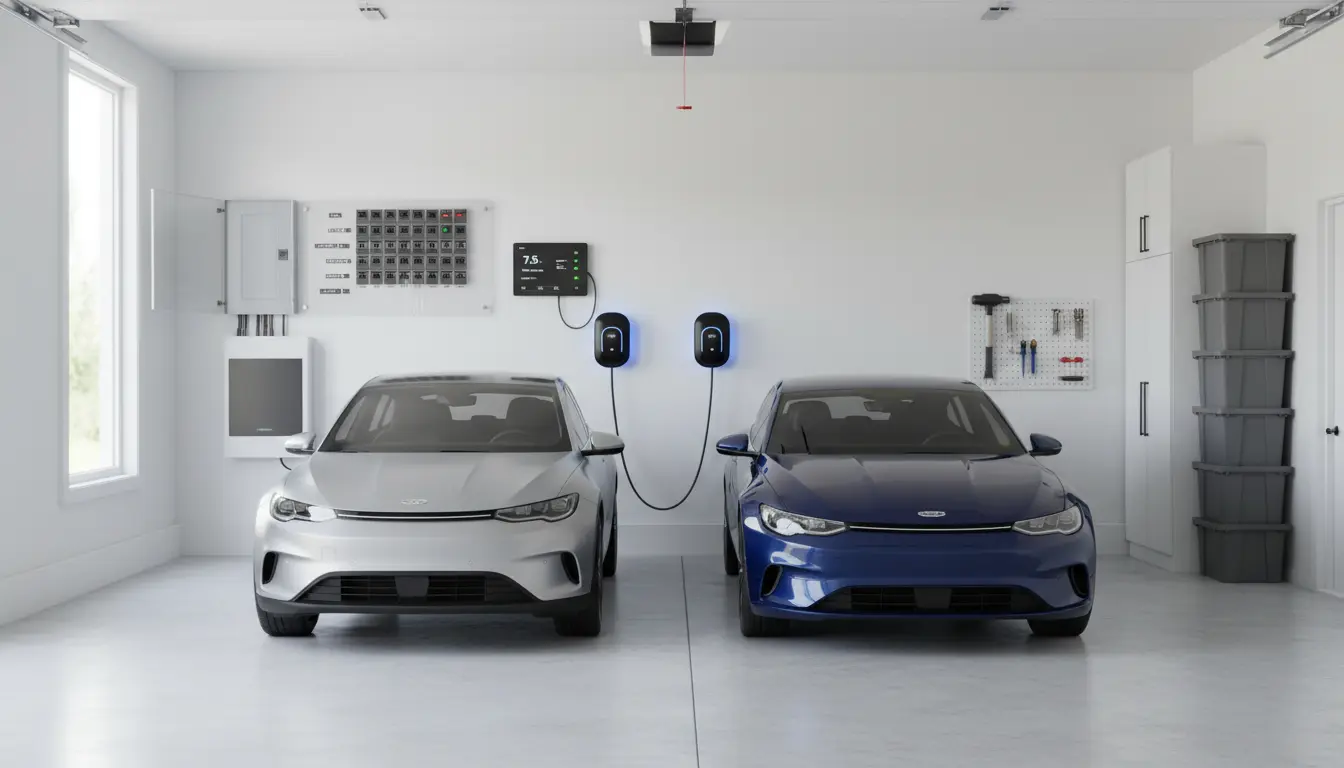
- Automatic load‑sharing EV chargers
Some EVSE (Electric Vehicle Supply Equipment) systems allow multiple chargers to share one circuit. They dynamically split available amperage, ensuring that total draw stays within a safe limit while still charging all vehicles over time. - Load management devices or smart panels
These systems actively monitor your home’s total load. When demand is high—for example, when your oven and dryer are on—they temporarily reduce EV charging power. When other loads drop, they ramp up charging again. - Scheduled or off‑peak charging
Many utilities offer lower electric rates during off‑peak hours (often overnight). You can program EVs or chargers to charge when the rest of your home’s usage is low, reducing strain on your panel and potentially lowering your energy bill.
By combining smart technology with thoughtful scheduling, you can often support two or more EVs without immediately jumping to 400‑amp service.
Step 5: Plan Charger Locations with Future Vehicles in Mind
Future‑proofing is not only about electricity; it’s also about practical layout:
- Place chargers where cables can reach multiple parking spots. A single well‑positioned charger can serve two vehicles parked nose‑to‑nose or side‑by‑side.
- Run conduit during any renovation. If you’re resurfacing a driveway or working on a garage, install extra conduit and junction boxes now. The incremental cost is much lower than tearing things up later.
- Consider detached garages or carports. If you have structures away from the main house, you may need a subpanel. Installing a slightly larger subpanel than you currently need can give you flexibility for future EVs or tools.
Step 6: Think Beyond EVs – A Holistic Electrification Strategy
Multiple EVs are often just one part of a broader shift toward home electrification and sustainability. When future‑proofing your electrical panel, it’s wise to consider:
- Solar photovoltaic (PV) systems
A solar‑ready panel makes it much easier to connect rooftop solar later. Many homeowners pair EVs with solar to offset charging costs. - Battery storage
Home batteries can provide backup power during outages and allow you to store cheap off‑peak electricity for later use, including EV charging. - Electrified heating and hot water
Heat pumps, heat pump water heaters, and induction cooktops all require thoughtful circuit planning. Upsizing your panel today avoids bottlenecks when you upgrade appliances.
Taking a whole‑home approach ensures your electrical system can support your evolving lifestyle—EVs included—without constant rework.
Step 7: Work With Qualified Professionals and Local Codes
Because each U.S. region has its own utility rules, permitting requirements, and building codes, working with local experts is crucial:
- Hire a licensed electrician experienced with EV installations. They can perform formal load calculations, recommend appropriate panel sizes, and help you compare the value of a full upgrade versus load management solutions.
- Check with your utility early. Some utilities offer rebates or incentives for EV chargers, smart panels, or service upgrades. In certain areas, they may also need to upgrade the service drop or transformer before you can increase your panel size.
- Pull the right permits. Complying with the National Electrical Code (NEC) and local amendments not only ensures safety but also protects your home’s resale value and insurance coverage.
Cost, Value, and Resale Considerations
Future‑proofing your electrical panel is an investment, but it can offer tangible and intangible returns:
- Reduced upgrade costs later by doing major work once instead of in multiple stages.
- Higher home value as EV‑ready infrastructure becomes a standard expectation among buyers.
- Improved living experience, with reliable charging for all vehicles and fewer compromises about who gets to charge when.
As EV adoption accelerates in the U.S., homes that can seamlessly support multiple electric vehicles will stand out in the market.
Key Takeaways for U.S. Homeowners
To future‑proof your electrical panel for multiple EVs:
- Assess your existing capacity with a professional load calculation.
- Consider upgrading to at least 200A service, and possibly higher if you plan full electrification.
- Choose an EV‑ready, modern panel with room to grow and potential for smart energy management.
- Leverage load management and smart charging to avoid unnecessary oversizing.
- Plan charger locations and conduit runs with future vehicles in mind.
- Think holistically about solar, batteries, and electric appliances.
- Work with qualified electricians and follow local codes for a safe, compliant installation.
By planning ahead, U.S. homeowners can create an electrical infrastructure that supports multiple EVs, aligns with long‑term sustainability goals, and adds lasting value to their property.