
Home EV Charging 101 for U.S. Homeowners: Level 1, Level 2 and DC Fast Charging Explained
Switching to an electric vehicle (EV) is exciting, but many new owners share the same first question: How will I charge it at home? For U.S. homeowners, understanding the differences between Level 1, Level 2 and DC fast charging is essential for a smooth, convenient ownership experience.
This guide walks you through each option in clear language, shows what you actually need in a typical American home, and helps you choose the right setup for your driving habits and budget.
What Is Home EV Charging?
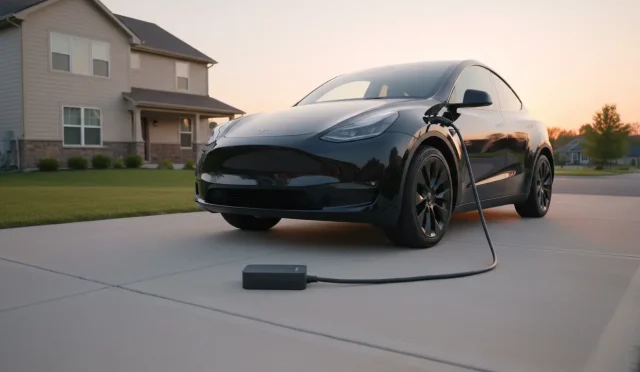
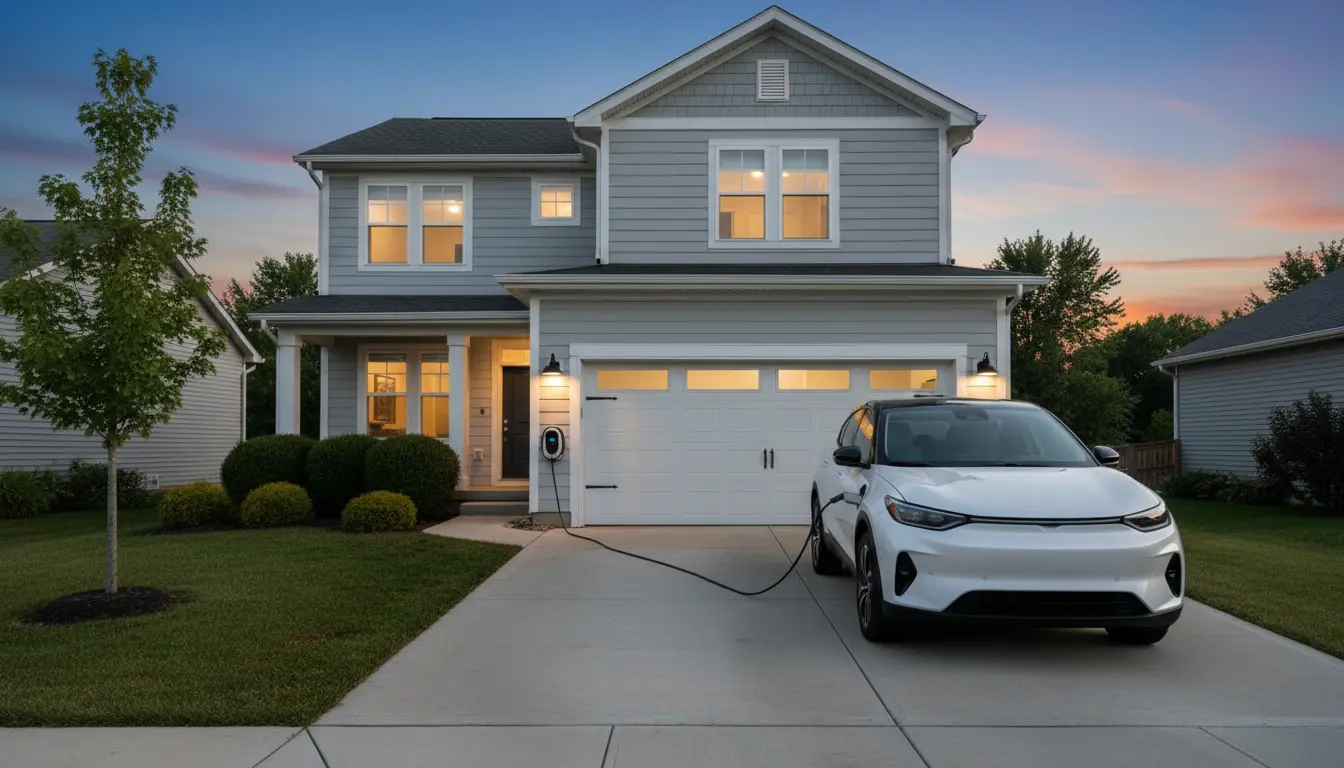
Home EV charging means using your own electrical system—usually in a garage, driveway, or carport—to recharge your electric vehicle’s battery. Instead of planning trips around public chargers, you simply plug in at home, often overnight, and wake up to a “full tank” every morning.


For most U.S. drivers, home charging covers 80–90% of total charging needs. Public chargers, including DC fast chargers, are then used only for longer road trips or occasional top-ups.
Level 1 Charging: The Simple Starting Point
What is Level 1 charging?
Level 1 charging uses a standard 120-volt household outlet—the same kind you use for a lamp or phone charger. Many EVs include a mobile charging cord that plugs directly into this outlet.
- Voltage: 120V
- Typical charging speed: ~3–5 miles of range per hour
- Hardware cost: Often included with the car (just the mobile cord)
When is Level 1 charging enough?
Level 1 can work well if:
- You drive short distances each day (e.g. 20–40 miles).
- You can leave the car plugged in overnight or for long stretches.
- You don’t mind slower charging speeds.
For example, if your EV gains 4 miles of range per hour on Level 1 and you charge for 10 hours overnight, you get around 40 miles of range. Many commuters find this is enough for daily driving.
Pros of Level 1
- Lowest upfront cost: No special equipment required beyond the included charging cable.
- Easy setup: Plug into a dedicated 120V outlet and you’re ready.
- Good for low-mileage drivers: Ideal if you don’t drive much or own a plug-in hybrid (PHEV).
Cons of Level 1
- Slow: Not ideal if you regularly drive long distances or have a large battery EV.
- Outlet limitations: You should use a dedicated circuit to avoid overloading a shared outlet.
- Less future-proof: As EV batteries get larger, Level 1 will feel more limiting.
Level 2 Charging: The Sweet Spot for Most Homeowners
What is Level 2 charging?
Level 2 charging uses 240 volts, similar to large home appliances like dryers or electric ranges. It requires a dedicated charging station (often wall-mounted) and usually a licensed electrician to install a 240V circuit.
- Voltage: 240V
- Typical charging speed: ~20–40 miles of range per hour (varies by car and charger)
- Hardware cost: Around $400–$800 for the charger, plus installation
Why Level 2 is ideal for home use
For most U.S. homeowners, Level 2 is the best balance of speed, convenience, and cost. You can arrive home nearly empty, plug in, and get a full charge by morning.
Examples:
- A typical EV adding 8 kW for 8 hours overnight = 64 kWh, often enough to go from low state-of-charge to nearly full.
- Many drivers fully cover daily driving with just a few hours of Level 2 charging per night.
Benefits of Level 2 charging
- Fast and convenient
- Replenishes a full day’s driving in just a few hours.
- Perfect for overnight charging or quick top-ups.
- Flexible scheduling
- Many smart Level 2 chargers integrate with apps.
- You can schedule charging during off-peak electricity rates to save money.
- Increases home appeal
- A built-in EV charging station can be a selling point for future buyers, especially as EV adoption grows in the U.S.
- Future-proof
- As you upgrade to larger EVs or add a second electric car, Level 2 offers enough power to keep up.
What you need for Level 2 at home
- A dedicated 240V circuit in your electrical panel (often 40–60 amps for most EVs).
- A wall-mounted or pedestal Level 2 charger (also called an EVSE).
- A licensed electrician to:
- Inspect your panel capacity.
- Run wiring to your parking area.
- Install and permit the circuit according to local code.
In many U.S. regions, utilities or states offer rebates or tax incentives for home EV charger installation, which can offset part of the cost.
DC Fast Charging: Powerful, But Mostly Public
What is DC fast charging?
DC fast charging (often called Level 3) bypasses your vehicle’s onboard AC charger and sends direct current (DC) straight to the battery at very high power levels.
- Power levels: Commonly 50–350 kW at public stations
- Speed: Can add 100–200+ miles of range in 20–40 minutes, depending on the EV
Is DC fast charging realistic at home?
For nearly all U.S. homeowners, DC fast charging is not practical for residential use. Reasons include:
- Extremely high power demand: Often requires three-phase power and utility-level infrastructure.
- Very high installation cost: Can run into tens of thousands of dollars or more.
- Utility approvals and demand charges: Complex commercial-rate structures and permits.
DC fast charging is designed for public corridors, highway stations, and commercial fleets, not typical American homes. For home use, Level 2 almost always provides more than enough speed.
How to Choose the Right Home Charging Option
Step 1: Evaluate your daily driving
Ask yourself:
- How many miles do I drive on a typical weekday?
- Do I often take unexpected long trips, or are most journeys predictable?
If you drive under 40 miles per day, Level 1 can work, but Level 2 will give you more comfort and flexibility. If you regularly drive 60–150+ miles per day, Level 2 is strongly recommended.
Step 2: Check your home’s electrical capacity
- Look at your main service panel (often 100A, 150A, or 200A for U.S. homes).
- An electrician can perform a load calculation to ensure your system can safely support an additional 240V circuit.
- If your panel is limited, you may:
- Use a lower-amp Level 2 charger (e.g. 24A or 32A).
- Install a load management device that balances power between your EV charger and other large appliances.
Step 3: Consider smart features and connectivity
Many modern Level 2 home chargers include:
- Wi‑Fi or Bluetooth apps to monitor energy use.
- Scheduling for off-peak charging.
- Integration with solar panels or home energy management systems.
- User access control, if you share your charger with tenants or roommates.
These features help keep charging costs low and energy usage visible and manageable.
Safety and Best Practices for Home EV Charging
- Always use a dedicated circuit for your EV charger. Avoid extension cords and shared outlets.
- Hire a licensed electrician. Proper installation is crucial for fire safety and code compliance.
- Install in a convenient location near where you park every day—garage wall, carport post, or exterior wall.
- Protect outdoor installations with weatherproof enclosures and appropriate outdoor-rated equipment.
- Follow manufacturer and vehicle guidelines on maximum charge current and cable handling.
Cost of Home Charging vs. Gas
In most parts of the U.S., charging at home is significantly cheaper than fueling a gasoline car:
- Home electricity rates often translate to the equivalent of paying $1–$2 per gallon of gasoline, sometimes less if you use:
- Time-of-use (TOU) rates
- Solar panels
- Off-peak charging schedules
While installing a Level 2 charger and circuit has an upfront cost, many homeowners recover it over time through lower fueling expenses and reduced maintenance costs compared to internal combustion vehicles.
Recommended Home Charging Product on Amazon
A popular and well-reviewed option for U.S. homeowners is the ChargePoint Home Flex Level 2 EV Charger (available on Amazon.com).
Key reasons many buyers choose it:
- Adjustable amperage (up to 50 amps, depending on your circuit).
- Compatible with most major EVs sold in North America.
- Wi‑Fi connectivity with a robust app for scheduling and energy tracking.
- Indoor and outdoor installation options.
Always confirm the model, plug type, and amperage match your EV and your electrician’s recommendations before purchase.