
Meta Acquires Assured Robot Intelligence: What the Deal Signals for Humanoid AI
Meta is pushing deeper into robotics, and this time it is buying specialized capability rather than simply showcasing research. Meta recently acquired Assured Robot Intelligence (ARI), a startup building AI for robots to address critical challenges in high-value labor markets. This move strengthens the company’s embodied AI ambitions—systems that do not just talk about the physical world, but can operate inside it. The acquisition also hints at a more concrete robotics roadmap for the tech giant.
What Meta Actually Bought (And Why It Matters)
ARI focuses on the intelligence layer that turns sensors, actuators, and compute into useful behavior: perception, planning, and consistent motion in unpredictable environments. While Meta already has teams working on robot hardware and AI in-house, spokespeople have noted that ARI brings deep expertise in how to design models and frontier capabilities for humanoid robot control and self-learning—specifically targeting whole-body humanoid control.
Just as important, the firm is absorbing the people behind the work. ARI co-founder Xiaolong Wang, along with co-founders Xuxin Cheng and Lerrel Pinto, and the broader ARI team, will join Meta’s Superintelligence Labs. This placement signals that the organization treats robotics as a strategic frontier, not an experimental side project.
What “High-Value Labor Markets” Likely Implies
The mission at ARI centers on high-value labor markets—settings where labor is scarce, costly, risky, or hard to staff reliably. In these environments, companies pay for uptime and consistency. If humanoids can take on repetitive handling, basic inspection, or assisted operations across long shifts, they can reduce operational bottlenecks while keeping humans focused on higher-judgment tasks.
Why the Industry Keeps Circling Back to Humanoids
Humanoids introduce complexity, but they also offer compatibility. A humanoid body can potentially work in spaces built for humans—doors, stairs, standard-height workstations, and existing tools—without forcing companies to redesign entire facilities. That compatibility remains a major reason many firms keep revisiting humanoid form factors despite the significant engineering difficulty.
This is also why software becomes the primary bottleneck. Hardware can look impressive in a controlled demo, but software determines whether a robot succeeds on a messy factory floor. Real-world operation demands robust behavior under uncertainty, safe recovery from mistakes, and reliable generalization.
ARI’s “General-Purpose Physical Agent” Thesis
The goal at ARI required training a truly general-purpose physical agent. The leadership at the startup believes that agent will be humanoid and that scaling will come from learning directly from human experience.
This maps to the broader shift toward self-learning robotics: teams increasingly train policies from demonstrations, simulation, and feedback rather than hand-coding every action. In principle, a capable system improves as it sees more human behavior and encounters more real situations. In practice, making that learning stable, safe, and repeatable is exactly where advanced model design and control expertise become decisive.
Meta’s Platform Play: “Android of Robotics”
Company leadership has previously stated an aim to create robotics software that other companies can license, similar to what was achieved with the Android mobile operating system. If Meta executes this vision, it could become a robotics software platform rather than a single robot manufacturer.
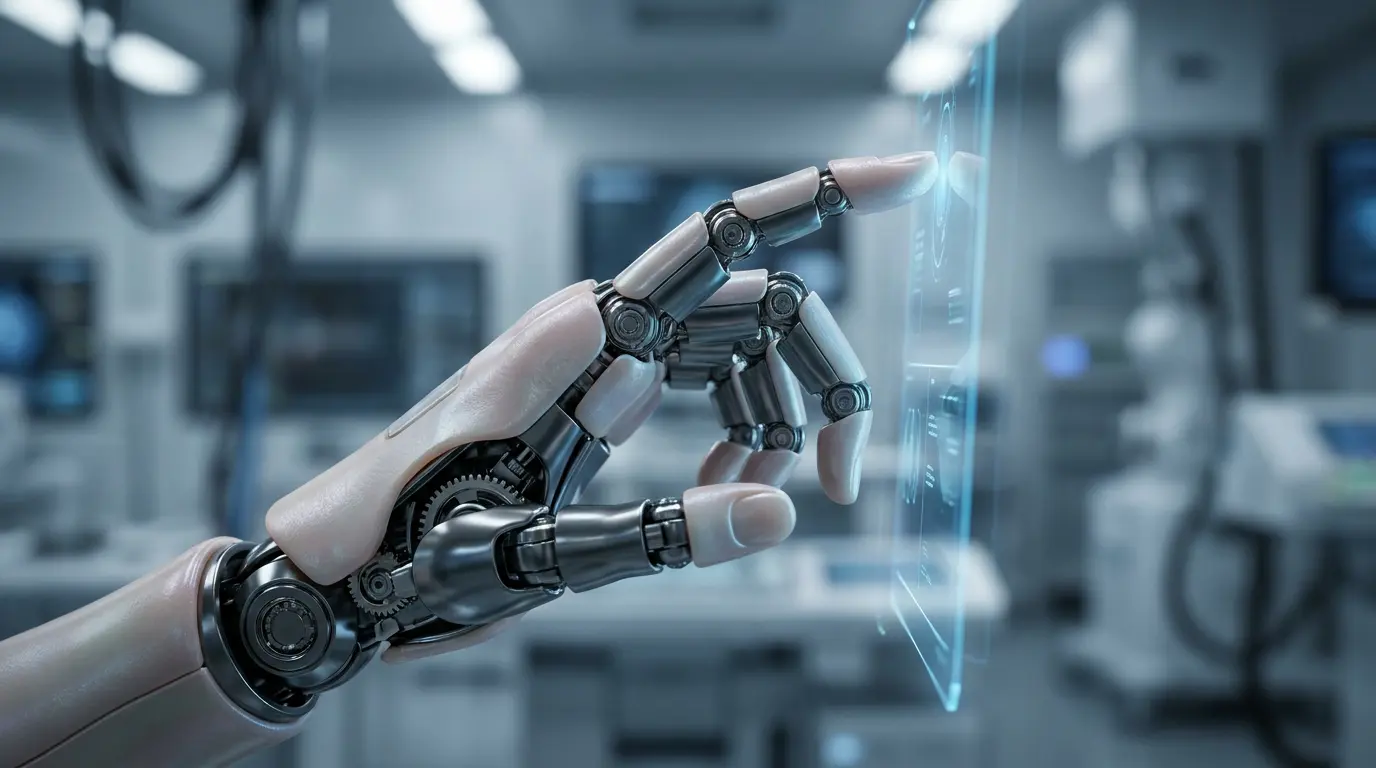
The strategy describes a pragmatic starting point: build software that powers a dexterous hand, then expand from there. Hands force systems to solve contact-rich manipulation—friction, slippage, precision, and timing—where small errors cause big failures. Strong dexterous hand software can become a foundation for full-body motion, tool use, and multi-step task execution.
Competitive Pressure is Rising
The industry is not operating in isolation. Amazon is pursuing humanoid efforts, and reports note that key talent has moved between these competing projects. Tesla continues to develop its Optimus robot, and competition across the industry keeps pushing timelines forward. Against that backdrop, the ARI acquisition looks like a speed play: Meta brings in a team tightly focused on robot control AI to shorten the path from research to product-grade capability.
Bottom Line
The ARI deal is a serious bet on embodied AI, with software positioned as the scalable lever. If Meta can translate this control and learning expertise into reliable modules—and eventually licensable systems—it could shape how humanoid robots learn, deploy, and standardize across the next wave of automation.