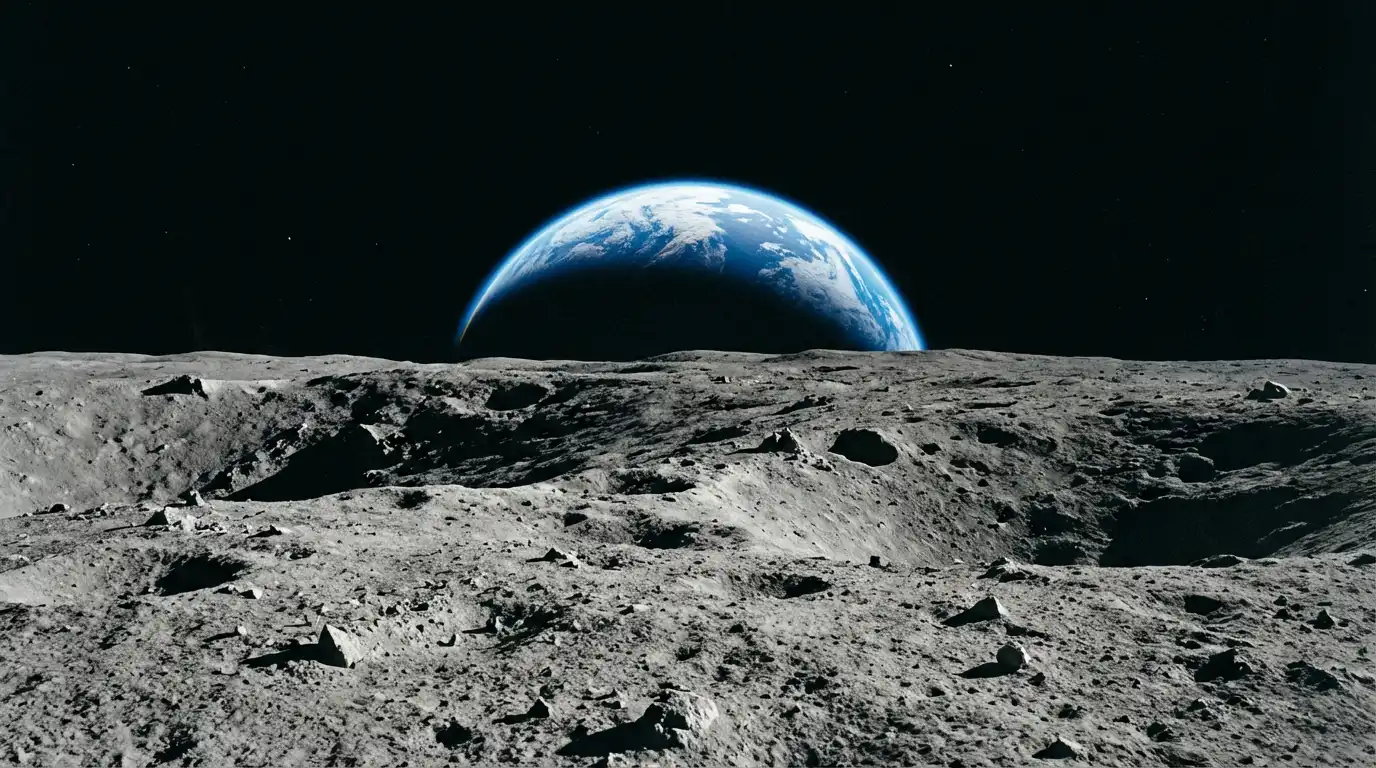

NASA Shares Striking Views from the Moon’s Far Side
NASA has released a fresh set of images tied to the Artemis II mission, offering a visual logbook that feels both cinematic and meaningful. The photos are not only beautiful; they also show how dramatically perspective changes during a lunar flyby—especially when the camera looks back at Earth from the Moon’s far side.
One of the most talked-about frames is an “Earthset,” a moment that resembles a sunset on Earth—except here, Earth is the object that “sets.” In the image, our planet appears to sink behind the Moon’s curved horizon until it disappears from view.
NASA’s Artemis account noted that the scene echoes the emotional impact of a historic space photograph: the famous “Earthrise” captured during Apollo 8 decades ago. That iconic shot showed Earth rising above the Moon’s horizon. This new view flips the experience—Earth isn’t rising; it’s slipping away behind the lunar edge—yet it triggers a similar feeling of distance, scale, and fragility.
The “Earthset” and a Reminder of Scale
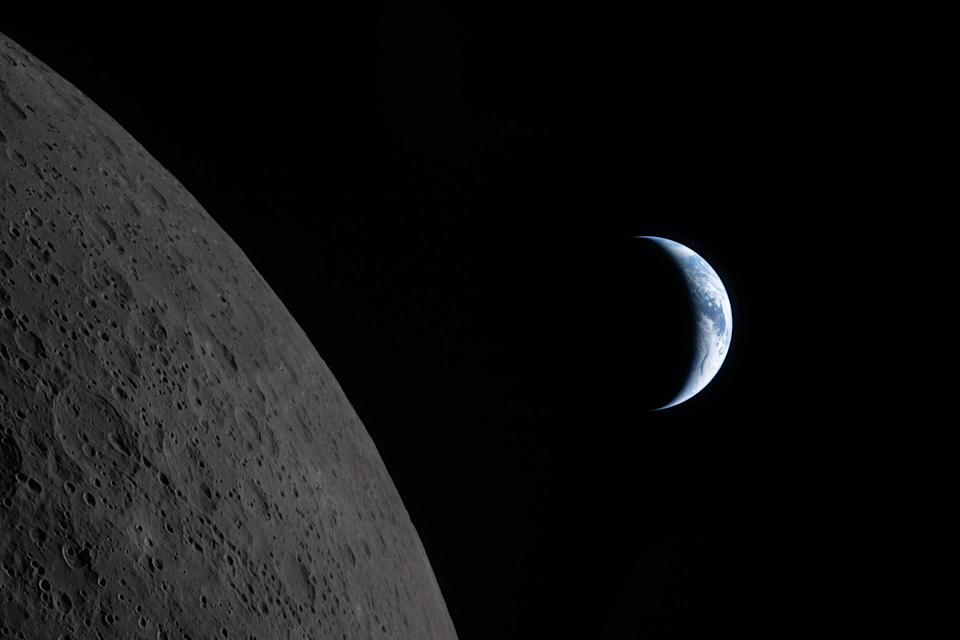
Beyond the headline Earthset image, NASA also shared additional frames where Earth appears as a small, distant disk near the Moon’s edge. In some views, Earth looks like a delicate crescent—mirroring how we often see the Moon from our own sky.
These images can be unsettling in the best way. The Moon’s surface looks stark and textured in the foreground, while Earth—so enormous in our daily lives—shrinks into a small, luminous shape. The photos make the scale of space feel immediate: from far enough away, even a whole planet can look like a thin splash of light.
A Solar Eclipse Seen from a Rare Angle
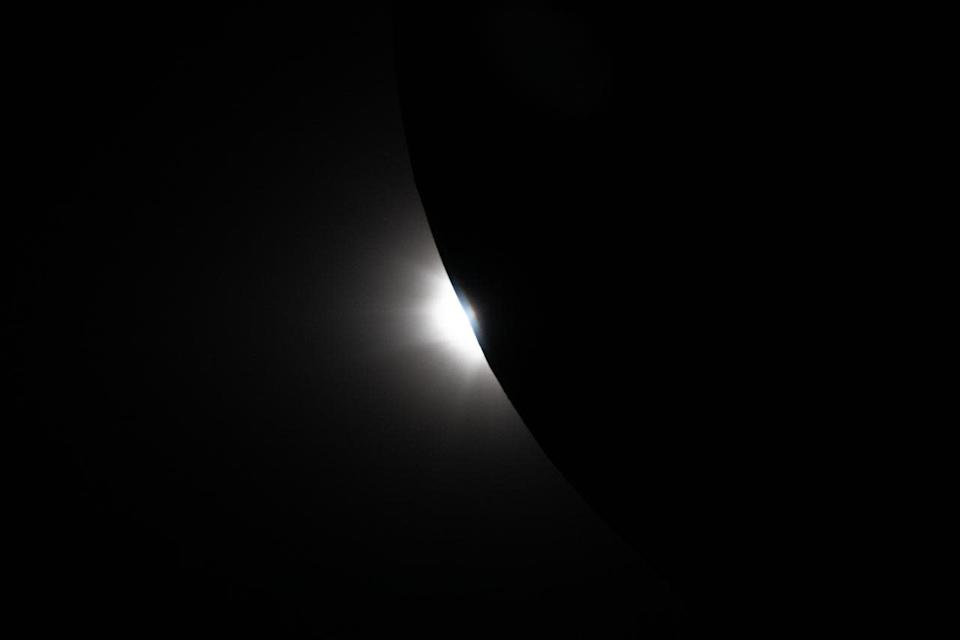
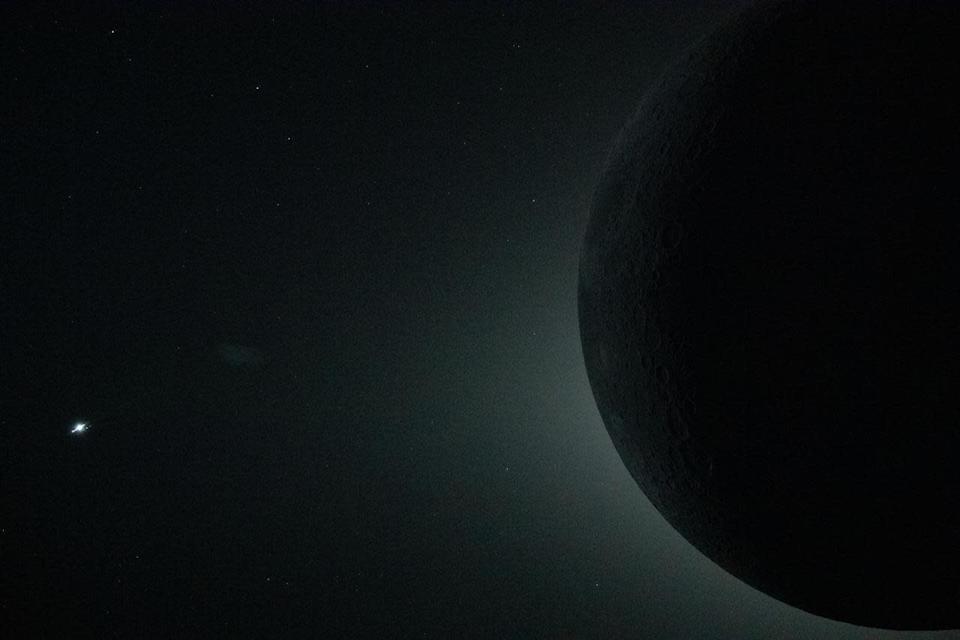
The mission also delivered a dramatic event: a solar eclipse observed from the Moon’s far side. From this vantage point, the Moon fully blocked the Sun, creating a total eclipse captured by Orion’s cameras. In the photos, the Moon’s dark silhouette covers the Sun, while a soft halo and glow outline the Sun’s presence behind the lunar disk.
According to the report, the eclipse lasted around 57 minutes. During that period, Orion traveled more than 4,000 miles beyond the Moon. The duration and the viewpoint combine into something rare: an eclipse not just as a brief spectacle, but as a sustained cosmic alignment witnessed from deep space.
NASA also highlighted a practical detail: the astronauts used eclipse viewers to protect their eyes while observing the event. It’s a small but telling reminder that even the most extraordinary moments in space still demand careful safety routines.
Two New Craters—and Two New Names
While circling the Moon, the Artemis II crew reportedly identified two previously unrecorded craters. The astronauts suggested names for them: Integrity and Carroll.
“Integrity” references the nickname for their spacecraft. “Carroll,” meanwhile, carries personal significance: it honors the late wife of Commander Reid Wiseman, who described it as a “bright spot on the Moon.” That moment blends exploration with humanity—showing how space missions often carry personal stories alongside technical milestones.
The Crew and the Road Back Home
Artemis II includes Christina Koch, Jeremy Hansen, Reid Wiseman, and Victor Glover. The mission has been described as a historic achievement, noting that the crew traveled farther from Earth than any other living humans.
At the time of the report, the mission still had a few days to go, with Orion already on its return trajectory. NASA expected the spacecraft to splash down in the Pacific Ocean near San Diego on April 10.
Why These Images Matter
Taken together, the Earthset, the eclipse sequence, and the distant-Earth frames are more than “pretty pictures.” They function as visual proof of progress—evidence that Artemis II is not only testing systems and operations, but also expanding how we see our place in space.
A planet setting behind the Moon’s horizon and an eclipse observed from the far side aren’t everyday viewpoints. They’re reminders that returning to the Moon is not just a technical milestone—it’s a perspective shift, captured one frame at a time.