
The world of gaming evolves quickly, and handheld consoles have followed a fascinating path over the past decade. With the anticipated arrival of the Nintendo Switch 2, players are eager to discover what new innovations it brings compared to the first-generation Switch released in 2017. In this in-depth article, we will provide a comprehensive Nintendo Switch 2 user guide, examine its features, and compare it with the original Switch to help you decide if upgrading is the right move.
The Legacy of the Nintendo Switch (2017)
When Nintendo launched the original Nintendo Switch, it redefined hybrid gaming. Unlike other consoles of its time, the Switch seamlessly allowed users to play on a TV, then remove the console from the dock and continue on-the-go in handheld mode. This flexibility became its unique selling point.
Key highlights of the first Switch included:
- Hybrid design: Docked TV play and handheld portability.
- Detachable Joy-Cons: Local multiplayer anywhere.
- Strong game lineup: Titles like The Legend of Zelda: Breath of the Wild and Super Mario Odyssey.
- Expandable storage: MicroSD support to extend beyond the internal memory.
While revolutionary, the original Switch also had shortcomings: performance issues with demanding games, limited battery life at launch, and Joy-Con drift problems that raised criticisms over time.
Nintendo Switch 2: What’s New?
The Nintendo Switch 2 builds on this legacy with significant hardware and software upgrades. While Nintendo has not completely reinvented the wheel, it listened closely to gamer feedback and industry expectations. Here’s a breakdown of what users can expect:
1. Performance Upgrade
- Custom NVIDIA chipset with advanced AI processing, superior graphics rendering, and faster load times.
- 4K support in docked mode, thanks to DLSS (Deep Learning Super Sampling).
- 120Hz refresh rate option in handheld mode for smoother gameplay.
This leap enables the Switch 2 to run graphically intense titles without compromise, something the first Switch struggled with.
2. Improved Display
- A 7.5-inch OLED+ display (slightly larger than the OLED model of Switch 1).
- Sharper colors, deeper contrast, and improved viewing angles.
- Higher resolution in handheld mode: 1080p, compared to the Switch 1’s 720p.
3. Battery and Efficiency
Battery life now lasts 7–10 hours depending on settings, extending play sessions. Enhanced power management makes the console more energy-efficient.
4. Backward Compatibility
The Switch 2 supports the entire Nintendo Switch library, ensuring a smooth transition with no loss of previous purchases. Joy-Con controllers also remain compatible, though new redesigned controllers boast ergonomic upgrades.
5. Redesigned Joy-Cons and Pro Controller
Nintendo finally addressed the Joy-Con drift issue with new magnetic hall effect sticks. The updated design is slightly larger, making handheld play more comfortable. A new Pro Controller 2 offers adaptive triggers, similar to the PS5 DualSense but with Nintendo’s unique touch.
6. Online Features
The Nintendo Online+ service has expanded with cloud saves, enhanced multiplayer matchmaking, and larger classic libraries from GameCube and Wii generations.
7. Expanded Storage
The Switch 2 now starts with 256 GB internal storage compared to the original’s 32 GB, appealing to digital buyers.
Nintendo Switch 2 User Guide
For new owners and those upgrading, here’s a step-by-step overview.
Getting Started
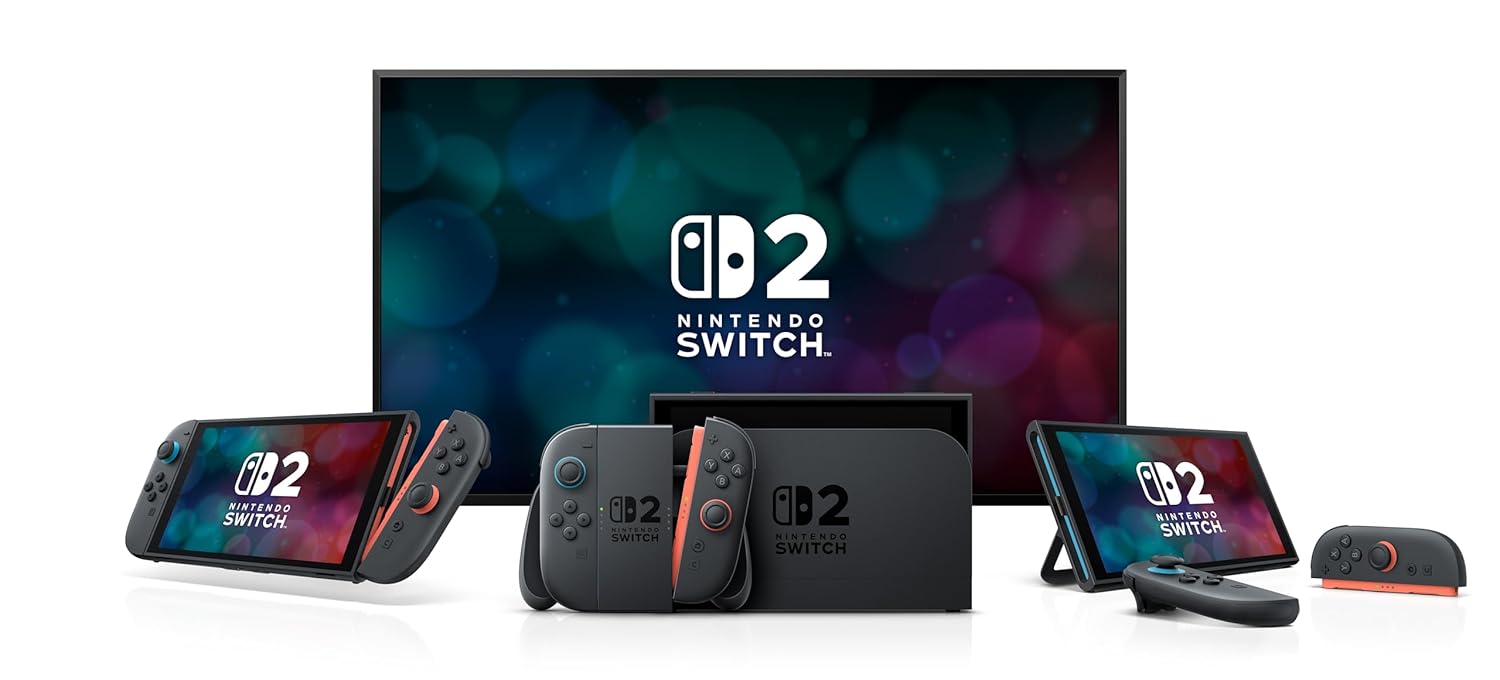
- Unbox: Inside, you’ll find the console, Joy-Cons, dock, cables, and instruction manual.
- Setup: Attach Joy-Cons, power on, and complete the guided onscreen setup (language, WiFi, Nintendo Account login).
- Docking: Connect the dock to your TV using HDMI, then slide the console in. The screen switches to your TV automatically.
Account & Online
- Create or log in to a Nintendo Account.
- Subscribe to Nintendo Online+ for access to online multiplayer and exclusive titles.
- Enable cloud saves to protect your progress.
System Customization
- Themes: Choose from light, dark, or custom themes.
- Parental controls: Restrict playtime, purchases, or certain content.
- Accessibility features: Larger text, button remapping, audio support.
Game Management
- Insert physical game cartridges or download digitally from the Nintendo eShop.
- Expand storage with a microSDXC card for larger libraries.
- Enable automatic updates in system settings.
Playing Modes
- Handheld Mode: Attach Joy-Cons to the console for solo play.
- Tabletop Mode: Detach Joy-Cons, prop up the console on a surface.
- TV Mode: Dock the console for larger-screen play.
Pro Tips
- Use Sleep Mode instead of powering off for instant resume.
- Adjust brightness manually to save battery.
- Pair wireless headphones via Bluetooth for portable audio.
Nintendo Switch 2 vs Nintendo Switch 1: Detailed Comparison
| Feature | Nintendo Switch (2017) | Nintendo Switch 2 (2025) |
|---|---|---|
| Display | 6.2-inch LCD / 7″ OLED | 7.5-inch OLED+ |
| Resolution (Handheld) | 720p | 1080p |
| Resolution (Docked) | 1080p | Up to 4K via DLSS |
| Performance | Custom Tegra X1 | Custom NVIDIA AI-enabled |
| Storage | 32 GB internal | 256 GB internal |
| Battery Life | 4–6 hours (rev. model 9) | 7–10 hours |
| Joy-Con Controllers | Standard, drift-prone | Redesigned w/ Hall sensors |
| Backward Compatibility | N/A (first model) | Full Switch 1 support |
| Online Service | NES/SNES classics | +GameCube/Wii, better net |
| Audio | Basic stereo | Enhanced spatial sound |
| Price at Launch | $299 | Expected $399–$449 |
Who Should Upgrade?
- Hardcore gamers: If you want better performance, graphics, and smoother online play, the Switch 2 is worth it.
- Casual gamers: The original Switch still delivers great experiences, especially with its vast library.
- New buyers: Switch 2 is the smarter long-term investment due to better hardware and game support trajectory.
Anticipated Games for Switch 2
Nintendo is known for strong exclusives. Early confirmed or rumored titles include:
- The Legend of Zelda: Echoes of Eternity (next-gen Zelda).
- Super Mario Galaxy 3 (rumored).
- Enhanced ports of Metroid Prime 4 and older third-party AAA games in 4K.,
Final Thoughts
The Nintendo Switch 2 is not just a minor upgrade but a significant evolution of one of the most beloved consoles of all time. The leap in performance, display quality, and controller durability finally makes the Nintendo handheld/dockable console more future-proof. While the original Switch will remain relevant thanks to backward compatibility, the Switch 2 clearly raises the bar for hybrid gaming.
If you are deciding between the two, consider whether you value 1080p handheld gaming, 4K docked mode, and improved controllers enough to justify the upgrade. With Nintendo’s first-party lineup and stronger online infrastructure, the next-generation console is set to expand the hybrid gaming revolution even further.