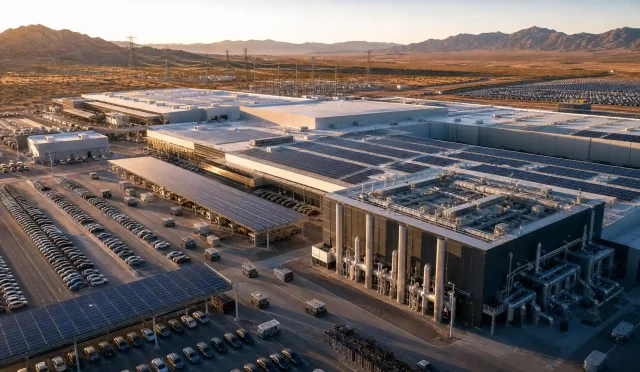

In one of the most unprecedented deals in technology history, Nvidia has announced plans to invest up to $100 billion in OpenAI, setting the stage for a new era of computing. The investment goes far beyond capital infusion—it signals the beginning of a massive AI datacenter expansion intended to support the next generation of large language models (LLMs) and advanced generative AI systems.
The Deal’s Core: Powering AI at Scale
The collaboration will see Nvidia not only provide equity but also supply tens of gigawatts of GPU systems purpose-built for deep learning workloads. Early reports suggest that the initial deployment could begin by late 2026, marking the start of a significant push to both train and deploy advanced OpenAI models on a global scale.
By controlling the hardware pipeline, OpenAI gains an unmatched level of compute power, while Nvidia secures its position as the backbone of the AI economy. Chip industry insiders are already calling this the “defining partnership of the decade.”

Why This Matters for the Global Chip Industry
The AI boom of the last three years has created unprecedented demand for high‑end chips. Traditional datacenters optimized for general computing are no longer sufficient. This partnership directly addresses industry bottlenecks by securing supply chains for Nvidia GPUs, ensuring OpenAI has exclusive access to cutting-edge hardware at scale.
Meanwhile, global chip rivals in China, Europe, and India are accelerating their own programs. India recently declared an $18 billion bid to become a semiconductor powerhouse, while Huawei and DeepSeek in China continue to push affordable AI compute as U.S. export restrictions remain in effect. Nvidia’s OpenAI deal is therefore not just about business—it is about geopolitical positioning in the global race for AI dominance.
Implications for AI Development
For the broader AI community, this deal suggests two major outcomes:
- Acceleration of LLM Research: With access to massive GPU clusters, OpenAI could increase both the size and efficiency of its models, making AI assistants more powerful, accurate, and personalized.
- Rising Barriers to Entry: Smaller startups may struggle to compete as the scale of compute available to OpenAI far surpasses what most companies can afford. This could spark debates about AI regulation, fairness, and monopolistic structures.
A Shift in Market Dynamics
Investors immediately reacted to the news with bullish sentiment. Global chip stocks rallied on the announcement, with Micron, TSMC, and ASML seeing double‑digit growth overnight. Apple, which recently revealed it controls all of its iPhone chips to optimize AI, is also expected to benefit indirectly from the surge in AI infrastructure investment.
Regulatory and Ethical Challenges Ahead
While the financial markets may be enthusiastic, policy experts caution that deploying such massive compute power could intensify concerns around energy consumption, data privacy, and AI misuse. Nobel laureates have already urged international red lines for military and surveillance usage of AI. Governments may soon demand stronger guidelines before these hyperscale systems go live.
Conclusion
Nvidia’s $100 billion investment in OpenAI marks a watershed moment in technology. It represents not only a fusion of capital and compute but also a new blueprint for how AI infrastructure will be built and scaled in the coming decade.
As the world enters this next chapter, the focus keyword “ Nvidia OpenAI $100B investment ” will dominate discussions in boardrooms, research labs, and regulatory hearings alike. The stakes are nothing short of redefining the balance of power in the AI-driven global economy.