
Lactate Test Devices for Measuring Sports Performance: A Comprehensive Guide
Monitoring sports performance has become increasingly data-driven, and one of the most powerful biomarkers for endurance and high‑intensity athletes is blood lactate. Modern lactate test devices make it possible to measure lactate levels quickly and accurately in the lab, in the clinic, or directly on the field. Understanding how these devices work, how to use them correctly, and how to interpret the results can give athletes and coaches a clear advantage in training and competition.
In this article, you will learn what lactate is, why it matters for performance, the types of lactate analyzers available, step‑by‑step usage, and how to apply test results to build smarter training plans.
What Is Lactate and Why Does It Matter in Sports?
During exercise, your muscles demand energy. At lower intensities, most of this energy comes from aerobic metabolism, which uses oxygen to break down carbohydrates and fats. As intensity increases, your body relies more on anaerobic metabolism, which generates energy rapidly but also produces lactate as a by‑product.
Lactate itself is not the enemy; it is actually a usable fuel. However, rapidly rising blood lactate levels indicate that exercise intensity is moving beyond what your aerobic system can sustain efficiently. This point is often referred to as lactate threshold or anaerobic threshold, and it strongly correlates with endurance performance.
Athletes who can sustain a higher workload at a lower blood lactate concentration are usually better conditioned. That is why accurate and consistent lactate measurement has become a standard in high‑performance training environments.
What Are Lactate Test Devices?
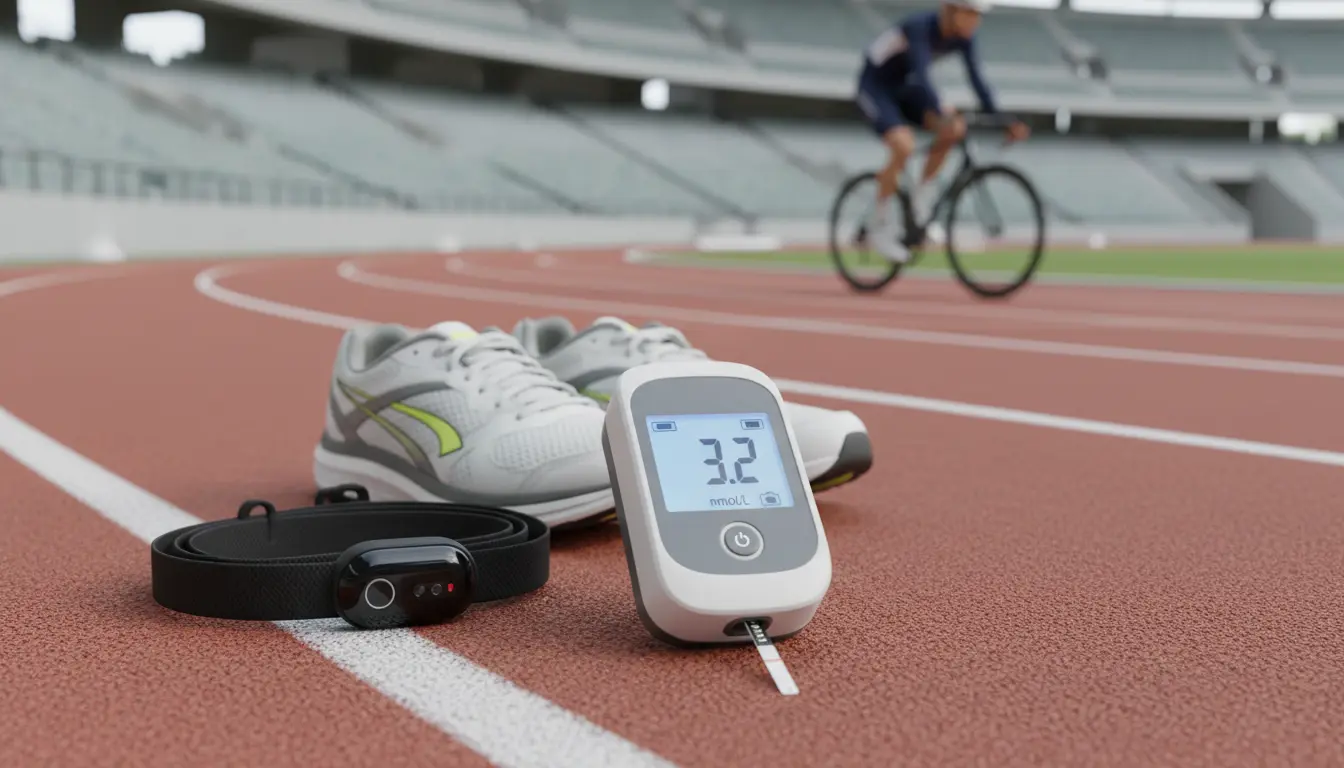
Lactate test devices are portable analyzers that measure blood lactate concentration from a small capillary blood sample, usually drawn from the fingertip or earlobe. These devices are similar in size and operation to portable blood glucose meters.
Most modern lactate analyzers use disposable test strips pre‑loaded with reagents. When a drop of blood is applied, the device measures the electrochemical reaction and converts it into a lactate value, expressed in millimoles per liter (mmol/L). Readings are typically available within seconds, allowing real‑time feedback during incremental exercise tests or interval sessions.
Key Components of a Lactate Testing System
- Lactate analyzer device
- Disposable lactate test strips
- Lancets and lancing device
- Calibration or control solutions (depending on the model)
- Data interface (Bluetooth, USB, or app integration on newer models)
Types of Lactate Analyzers
Not all lactate test devices are created equal. They vary in accuracy, speed, durability, and additional features. Broadly, we can divide them into three categories:
1. Handheld Portable Lactate Meters
These are compact, battery‑powered devices designed for field use. They require only a tiny blood sample and provide quick readings. They are ideal for:
- Endurance athletes (runners, cyclists, rowers, triathletes)
- Coaches working with multiple athletes on the track or field
- Sports scientists who need mobility outside the lab
Advantages include portability, relatively low cost per test, and rapid feedback. Limitations can include sensitivity to environmental conditions and the need for frequent strip replacement.
2. Bench‑Top Lactate Analyzers
Bench‑top systems are larger and commonly used in labs or medical facilities. They offer very high accuracy, automatic sample handling, and multi‑parameter analysis in some models.
They are suited for:
- Sports performance laboratories
- University research centers
- Clinical environments where lactate is used as a diagnostic marker
While more precise, they are more expensive and not practical for on‑field testing.
3. Integrated Wearable and Multi‑Sensor Systems
Emerging technologies integrate lactate sensing with other performance metrics such as heart rate, power output, and oxygen saturation. While continuous non‑invasive lactate monitoring is still developing, some systems combine occasional lactate measurements with comprehensive data logging and cloud analysis.
These are ideal for organizations looking for holistic athlete monitoring that connects biochemical markers with biomechanical and physiological data.
How to Use a Lactate Test Device Step by Step
To obtain reliable data, it is essential to follow a consistent protocol. Below is a typical step‑by‑step procedure for field‑based lactate testing:
- Prepare the equipment
- Ensure the lactate meter has fresh batteries or is fully charged.
- Check that test strips are within their expiry date and stored correctly.
- Set up all accessories (lancets, alcohol wipes, cotton pads).
- Calibrate or check the device (if required)
- Some models require periodic calibration using a control solution.
- Follow the manufacturer’s instructions carefully to maintain accuracy.
- Prepare the athlete
- Explain the procedure and obtain consent.
- Make sure the athlete is hydrated and that hands or earlobe are warm, as cold extremities can hinder blood flow and distort readings.
- Clean the sampling site
- Disinfect the fingertip or earlobe with an alcohol wipe.
- Allow the area to dry completely; residual alcohol can dilute the sample.
- Collect the blood sample
- Use a sterile lancet to prick the skin.
- Wipe away the first drop of blood, as it may contain tissue fluid.
- Gently massage the area to obtain a second, clean drop of blood.
- Apply blood to the test strip
- Insert a new test strip into the device.
- Touch the strip to the blood drop until the required volume is drawn in.
- Avoid smearing or pressing excessively, which can compromise the sample.
- Read and record the result
- Wait for the reading, which typically appears within 10–60 seconds.
- Record the value along with the time, exercise intensity, heart rate, and any relevant notes (e.g., stage of incremental test).
- Dispose of materials safely
- Discard used lancets and strips in a sharps container or appropriate biohazard disposal system.
- Clean and store the device according to the manufacturer’s recommendations.
Interpreting Lactate Test Results
Blood lactate values must be interpreted in context. A single isolated measurement means little without reference to exercise intensity, power output, or heart rate.
Lactate Threshold and Training Zones
During an incremental exercise test, lactate is measured at the end of each stage as workload increases. Plotting lactate concentration against intensity allows identification of:
- First lactate threshold (LT1): The point at which lactate first rises above resting levels.
- Second lactate threshold (LT2 / anaerobic threshold): The intensity at which lactate begins to accumulate rapidly, usually associated with a sharp rise in perceived effort and ventilation.
Once thresholds are identified, coaches can design individualized training zones:
- Zone 1 (Low intensity) – Below LT1; promotes recovery and basic aerobic capacity.
- Zone 2 (Moderate) – Between LT1 and LT2; improves aerobic efficiency and fat utilization.
- Zone 3 (High intensity) – At or above LT2; trains the body to tolerate and clear lactate more effectively.
Monitoring shifts in these thresholds over time provides objective evidence of training adaptation. If an athlete can reach a higher pace or power output at the same lactate concentration, their endurance capacity has improved.
Benefits of Using Lactate Test Devices in Training
Integrating lactate testing into a structured training program offers several clear advantages:
- Objective performance benchmarks
Lactate levels reflect metabolic stress more accurately than pace or heart rate alone, especially under varying environmental conditions. - Personalized training zones
Instead of using generic tables, athletes can base their workouts on their unique physiological responses, improving training efficiency. - Early detection of overreaching
Unusually high lactate values at moderate intensities may indicate fatigue or insufficient recovery. This allows coaches to adjust workloads before overtraining develops. - Monitoring adaptation
Regular testing highlights improvements in aerobic capacity, allowing more precise periodization and peaking strategies for key competitions. - Enhanced race strategy
Knowing the workload corresponding to lactate threshold helps athletes pace themselves more effectively in endurance events.
Best Practices for Reliable Lactate Measurements
To maximize the reliability and usefulness of lactate data, consider the following best practices:
- Standardize test conditions: Keep time of day, nutrition, warm‑up routines, and environmental conditions as consistent as possible.
- Use proper sampling technique: Always discard the first blood drop and avoid excessive squeezing of the finger or earlobe.
- Train staff and athletes: Anyone performing tests should be trained in both the technical and hygiene aspects of sampling.
- Log all relevant variables: Record workload (speed, power, pace), heart rate, RPE (rate of perceived exertion), and any unusual symptoms.
- Maintain equipment: Store test strips correctly, keep the device clean, and follow calibration or quality‑control schedules.
Product Suggestion from Amazon
A widely used and well‑reviewed portable lactate testing option available on Amazon is:
Lactate Scout 4 Portable Lactate Analyzer
This device is designed for quick, field‑based measurements with small sample volumes and fast results. It is suitable for endurance athletes, coaches, and sports scientists who need reliable lactate data outside the lab. When choosing a device, always review the latest product description, user reviews, and compatibility of test strips to ensure it matches your specific requirements.