
The Ultimate Guide to Phone Case Materials: TPU, PC, Aramid Fiber, and Leather
Choosing the right phone case is no longer just about aesthetics; it is a critical decision involving material science, ergonomics, and long-term device preservation. With smartphones now costing upwards of a thousand dollars, the “armor” you choose dictates whether a accidental drop results in a minor heart skip or a shattered display. The market is flooded with various materials, but four stand out as the industry standards: Thermoplastic Polyurethane (TPU), Polycarbonate (PC), Aramid Fiber, and Leather.
Each material offers a distinct balance of shock absorption, tactile feedback, durability, and style. In this comprehensive guide, we will break down the pros and cons of each to help you decide which material aligns with your lifestyle.
1. TPU (Thermoplastic Polyurethane): The Flexible Protector
TPU is perhaps the most common material used in the smartphone accessory industry. It is a hybrid material—a mixture between hard plastic and soft silicone. This unique composition gives it a rubber-like elasticity while maintaining the durability of plastic.

The Pros (Pluses):
- Superior Shock Absorption: Because TPU is elastic, it acts like a cushion. When your phone hits the ground, the material compresses and redistributes the kinetic energy away from the internal components.
- Excellent Grip: TPU has a naturally “tacky” feel. This high-friction surface makes it much less likely for the phone to slide out of your hand or off a smooth dashboard.
- Affordability: Manufacturing TPU is cost-effective, making these cases the most budget-friendly option for consumers.
- Ease of Installation: Its flexibility allows you to snap the case on and off without worrying about scratching the phone’s frame or breaking the case itself.
The Cons (Minuses):
- Yellowing Over Time: Clear TPU cases are notorious for turning a murky yellow. This isn’t dirt; it’s a chemical reaction caused by UV light and oils from your skin.
- Loose Fit: Over months of use, lower-quality TPU can stretch out, leading to a “saggy” fit around the buttons and ports.
- Heat Retention: TPU is a decent insulator, which means it can trap heat during intensive gaming or fast charging, potentially slowing down your processor.
2. PC (Polycarbonate): The Rigid Shield
Polycarbonate is a high-impact resistant thermoplastic. It is the same material used for bulletproof glass and riot shields. In the world of phone cases, it is used to create “hard shell” cases that offer a slim, sleek profile.
The Pros (Pluses):
- High Impact Resistance: PC is incredibly tough. It excels at preventing “piercing” damage and structural bends.
- Slim and Lightweight: Because the material is so strong, manufacturers can make PC cases very thin without sacrificing structural integrity.
- Clarity and Customization: Unlike TPU, PC does not yellow. It stays crystal clear for years. It also takes well to high-definition printing, making it the go-to for artistic or branded cases.
- Weather Resistance: It handles extreme temperatures and moisture better than organic materials like leather.
The Cons (Minuses):
- Lack of Shock Absorption: While PC is hard, it is also rigid. It doesn’t “bounce.” In a high-velocity drop, the case might survive, but the vibration can pass directly through to the phone’s glass.
- Slippery Texture: Without a specialized coating, PC is very smooth. This can make the phone feel like a bar of soap in your hand.
- Prone to Cracking: If you drop a PC case on a hard corner, the material may crack or chip because it lacks the flexibility to deform and return to its original shape.
3. Aramid Fiber: The Aerospace Elite
Often confused with carbon fiber, Aramid fiber (best known by the brand name Kevlar) is a synthetic fiber used in military body armor, aerospace engineering, and racing cars. It represents the premium tier of synthetic protection.
The Pros (Pluses):
- Incredible Strength-to-Weight Ratio: Aramid fiber is five times stronger than steel on an equal weight basis. It provides “heavy-duty” protection in a “paper-thin” form factor.
- Heat Resistance: It is naturally flame-resistant and handles heat dissipation exceptionally well, keeping your phone cool.
- No Signal Interference: Unlike carbon fiber, which is conductive and can block Wi-Fi or 5G signals, Aramid fiber is non-conductive.
- Premium Aesthetic: It has a distinct, sophisticated woven texture that feels high-end and resists fingerprints and scratches.
The Cons (Minuses):
- High Price Point: The manufacturing process for Aramid fiber is complex and expensive, which is reflected in the retail price.
- Minimal Lip Protection: Most Aramid cases are designed for “minimalists.” They often don’t have the raised edges (lips) needed to protect the screen during a face-down drop.
- Difficult to Remove: Because they are engineered for a precision fit, taking these cases off can be a struggle.
4. Leather: The Timeless Classic
Leather cases, whether made from genuine animal hide or high-quality vegan alternatives, are about the “experience.” They are the choice for professionals and those who value tactile luxury over rugged utility.
The Pros (Pluses):
- The Patina Effect: Unlike every other material on this list, leather gets better with age. It develops a “patina”—a unique sheen and color shift based on how you handle it.
- Premium Grip and Feel: Leather feels warm and organic. It provides a natural grip that improves as the leather softens over time.
- Professional Appearance: It complements formal attire and business environments better than plastic or rubber.
- Slim Profile: Most leather cases are built around a thin plastic frame, offering a good balance of slimness and style.
The Cons (Minuses):
- Maintenance Required: Leather is skin. It can dry out, crack, or stain. It requires occasional conditioning and must be kept away from excessive water.
- Lower Drop Protection: While leather provides good scratch protection, it doesn’t have the mechanical shock-absorbing properties of TPU or the structural hardness of PC.
- Ethical and Cost Concerns: Genuine leather is expensive and carries ethical weight for some consumers, while “vegan leather” (PU leather) often lacks the durability and patina of the real thing.
Conclusion: Which One Should You Choose?
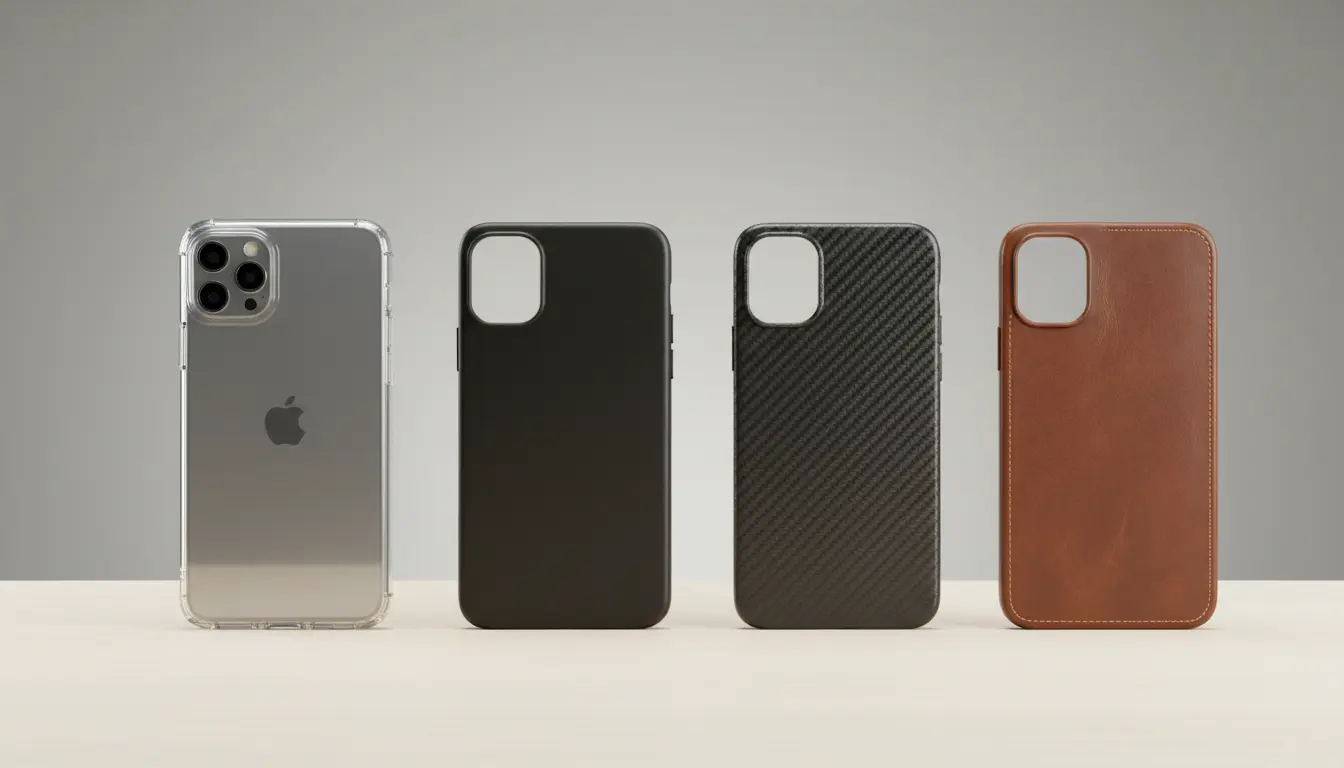
The “best” material depends entirely on your daily environment. If you are prone to dropping your phone on concrete, a TPU or a hybrid TPU/PC case is your best bet for survival. If you want to showcase the design of your phone without it turning yellow, Polycarbonate is the winner. For those who want the thinnest possible protection that still feels like a luxury item, Aramid Fiber is unmatched. Finally, if you view your phone as a fashion accessory that should age gracefully with you, Leather is the only choice.
By understanding these materials, you can move beyond “does it look good?” and start asking “will it actually protect my investment?”