
Safe Sports Equipment for Kids and Home-Friendly Fitness Gear
Ensuring that children stay active is essential for their physical and mental development. Yet many parents hesitate to encourage sports because of injury risks or unsafe equipment. Choosing safe sports equipment for kids and home-friendly fitness gear can solve this problem and help children build lifelong healthy habits. In this guide, you’ll learn how to select age-appropriate, safe, and engaging equipment that your child can confidently use at home.
Why Safe Sports Equipment Matters for Children
Children’s bodies are still growing. Their bones, joints, and muscles are more vulnerable than those of adults. Poorly designed or low‑quality equipment can lead to:
- Sprains and strains
- Falls and impact injuries
- Poor posture and long‑term joint problems
By investing in kid-safe sports gear, parents reduce injury risk and create a positive relationship between children and physical activity. When kids feel safe and supported, they are more likely to enjoy exercise and keep moving every day.
Key Safety Criteria When Choosing Kids’ Sports Gear
Before buying any equipment, consider these core safety criteria:
1. Age Appropriateness
Select equipment specifically designed for your child’s age group. Look for:
- Age ranges on product labels
- Adjustable sizes (handles, heights, resistance levels)
- Lighter weights for younger children
Age‑appropriate equipment supports proper coordination and prevents overloading growing joints.
2. Non-Toxic and Child-Safe Materials
Children may touch their face or mouth after using equipment. Choose products made from:
- BPA‑free plastics
- Non‑toxic paints and coatings
- Hypoallergenic, skin-friendly materials
Check product descriptions and safety certifications whenever possible.
3. Stability and Anti-Slip Design
For use at home, stability is crucial. Prefer equipment with:
- Wide bases for balance
- Non-slip rubber feet or suction cups
- Textured, anti-slip surfaces on steps and platforms
Stable equipment reduces the chance of tipping and sliding on hard floors or tiles.
4. Rounded Edges and Soft Padding
Avoid sharp corners and hard contact points. Instead, choose:
- Rounded edges
- Foam padding or soft covers
- Cushioned grips and handles
Soft surfaces help protect against bumps and minor falls, especially for younger kids.
Best Types of Safe Sports Equipment for Home Use
You don’t need a full gym to keep your child active. A few thoughtful pieces of home fitness equipment for kids can be enough to create a safe movement space.
1. Soft Play Mats and Exercise Mats
A quality mat is the foundation of safe activity at home. It:
- Cushions falls
- Protects knees, wrists, and ankles
- Defines a dedicated “play and exercise zone”
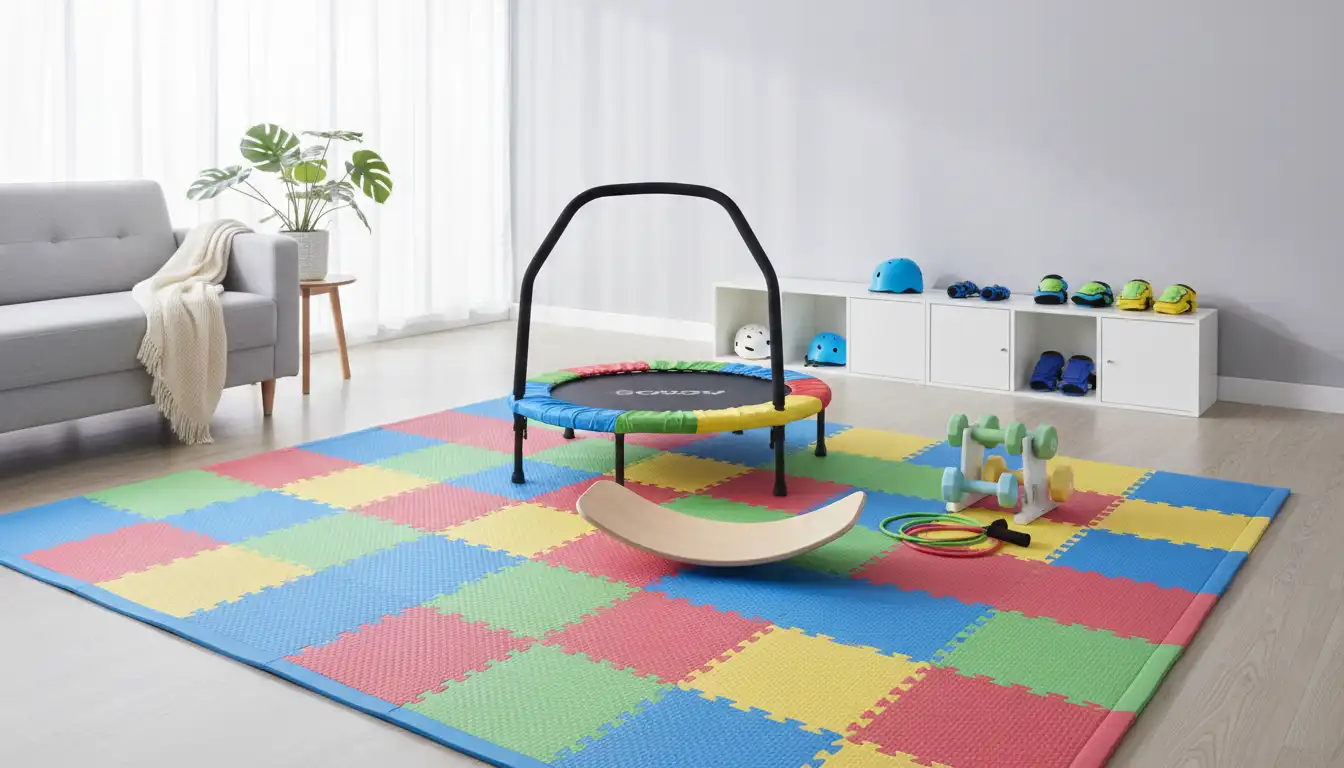
Choose thick, non‑slip, easy‑to-clean mats made from non‑toxic foam. Puzzle mats or foldable exercise mats are ideal for small homes because you can store them away easily.
2. Balance Boards and Stability Trainers for Kids
Balance boards and wobble cushions help children develop:
- Core strength
- Coordination
- Body awareness
Look for models specifically designed for kids, with:
- Lower height and limited tilt angles
- Anti‑slip surfaces
- Weight ratings suitable for children
Always supervise young children while they’re learning to use balance gear.
3. Child-Sized Dumbbells and Resistance Bands
Strength training can be safe for kids when done correctly and with appropriate loads. Use:
- Light, neoprene‑coated dumbbells
- Short, low‑resistance bands
Focus on form, not weight. Encourage controlled movements, and avoid heavy lifting. Resistance bands should be short enough for kids and should be used away from the face to prevent snaps.
4. Mini Indoor Trampolines With Safety Handles
A small indoor trampoline for kids can be a fun way to burn energy and improve coordination. For safety, pick one with:
- A sturdy, fixed handrail
- Strong springs or bungee cords covered by padding
- Non‑slip feet
Place the trampoline on a mat and keep the area clear of furniture. Allow only one child at a time to avoid collisions.
5. Foam Rollers and Soft Massage Balls
Foam rollers designed for kids help with:
- Muscle recovery
- Flexibility
- Sensory input and body awareness
Choose shorter, softer rollers and light, textured massage balls. Teach children how to roll slowly and avoid the lower back area without guidance.
Protective Gear: Essential Safety for Active Kids
In addition to equipment, protective gear for children’s sports is non‑negotiable for many activities.
Helmets
For bikes, scooters, skating, or hoverboards, a properly fitted helmet is essential.
- Look for safety standards (such as CPSC for bike helmets in the U.S.).
- Ensure the helmet fits snugly and sits level on the head.
- Teach kids to fasten the chin strap every time.
Knee, Elbow, and Wrist Guards
Pads and guards:
- Absorb impact during falls
- Protect small joints and bones
- Build confidence for learning new skills
Soft, adjustable straps improve comfort and keep gear in place during movement.
Creating a Safe Home Fitness Zone for Kids
Even the safest gear can become risky without a suitable environment. To make your home child‑friendly:
1. Choose the Right Space
Select a room or corner that is:
- Free of sharp furniture edges
- Away from stairs and fragile items
- Well lit and ventilated
Clear enough space around equipment so children can move freely.
2. Establish Simple Safety Rules
Set clear, age-appropriate rules such as:
- “One person on the trampoline at a time.”
- “Use equipment only with adult permission.”
- “No running with weights or resistance bands.”
Post rules on the wall using simple language or icons, especially for younger kids.
3. Supervise and Teach Proper Technique
Active adult supervision is critical. Show kids:
- How to warm up with light stretches and movements
- Correct posture for basic exercises (squats, jumping, push-ups)
- How to put away equipment safely after each use
When parents join in, children see exercise as a fun family routine instead of a chore.
Encouraging Healthy, Long-Term Habits
Safe equipment is only one part of supporting an active lifestyle. To keep your child engaged:
- Make it playful: Turn exercises into games, obstacle courses, or challenges.
- Celebrate effort: Praise consistency and effort, not speed or performance.
- Rotate activities: Alternate between balance games, jumping, stretching, and light strength movements to avoid boredom.
By combining safe home sports equipment with positive encouragement, you help your child build confidence, resilience, and a love of movement that can last a lifetime.
Example Product Suggestion from Amazon
As a practical example, you can look for a kids’ indoor trampoline with safety handle on Amazon.com. Search for a mini trampoline model that includes:
- A sturdy U- or T-shaped handlebar
- Padded springs or bungee cords
- Non‑slip rubber feet
Always check reviews, weight limits, and product safety information before purchasing.