
Best Premium Home Theater TVs: OLED and Mini‑LED Explained
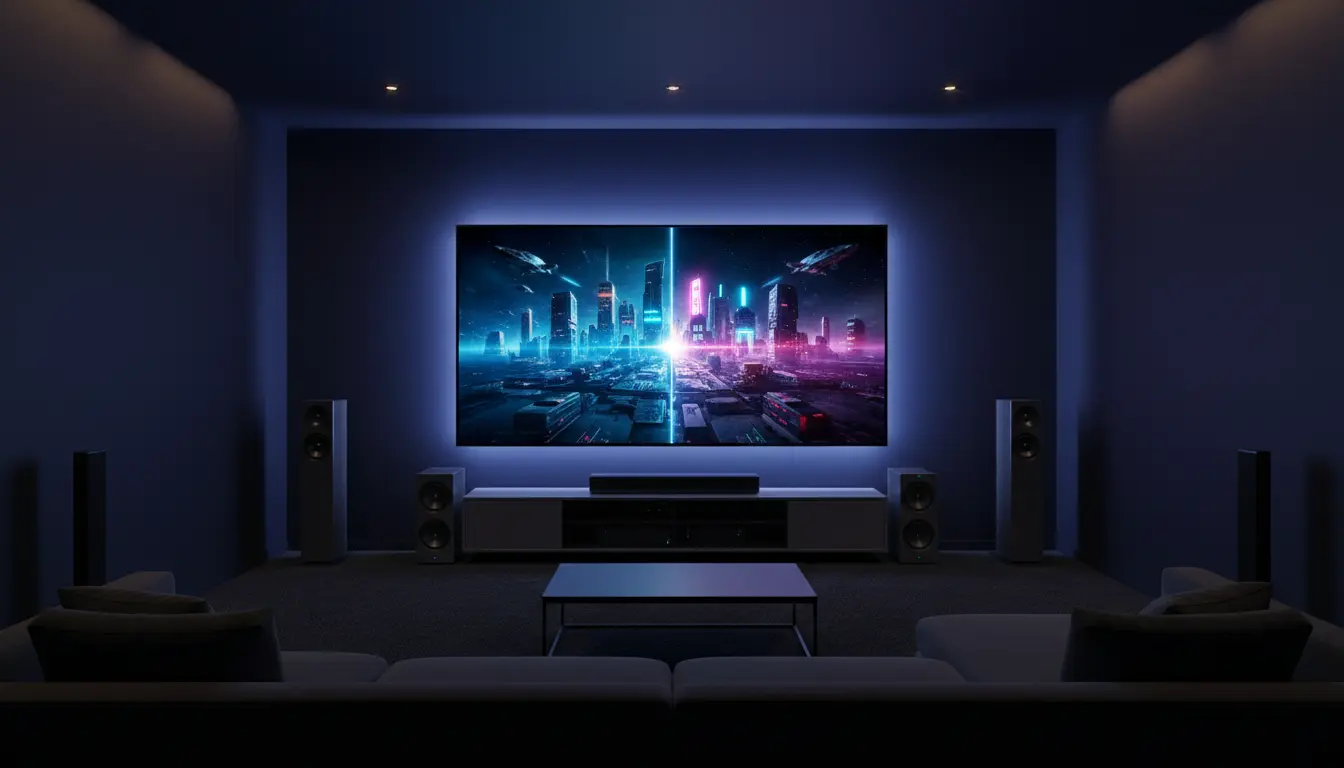
Creating a true home theater experience starts with choosing the right TV. Today, two premium display technologies dominate the market: OLED and Mini‑LED. Both can deliver cinematic visuals in your living room, but they do so in different ways. Understanding their strengths, weaknesses, and best‑use scenarios will help you pick the perfect screen for movies, sports, and next‑gen gaming.
This guide breaks down how OLED and Mini‑LED work, compares real‑world performance, and ends with a concrete product recommendation you can actually buy.
What Is an OLED TV?
OLED (Organic Light‑Emitting Diode) TVs use self‑emissive pixels. Each pixel can turn completely on or completely off:
- When a pixel is off, you get perfect black.
- When a pixel is on, it emits its own colored light—no backlight needed.
Key Advantages of OLED
- Perfect Blacks & Infinite Contrast
Because pixels can fully shut off, black areas of the image are truly black, not dark gray. This creates an “infinite” contrast ratio, making movies look incredibly three‑dimensional. - Exceptional Picture Uniformity
Without a backlight, you avoid common LCD issues like blooming and clouding. Dark scenes in HDR movies and streaming series look clean and precise. - Wide Viewing Angles
Picture quality stays consistent even when you sit off to the side. Large families or wider seating layouts especially benefit from this. - Ultra‑Fast Response Time for Gaming
OLED pixels switch almost instantly, reducing motion blur and ghosting. Paired with HDMI 2.1 features, OLED is a favourite among competitive gamers.
Potential Drawbacks of OLED
- Peak Brightness in Very Bright Rooms
Although modern OLEDs are brighter than ever, very sunny rooms may still favor the raw light output of a top‑tier Mini‑LED. - Image Retention Risk
With normal mixed use, burn‑in is rare, but static logos and HUDs displayed for many hours can pose a small risk over several years.
What Is a Mini‑LED TV?
Mini‑LED is an advanced form of LCD TV. Instead of traditional large LEDs, it uses thousands of tiny LEDs grouped into many local dimming zones behind the LCD panel.
These zones can be brightened or darkened independently, significantly improving contrast over older LED‑LCD models.
Key Advantages of Mini‑LED
- Very High Peak Brightness
Mini‑LED TVs can get extremely bright, making them ideal for:- Daytime viewing
- Bright living rooms
- HDR content with intense highlights (explosions, sun reflections, specular details)
- Improved Local Dimming
With many more dimming zones, Mini‑LED handles dark scenes much better than standard LED‑LCD. While not as precise as OLED at a pixel level, it gets close with far fewer artifacts than older tech. - Lower Risk of Burn‑In
Mini‑LEDs rely on an LCD panel, so they are highly resistant to static image damage. They’re a strong choice for:- News channels
- Sports score tickers
- Gaming with static HUD elements
- Excellent for Large Screen Sizes
Mini‑LED often offers a better price‑to‑size ratio at very large diagonals (75–85 inches and beyond), making it attractive for dedicated home theater rooms.
Potential Drawbacks of Mini‑LED
- Blooming & Halo Effects
Since local dimming uses zones rather than individual pixels, bright objects on dark backgrounds can produce visible halos, especially in subtitles or UI elements. - Reduced Viewing Angles
Picture quality typically degrades more when viewed from the side compared to OLED, although premium Mini‑LED panels mitigate this somewhat.
OLED vs Mini‑LED: Which Is Better for Home Theater?
The “best” technology depends on your room, habits, and priorities. Here’s how they stack up in real‑world home theater use.
Picture Quality & Contrast
- OLED: Reigns supreme in dark rooms, with flawless blacks and incredible depth.
- Mini‑LED: Delivers strong contrast for an LCD and much better performance than standard LED TVs, but still not as perfect as OLED’s per‑pixel control.
Winner for cinematic dark‑room viewing: OLED
Brightness and HDR Impact
- Mini‑LED: Takes the lead in sheer brightness, making HDR highlights pop even in daytime viewing.
- OLED: Bright, but still behind the very best Mini‑LED models at large sizes and sustained full‑screen brightness.
Winner for bright rooms and HDR pop: Mini‑LED
Gaming Performance
- OLED: Near‑instant response times and superb motion clarity, excellent for fast‑paced shooters and racing games.
- Mini‑LED: Modern models with 120 Hz panels and HDMI 2.1 also perform very well, especially when combined with VRR and game‑specific picture modes.
If you game in a dark room and want maximum contrast, OLED is slightly ahead. If you game in a bright environment and are concerned about static HUDs, a Mini‑LED might be the safer long‑term choice.
Screen Size and Value
At very large screen sizes (e.g., 85 inches):
- Mini‑LED often offers better pricing or richer feature bundles at the same price point.
- OLED is catching up with more affordable large‑screen options, but truly premium big OLEDs can still be expensive.
Choosing Between OLED and Mini‑LED for Your Setup
Ask yourself these questions:
- How bright is your room most of the time?
- Mostly dark and controlled lighting → Lean toward OLED
- Very bright, sunlit room → Lean toward Mini‑LED
- What do you watch most often?
- Movies and series at night, cinematic experience is the priority → OLED
- Mixed use: TV, sports, gaming, daytime viewing → Mini‑LED or high‑brightness OLED
- Are you concerned about static logos and HUDs?
- Heavy gaming with static UI, news channels all day → Mini‑LED is safer
- Mixed content with varied scenes → Either is fine
- How many people watch together?
- Wide seating layout → OLED’s viewing angles win
- Narrow, centered seating → Mini‑LED is totally fine
Why Premium Home Theater TVs Need Strong Processing
Beyond the panel technology, image processing is critical for premium home theater performance. The best TVs now use AI‑driven processors to:
- Upscale lower‑resolution content to 4K with more detail
- Reduce noise and compression artifacts from streaming services
- Optimize motion for smoother action scenes
- Adapt picture settings based on content type (movie, sports, games)
A powerful processor can bridge the gap between different content sources, ensuring that even older Blu‑rays or HD broadcasts look sharp and cinematic on your big screen.
Recommended Premium Mini‑LED Home Theater TV (Amazon)
For users who want a large, bright, premium Mini‑LED TV with advanced processing, excellent gaming features, and strong integration with modern ecosystems, consider:
Sony BRAVIA 5 85 Inch TV, Mini LED, 4K Smart Google TV, XR Processor with AI Technology, 120Hz Television with Dolby Vision/Atmos, Exclusive Features for PlayStation®5, K‑85XR50, 2025 Model
This model is an outstanding fit if:
- You want a true home theater scale at 85 inches
- You need Mini‑LED brightness for daytime viewing and impactful HDR
- You care about AI‑enhanced processing for upscaling and motion
- You use a PlayStation®5 and want low input lag, 120 Hz, and exclusive gaming features
- You prefer Google TV for a rich app ecosystem and voice control
With its combination of Mini‑LED backlighting, Sony’s XR processor with AI technology, 120 Hz panel, and Dolby Vision/Atmos support, this TV delivers a powerful, premium home theater experience in a large‑format size that truly fills your room.