
Best Solar-Powered Outdoor Lights for Florida’s Year-Round Sunshine
Florida’s abundant sunshine makes solar-powered outdoor lighting a practical choice for homes, patios, gardens, walkways, and pool areas. Instead of connecting fixtures to an outlet, these lights collect daylight, store energy in rechargeable batteries, and illuminate your property after sunset. The best solar outdoor lights for Florida must do more than look attractive. They should handle intense heat, heavy rain, humidity, salty coastal air, and occasional strong winds while delivering dependable nighttime brightness.
Why Florida Is Ideal for Solar Lighting
Florida offers long, bright days across much of the year, giving solar panels plenty of opportunity to recharge. This makes outdoor solar lighting especially useful in places such as Miami, Orlando, Tampa, Jacksonville, and the Florida Keys. A well-positioned fixture can turn sunlight into free evening illumination for paths, garden beds, driveways, fences, and entertaining areas.
However, sunshine alone does not guarantee consistent performance. Summer storms can arrive quickly, and tree canopies or covered patios may reduce charging time. Before buying, identify the area you want to light and check whether the solar panel will receive several hours of unobstructed daylight. A separate-panel design works well when you need to place the lamp under an overhang while keeping its panel in direct sun.
Features That Matter in Florida
Weather resistance should be your first priority. Look for a sealed construction and a strong ingress protection rating, such as IP65 or IP68. These ratings indicate protection against dust and water, although the exact level of protection differs by model. A weather-resistant solar light can tolerate everyday rain, but no fixture should be treated as indestructible during hurricanes or flooding.
Heat-resistant materials also deserve attention. UV-stabilized plastic, aluminum, stainless steel, and tempered glass usually offer better long-term durability than thin, untreated materials. Coastal homeowners should consider corrosion-resistant finishes because salt air can gradually damage exposed metal. Secure stakes and mounting hardware help prevent wind from moving or tipping the light.
Battery quality influences how long the fixture shines. Choose models with replaceable rechargeable batteries when possible, because batteries eventually lose capacity. A high-capacity battery may provide longer runtime, but brighter settings consume energy faster. Motion-sensor lights conserve power by increasing brightness only when someone approaches, while pathway lights typically provide a softer, continuous glow.
Choose the Right Style for Each Area
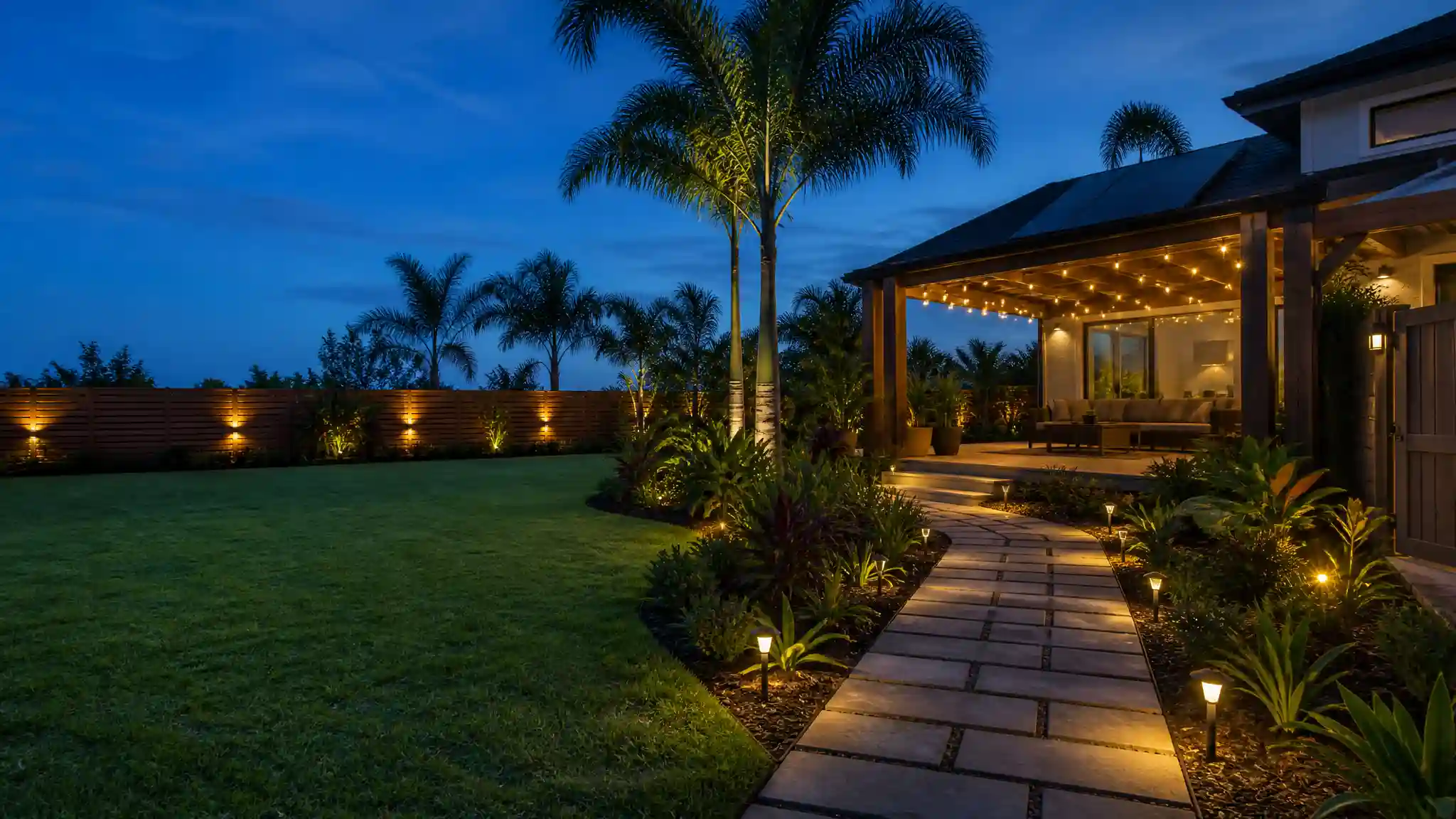
Solar pathway lights create a clear, welcoming route along sidewalks, driveways, and garden borders. Select evenly spaced fixtures with downward illumination to reduce glare and improve visibility. Solar landscape spotlights work better for highlighting palm trees, architectural details, fountains, or outdoor artwork. Adjustable heads let you direct the beam where you need it.
For decks, porches, and fences, solar wall lights or solar fence lights provide practical illumination without electrical wiring. Motion-activated outdoor lights can improve security around gates, garages, and side entrances. They also help preserve battery power when the area remains empty.
Solar string lights add atmosphere rather than strong task lighting. Hang them across a pergola, lanai, balcony, or seating area to create a warm outdoor setting. Edison-style bulbs and warm-white LEDs produce a comfortable glow for dining and conversation. For steps and pool borders, choose low-glare fixtures that improve safety without shining directly into people’s eyes.
Installation Tips for Better Performance
Install every panel where buildings, umbrellas, palms, and shrubs will not cast shadows during peak daylight. Even partial shade can reduce charging efficiency. Point adjustable panels toward the strongest available sunlight, then test the light for several nights before finalizing its position.
Clean the panel regularly with a soft, damp cloth. Florida’s pollen, dust, salt, and mineral deposits can block sunlight and shorten nighttime runtime. Keep vegetation from covering the panel, and inspect stakes after heavy rain. If a light begins fading early, check the switch, clean the panel, and replace the rechargeable battery if the model allows it.
Use solar lighting strategically instead of placing too many fixtures close together. A balanced layout improves curb appeal and prevents harsh visual clutter. For security, combine motion-sensor spotlights with gentle pathway lighting. For entertaining, pair solar string lights with a few low-level deck or fence fixtures.
How to Compare Brightness and Color
Check lumens when you need functional light, but remember that beam angle and lens design also affect perceived brightness. A narrow beam can highlight a tree, while a wider beam spreads light across a walkway. Warm white illumination feels softer and more inviting; cool white light can make entrances and security zones appear sharper. Avoid excessive brightness near neighbors, bedrooms, or wildlife areas, and use shields or downward angles to control glare.
Recommended Amazon Product
For a reliable all-purpose option, consider the AloftSun Solar Motion Sensor Outdoor Lights available on Amazon.com. The Spruce identifies this model as a strong overall choice and reports that its tested version offered three lighting modes, adjustable positioning, two installation methods, and an IP68 rating. The source also notes that the lights can detect motion from as far as 33 feet, depending on the setting, and can operate for approximately six to twelve hours depending on the mode. Product specifications, availability, and price can change, so verify the current Amazon listing before purchasing.
These lights suit Florida driveways, garden paths, side yards, and entry steps because they combine directed illumination with motion detection. Their spotlight design is more functional than decorative, so they may not replace ambient patio lights. Still, they offer a useful balance of brightness, flexibility, and weather protection for many residential applications. See the current listing on Amazon.com.
Final Buying Advice
The best solar-powered outdoor lights for Florida match the fixture to the job. Choose pathway lights for navigation, spotlights for landscaping, motion sensors for security, and string lights for ambiance. Prioritize direct sunlight, durable construction, a dependable battery, automatic dusk-to-dawn operation, and suitable water resistance. With thoughtful placement and simple maintenance, solar lighting can make your outdoor space safer, more attractive, and more enjoyable throughout the year—without adding new electrical wiring.