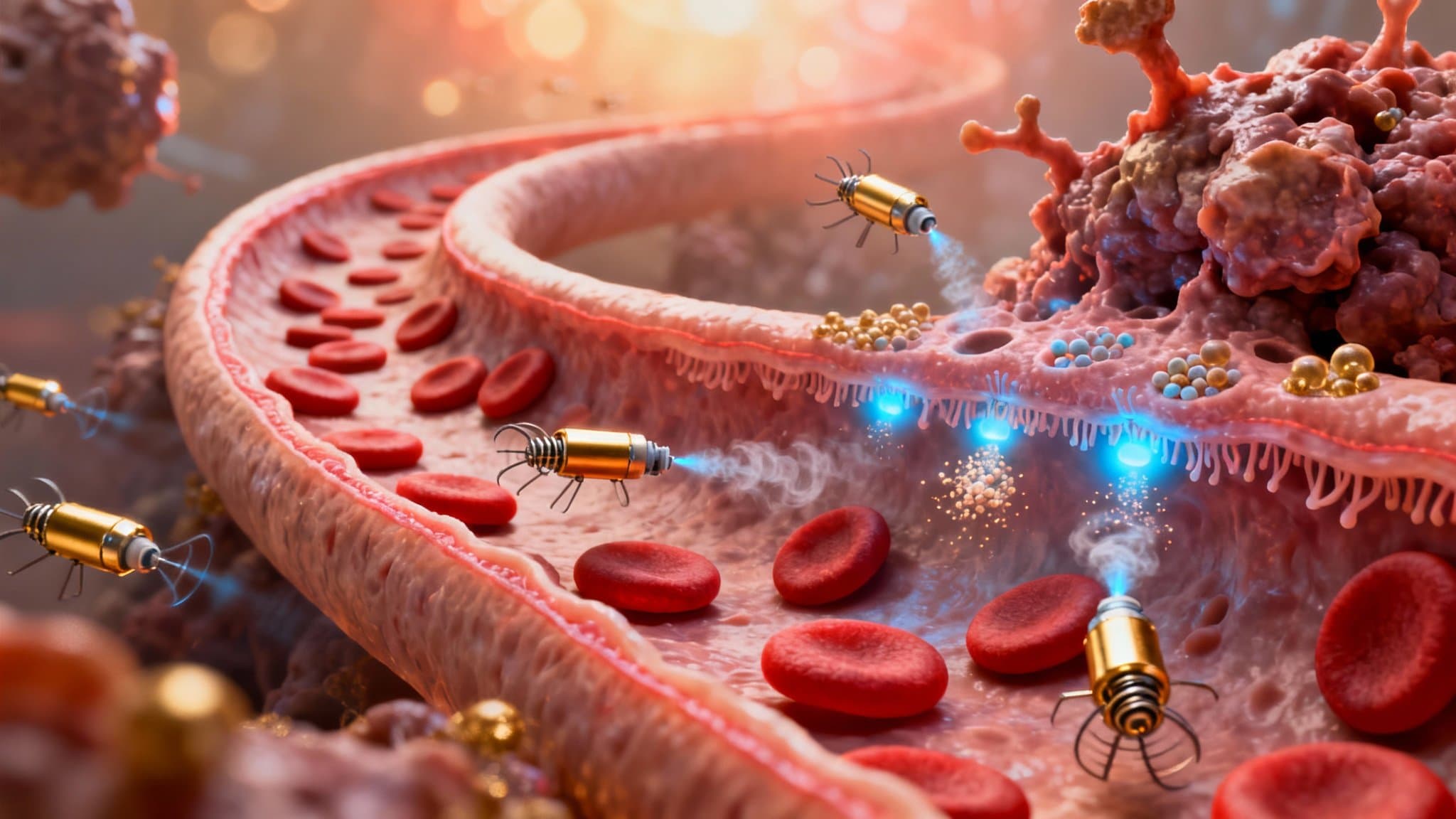

Modern medicine is advancing at an unprecedented pace, and one of its most revolutionary innovations involves nanotechnology in healthcare. At the forefront of this progress are nanorobotic drug carriers — microscopic machines engineered to deliver medications directly to diseased cells. This approach, known as targeted therapy, has the potential to transform the way we treat cancer, neurological disorders, cardiovascular diseases, and even chronic conditions that traditional medicine struggles to manage.
What Are Nanorobots?
Nanorobots are molecular-scale devices, often sized between 0.1 to 10 micrometers, designed to interact with biological environments at the cellular level. Unlike conventional drug delivery systems, which flood the entire body with chemicals, nanorobots can navigate directly to specific tissues, reducing collateral damage to healthy cells. They are typically crafted from biocompatible materials such as gold, silica, or specialized polymers, ensuring that the human body tolerates them without significant immune rejection.
How Nanorobots Work in Targeted Drug Delivery
Imagine a world where chemotherapy affects only cancerous tumors and spares healthy organs. This is precisely the vision driving nanorobot technology. These tiny machines can be programmed or guided to recognize biomarkers — unique molecular signatures that distinguish diseased cells from normal ones.
The primary working mechanism includes:
- Detection: Nanorobots identify abnormal cells using sensors that respond to pH differences, genetic markers, or protein expressions.
- Navigation: Guided by magnetic fields, chemical gradients, or even AI-based algorithms, nanorobots travel through the bloodstream with extreme precision.
- Payload Delivery: Once the target is reached, nanorobots release their payload — a defined quantity of medication — exactly where it is needed.
- Self-Degradation or Retrieval: Many nanorobots are designed to biodegrade safely, while others can be retrieved post-treatment via specialized medical procedures.
Applications in Modern Medicine
The potential applications are vast, making nanorobot therapy a cornerstone of the future healthcare industry.
- Cancer Treatment
Traditional chemotherapy introduces toxic chemicals into the entire body, causing severe side effects. Nanorobots can deliver anti-cancer drugs directly to tumors, minimizing systemic toxicity and improving recovery rates. This could significantly increase patient survival outcomes while reducing post-treatment complications. - Cardiovascular Diseases
Nanorobots can dissolve harmful arterial plaques, remove blood clots, or deliver anti-inflammatory drugs precisely at blocked vessels. This method reduces the risk of stroke and heart attacks without invasive surgeries. - Neurological Disorders
Diseases like Alzheimer’s and Parkinson’s often involve barriers such as the blood-brain barrier (BBB) that restricts drug entry. Nanorobots demonstrate the capability to cross the BBB, delivering neuroprotective agents directly into brain tissues. - Infectious Diseases
Nanorobots could revolutionize how we approach bacterial resistance. Instead of broad-spectrum antibiotics, they could release micro-doses of targeted antimicrobials inside infected cells. - Personalized Medicine
With the rise of genetic profiling, nanorobots could be tailored to deliver drugs based on a patient’s individual molecular blueprint, turning treatment into a personalized and highly accurate approach.
Advantages of Nanorobotic Drug Carriers
- Precision: Delivery directly to diseased cells without harming healthy tissue.
- Reduced Side Effects: Minimization of toxic drug exposure throughout the body.
- Efficiency: Enhanced bioavailability and faster onset of therapeutic action.
- Controlled Release: Ability to release drugs at controlled rates, ensuring maximum effectiveness.
- Adaptability: Integration with artificial intelligence for real-time monitoring and adaptive response.
Challenges and Limitations
While the promise is immense, several challenges remain before nanorobots become mainstream in hospitals:
- Manufacturing Complexity: Producing machines at a nano-scale with full functionality is highly challenging and costly.
- Safety Concerns: Even if made from biocompatible materials, long-term safety needs thorough testing.
- Regulatory Hurdles: Current medical approval systems are not fully adapted to nano-medical technologies, slowing clinical adoption.
- Ethical Issues: Questions regarding control, misuse, and accessibility remain in debate.
- Scalability: Mass production without losing precision and quality is still under development.
The Role of Artificial Intelligence in Nanorobot Drug Delivery
AI is becoming a crucial partner in nanomedicine. Machine learning algorithms can help:
- Predict patient responses to nanorobot therapy.
- Optimize pathways for nanorobot navigation.
- Personalize treatment schedules based on real-time biological data.
The combination of AI and nanorobotic drug delivery creates a hybrid healthcare model, offering not just treatment but predictive and preventive medical solutions.
The Future Outlook
Pharmaceutical giants and research institutions are investing billions into nanomedicine research. The U.S. remains at the forefront, with the National Institutes of Health (NIH) funding multiple nanomedicine initiatives. Analysts predict that the global nanorobotics market in drug delivery will grow exponentially over the next decade, especially driven by rising cases of cancer and chronic illnesses.
The ultimate vision is disease-specific nanorobotic therapy where treatments are automated, precise, and accessible. With advancements in biotechnology, materials science, and artificial intelligence, nanorobots will no longer be a futuristic concept but a standard part of U.S. clinical practice.
Conclusion
Nanorobot-based drug delivery marks a paradigm shift in medicine. These microscopic agents can detect, navigate, and deliver drugs with surgical precision, opening doors to safer treatments and personalized healthcare on an unprecedented level. While scientific, regulatory, and ethical hurdles exist, the integration of nanotechnology in medicine is inevitable. For patients in the United States and around the globe, nanorobots represent hope — a future where treatments are no longer blunt instruments but intelligent, patient-specific therapies.