
Identity theft is one of the fastest-growing cybercrimes in the United States, affecting millions of Americans every year. From data breaches to phishing scams and account takeovers, fraudsters are constantly evolving their tactics. The good news: with a layered defense strategy—anchored by a credit freeze—you can drastically reduce your risk. This guide explains how identity theft happens, how to prevent it, what to do if you’re a victim, and how to implement a credit freeze at all three U.S. credit bureaus.
What Is Identity Theft?
Identity theft occurs when someone uses your personal information—such as your Social Security Number (SSN), date of birth, or account logins—without your permission to commit fraud. Common outcomes include new-account fraud (credit cards or loans opened in your name), tax refund fraud, medical identity theft, benefits fraud, and synthetic identity fraud (where real and fake details are mixed to create a new “person”).
How Identity Theft Happens
- Data breaches: Hackers steal large volumes of personal data from companies, hospitals, and retailers.
- Phishing and smishing: Deceptive emails or texts mimic trusted brands to trick you into revealing passwords or 2FA codes.
- Public Wi‑Fi snooping: Unsecured networks can expose logins to eavesdroppers.
- Mail theft and dumpster diving: Paper statements and preapproved credit offers can be exploited.
- Social engineering: Fraudsters leverage public details from social media to guess security questions or reset accounts.
Why a Credit Freeze Is the Gold Standard
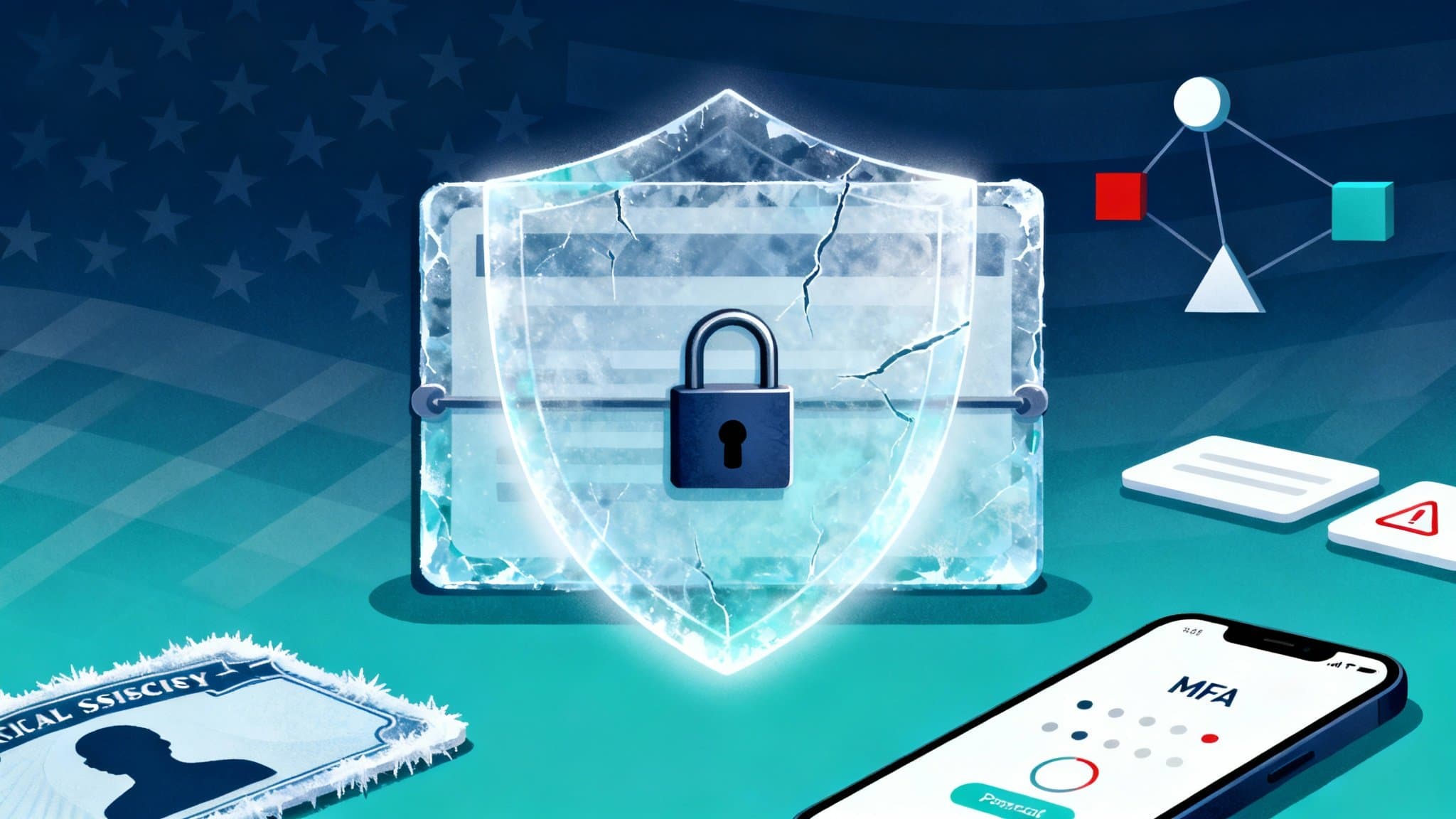
A credit freeze (also called a security freeze) restricts access to your credit report. Without access, lenders typically won’t approve new credit—making it far harder for criminals to open accounts in your name. Key points:



- Free: Federal law requires Equifax, Experian, and TransUnion to provide freezes and thaws at no cost.
- Reversible: You can temporarily “thaw” your freeze online or via phone when you need new credit.
- Doesn’t affect existing accounts: Your current credit cards and loans still function normally.
- Doesn’t impact your credit score: A freeze doesn’t show up as a negative item.
Pro tip: Consider adding a freeze for ChexSystems and Innovis as well. These specialty bureaus are sometimes used for bank account openings and identity verification.
How to Place a Credit Freeze (U.S.)
You must contact each bureau individually. Create an account with strong, unique passwords and enable multi-factor authentication (MFA).
- Equifax: Place, lift, or remove a freeze through your online account or by phone.
- Experian: Freeze via the Experian portal or automated phone system.
- TransUnion: Use your TransUnion account to manage freezes quickly.
When applying for credit (e.g., mortgage, auto loan), ask your lender which bureau they’ll pull. Then temporarily lift the freeze for that bureau only and time-limit the thaw (e.g., 24–72 hours).
Optional security layer: Credit locks are app-based controls from the bureaus. They’re convenient but not a legal right like freezes. If you use locks, keep the freeze as your foundation.
Credit Freeze vs. Fraud Alert
- Fraud Alert: Instructs creditors to take extra steps to verify your identity. It’s easier to set up and automatically propagates to all bureaus, but it doesn’t block access the way a freeze does.
- Freeze: Actively prevents new accounts by blocking credit pulls. Best-in-class for prevention.
You can use both, but if you must choose, a freeze provides stronger protection against new-account fraud.
Layered Defense: Best Practices for Identity Theft Prevention
- Passwords and MFA
- Use a password manager to generate 16–24 character unique passwords.
- Enable MFA everywhere, preferring app-based or hardware keys over SMS.
- Email and Phone Hygiene
- Create an “alias” email for shopping and newsletters; reserve a private email for banking and government.
- Set up number pin/port locks with your carrier to reduce SIM-swap risk.
- Device and Network Security
- Keep OS, browsers, and apps updated; enable full-disk encryption.
- Avoid logging into financial accounts over public Wi‑Fi; use a trusted VPN if necessary.
- Financial Monitoring
- Set up bank and card alerts for transactions, new payees, and large transfers.
- Review statements weekly; reconcile against receipts or budgeting apps.
- Data Minimization
- Opt out of data brokers and preapproved credit offers when possible.
- Shred sensitive mail; go paperless for financial accounts.
- Social Media Discipline
- Limit public sharing of birthdays, locations, and family details that can reset security questions.
- Mail Security
- Use a locked mailbox or PO box; sign up for USPS Informed Delivery to preview incoming mail.
If You Suspect Identity Theft: Immediate Action Plan
- Freeze your credit at all three bureaus (and consider ChexSystems/Innovis).
- Place a fraud alert if you haven’t already.
- Change passwords and enable MFA for email, financial, and shopping accounts.
- Contact affected institutions to close or flag fraudulent accounts.
- Report the theft at IdentityTheft.gov to create a recovery plan and get an FTC Identity Theft Report.
- File a police report if requested by creditors or if you know the thief’s identity.
- Check IRS resources if tax fraud is suspected; consider filing Form 14039 (Identity Theft Affidavit).
- Monitor for follow-on attacks (phishing, SIM-swap attempts, benefits fraud).
Identity Theft Protection for Kids, and High‑Risk Groups
- Children: Freeze your child’s credit proactively to prevent synthetic identity fraud. You’ll need documentation (birth certificate, SSN, guardianship proof).
- Turn on account alerts, add a trusted contact, and use both a credit freeze and a fraud alert.
- High-profile or breach victims: Use hardware security keys, minimize data broker exposure, and consider professional identity monitoring.
Should You Pay for Identity Monitoring?
Credit monitoring services can alert you to new inquiries, dark web mentions, or changes in your reports. They don’t prevent fraud, but they can speed detection. If you opt in:
- Ensure it covers all three bureaus.
- Verify breach resolution support (restoration specialists, lost funds coverage).
- Use alongside—not instead of—a freeze.
Red Flags to Watch For
- Mail about accounts you didn’t open.
- Denials of credit despite strong credit history.
- Unrecognized hard inquiries on your credit report.
- IRS notices about multiple returns or income you didn’t earn.
- Medical bills or insurance EOBs for services you didn’t receive.
Annual Maintenance Checklist
- Review credit reports from all three bureaus at least annually.
- Reconfirm freezes are still in place and MFA is enabled everywhere.
- Rotate critical passwords and review password manager vault for weak/duplicate entries.
- Audit bank/card alerts and spending rules.
- Opt out of new data broker listings periodically.
Bottom Line
A credit freeze is the single most effective step most Americans can take to stop new-account identity fraud. Pair it with strong authentication, vigilant monitoring, and disciplined digital hygiene. If you’re already a victim, act fast—freeze, alert, report, and remediate. With a layered, proactive approach, you can dramatically reduce your risk and recover more quickly if the worst happens.