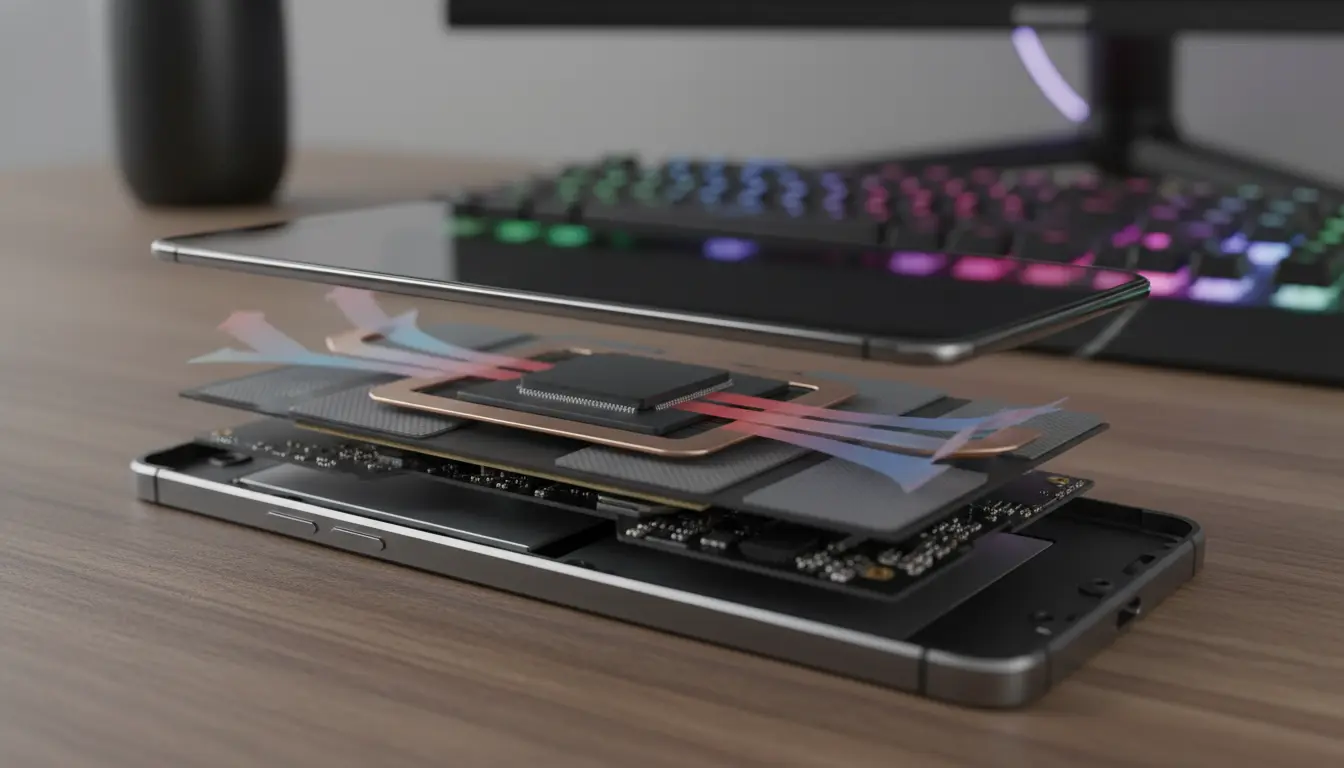

Modern smartphones push the limits of performance with powerful processors, high-refresh-rate displays, and advanced camera systems. However, all that power generates heat—and heat is the enemy of sustained performance. That’s where heat pipe phone cooling comes in. Also known as vapor chamber or heat pipe thermal solutions, this technology efficiently spreads and dissipates heat to maintain smooth, consistent performance without throttling. In this comprehensive guide, we’ll explain how heat pipe cooling works in phones, why it matters for gaming and everyday use, how it compares to other solutions, and what to look for when choosing a device that stays cool under pressure.
What is heat pipe cooling in smartphones?
A heat pipe is a sealed, hollow metal tube (often copper) partially filled with a working fluid. When your phone’s SoC (system-on-chip) gets hot, that heat is transferred to the pipe. The fluid inside evaporates at the hot end, travels toward a cooler region, and then condenses, releasing heat. A wicking structure returns the liquid to the hot end via capillary action, and the cycle repeats. This phase-change process moves heat far more efficiently than solid metal alone, spreading thermal load across a wider area so it can dissipate faster through the frame or a vapor chamber plate.
Vapor chambers operate on the same principle but use a flat, planar structure instead of a tube, making them ideal for ultra-thin devices. Many high-end phones combine vapor chambers with graphite sheets and thermal paste to optimize heat transfer from chips to the chassis.



Why heat pipes matter for sustained performance
- Reduces thermal throttling: Without proper thermal design, a phone quickly lowers CPU/GPU frequencies to avoid overheating, causing stutter in games and slowdowns in heavy tasks. Heat pipes delay and reduce throttling by efficiently spreading heat.
- Improves gaming stability: Titles like Genshin Impact or Call of Duty: Mobile are demanding. Heat pipe systems keep frame rates steadier during long sessions, especially at higher graphics settings.
- Extends component longevity: Lower peak temperatures are better for battery health, display circuits, and the SoC, potentially improving device lifespan.
- Enhances comfort: Better heat distribution prevents hotspot formation, so the device feels cooler in hand.
Heat pipes vs. other cooling methods
- Graphite sheets: Common and lightweight, graphite provides good in-plane heat spreading. However, its thermal conductivity and capacity are generally lower than vapor chamber systems for peak loads.
- Metal frames: Aluminum or stainless-steel frames act as heat sinks but can create uncomfortable hotspots without a proper spreader.
- Active cooling attachments: Clip-on fans or TEC coolers can help during marathon gaming, but they’re bulky and drain battery. Built-in heat pipes offer a balanced, always-available solution.
- Liquid cooling (marketing term): In phones, “liquid cooling” typically refers to vapor chambers/heat pipes, not pump-driven loops. The principle is still phase-change, not circulating water.
Key design factors in heat pipe phone cooling
- Surface area: Larger vapor chambers spread heat more effectively. Flagship gaming phones often boast chambers exceeding 3000–5000 mm².
- Thermal interface materials (TIMs): High-quality TIMs between the SoC and heat spreader reduce thermal resistance, improving transfer efficiency.
- Multilayer stacks: Combining vapor chambers with multiple graphite layers and copper foils can create thermal “highways” that route heat away from hotspots like the CPU, GPU, modem, and charging circuits.
- Chassis conduction path: The phone’s structural design determines where heat goes. A well-designed path moves heat to areas far from your fingertips and camera module.
- Software tuning: Thermal policies govern when to ramp or limit performance. A great hardware design paired with conservative software can still feel cool but may cap sustained performance; balanced tuning matters.
Real-world benefits for users
- Gaming: Expect more stable FPS, fewer drops, and longer sessions before throttling. Touch response and thermal comfort improve.
- Content creation: Video recording (especially 4K/60 or 8K), mobile editing, and AI photo processing run longer without forced pauses due to temperature.
- 5G and multitasking: Modems generate heat, particularly in poor signal areas. Heat pipe systems help maintain network performance and battery efficiency.
- Fast charging: High wattage charging heats cells and controllers. Better thermal management helps maintain charging speed and reduce battery wear.
Choosing a phone with effective heat pipe cooling
- Look for vapor chamber specs: Manufacturers often advertise chamber size or “liquid cooling” systems in gaming or flagship models.
- Check long-duration benchmarks: Reviews that test 15–30 minute gaming sessions or run sustained CPU/GPU loops reveal throttling behavior and thermal comfort.
- Read teardowns: Trusted teardown sources sometimes show the thermal stack, chamber size, and TIM quality.
- Consider cases and accessories: Thick, insulating cases can trap heat. If you game heavily, choose a thermally friendly case or consider a clip-on cooler when needed.
- Balance priorities: A larger vapor chamber may add a fraction of weight or thickness. If sustained performance is critical, that trade-off is often worth it.
Best practices to keep your phone cool
- Update software: OEM updates can refine thermal policies and optimize drivers for better efficiency.
- Optimize settings: Lock games to stable 60–90 FPS instead of chasing peak 120–144 FPS if you value consistency and temperature.
- Manage environment: Avoid direct sun and hot cars. Ambient temperature has a big impact on thermal headroom.
- Charge smart: Intense gaming while fast charging creates a worst-case thermal scenario. If possible, play unplugged or use a lower-watt charger.
- Background hygiene: Close unnecessary apps and disable high-drain features (e.g., hotspot) during gaming.
The future of mobile thermal design
As on-device AI and ray-traced graphics evolve, thermal loads will climb. Expect larger, thinner vapor chambers, advanced composite materials, phase-change TIMs, and smarter thermal algorithms. Some manufacturers explore sandwich designs with chambers on both sides of the PCB, while others integrate heat spreaders into midframes for more uniform dissipation. The goal is clear: desktop-like stability in a pocketable form factor.
Bottom line
Heat pipe phone cooling enables high performance in your pocket by efficiently managing heat from the SoC, modem, and charging circuits. For gamers, creators, and power users, a robust vapor chamber design can be the difference between smooth, sustained speed and frustrating throttling. When shopping, look for transparent thermal specs, long-run performance tests, and thoughtful design choices that prioritize heat spread and comfort.