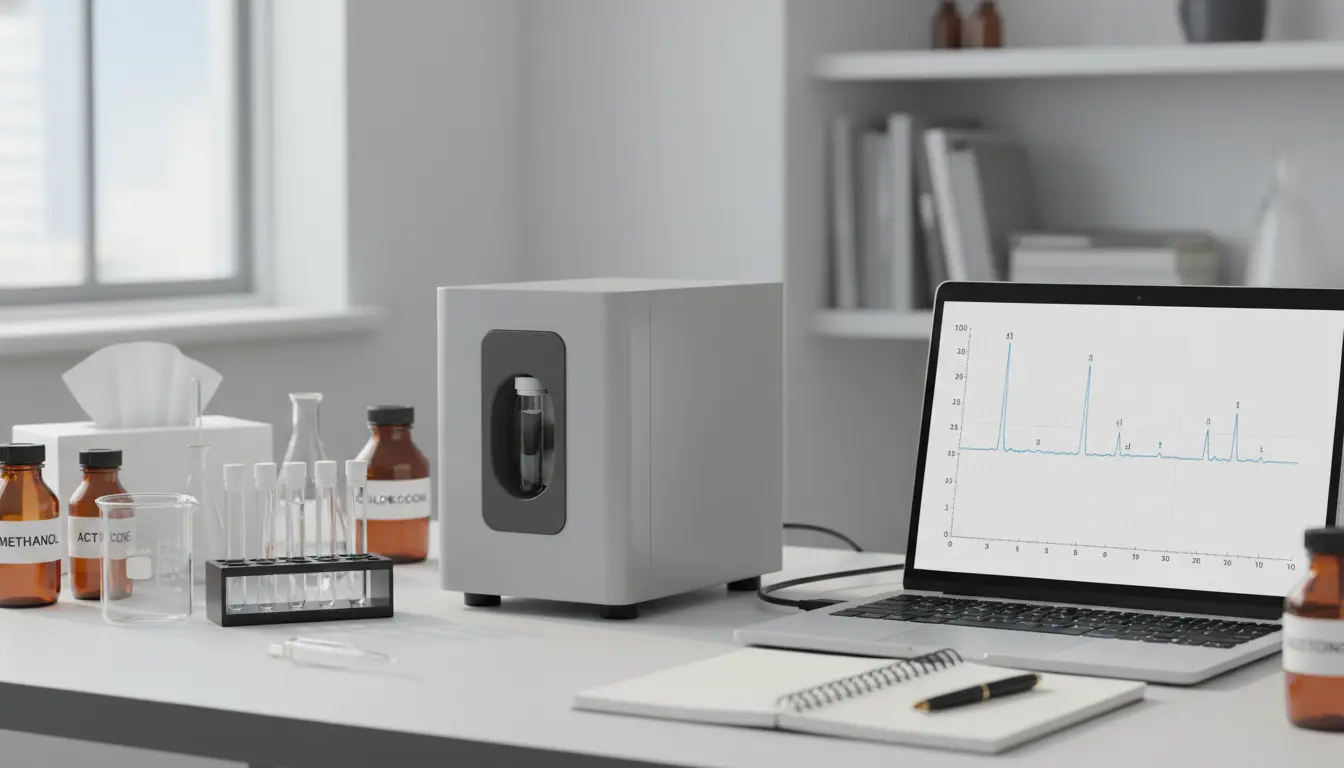

For decades, nuclear magnetic resonance (NMR) spectroscopy has been the gold standard for structural elucidation in chemistry, biochemistry, and materials science. Yet, traditional high-field NMR systems—massive superconducting magnets housed in specialized facilities—have limited access to well-funded labs. A new wave of innovation is changing that status quo. Home or benchtop NMR is steadily democratizing chemical analysis by reducing costs, shrinking footprint, and simplifying operation. This article explains how benchtop NMR works, what makes it different from high-field instruments, the key applications across industries and education, practical considerations for setup and data quality, and where the technology is headed. Whether you’re a startup chemist, a quality-control engineer, or an educator, home NMR offers a viable, organic path to fast, non-destructive insights.
What is home NMR and how does it work?
NMR detects the magnetic behavior of nuclei—most commonly 1H and 13C—when placed in a magnetic field and stimulated with radiofrequency pulses. The resonant frequencies and relaxation behaviors depend on the local electronic environment, producing spectra that reveal molecular structure, dynamics, and interactions. Traditional high-field systems rely on superconducting magnets (e.g., 400–1200 MHz proton frequency) with cryogens to achieve the sensitivity and resolution needed for complex molecules.
Benchtop or “home” NMR replaces the cryogenic magnet with permanent magnets or compact electromagnets operating typically in the 40–80 MHz range for 1H. While resolution and sensitivity are inherently lower than high-field instruments, advances in magnet design, shimming, pulse sequences, hyperpolarization techniques, and signal processing have dramatically improved performance. For many routine tasks—reaction monitoring, purity checks, solvent verification, and QC—benchtop NMR delivers actionable results without the cost and operational overhead of a large facility.
Key advantages that democratize chemical analysis
- Accessibility and footprint: Units fit on a lab bench and plug into standard power. No cryogens, specialized rooms, or complex infrastructure.
- Lower total cost of ownership: Permanent magnets reduce maintenance; no liquid helium refills; simplified service schedules.
- Ease of use: Guided workflows, automated shimming, and pre-set methods empower non-experts to acquire interpretable spectra.
- Non-destructive and quantitative: NMR requires minimal sample prep, preserves samples, and provides intrinsic quantitation without reference standards for many use cases.
- Safety and compliance: No ionizing radiation; straightforward integration in educational and small-lab environments with proper magnetic safety boundaries.
What can you do with a benchtop NMR?
- Reaction monitoring: Track conversion, intermediates, and side products in near real time. Ideal for flow chemistry and optimization cycles.
- Quality control: Verify raw materials and finished products in pharmaceuticals, flavors and fragrances, polymers, and specialty chemicals. Fingerprint methods provide rapid pass/fail decisions.
- Educational labs: Teach structure–property relationships, relaxation, diffusion, and quantitative analysis without the logistical barriers of high-field facilities.
- Process analytical technology (PAT): Inline or at-line measurements support continuous manufacturing, enabling faster release testing and tighter process control.
- Counterfeit detection and authenticity: Identify adulteration (e.g., oils, spirits, supplements) by comparing spectral signatures to known references.
- Solvent screening and purity assessment: Quickly confirm residual solvents, water content via relaxation or solvent peaks, and ensure batch-to-batch consistency.
- Material characterization: Study polymer composition, crosslinking, and curing through relaxation times (T1/T2) and diffusion-ordered spectroscopy (DOSY) where supported.
Performance considerations and how to get reliable results
- Field strength and resolution: While 40–80 MHz systems won’t resolve closely spaced aromatic patterns as a 400+ MHz system does, careful choice of analytes, solvent, and acquisition parameters can maximize interpretability. For small molecules with distinct functional groups, benchtop spectra are often sufficient.
- Sample prep: Use deuterated solvents where required or solvent suppression techniques if supported. Maintain consistent concentration and tube quality (e.g., 5 mm NMR tubes) to improve line shape and reproducibility.
- Temperature control and shimming: Allow the instrument to warm up, run automated shimming, and control temperature to reduce drift. This is especially important for quantitative NMR.
- qNMR best practices: Use appropriate relaxation delays (≥5× T1 for the slowest-relaxing nucleus), integrate well-resolved peaks, and consider internal standards for trace-level quantitation.
- Method development: Create SOPs with fixed parameters (pulse angle, acquisition time, number of scans, apodization) and store spectral libraries. This standardization reduces operator variability and speeds onboarding.
- Data processing: Modern benchtop software provides automated phasing, baseline correction, solvent suppression, and multivariate analysis. For QC, chemometric models (PCA/PLS) can translate spectra into pass/fail outcomes or property predictions.
Limitations to keep in mind
- Sensitivity: Lower field means higher limits of detection. For very dilute samples or complex mixtures, high-field NMR or complementary techniques (LC–MS/GC–MS) may be necessary.
- Spectral overlap: Congested regions can hinder assignments. Smart solvent selection, selective excitation, or simple 2D experiments (if supported) help disentangle signals.
- Nucleus coverage: 1H and 13C are common; some benchtop units support 19F, 31P, and others, but with varying performance. Verify your nuclei of interest before purchase.
The economics of democratization
The democratization effect stems from total lifecycle economics. Benchtop NMR typically requires:
- Minimal infrastructure upgrades.
- Lower service contracts than cryogenic systems.
- Reduced downtime and training needs.
- Faster time-to-data that compounds ROI in R&D and production settings.
For SMEs and educational institutions, this shifts NMR from a rare centralized resource to a daily lab tool. The resulting agility—rapid iterations, immediate QC checks, embedded process monitoring—can shorten development cycles and enhance product quality.
Emerging trends pushing the field forward
- Enhanced magnets and shimming: Better homogeneity widens the gap between current benchtop performance and yesterday’s expectations.
- Hyperpolarization add‑ons: Techniques like DNP or SABRE are moving from research to practical modules, boosting sensitivity for select targets.
- Smarter software: Cloud-connected libraries, AI-assisted peak picking, and automated quantitation streamline routine tasks and support remote collaboration.
- Portable and inline configurations: From cart-mounted units for factory floors to inline probes for flow reactors, NMR is stepping out of the analytical suite.
- Regulatory acceptance: As methods mature, qNMR and fingerprinting approaches are gaining traction in regulated environments for identity and purity testing.
Getting started with a home NMR workflow
- Define the primary use case: reaction monitoring, QC fingerprinting, or education. This guides field strength and feature selection.
- Verify nuclei and solvent requirements: ensure your target analytes and matrices are well supported.
- Standardize sample handling: SOPs for tube quality, volumes, solvents, and concentration.
- Build a spectral library: capture reference spectra under controlled conditions to enable rapid comparisons.
- Validate quantitation: run calibration sets; confirm linearity, precision, and accuracy for the intended range.
- Integrate with data systems: export formats (JCAMP-DX, CSV), LIMS connectivity, and versioned methods support traceability.
Home NMR does not replace ultra-high-field structural studies of complex biomolecules, but it decisively broadens access to reliable, non-destructive chemical analysis. By bringing NMR closer to the bench, startups and established manufacturers alike can make faster, more informed decisions—organically improving product development, safety, and quality.