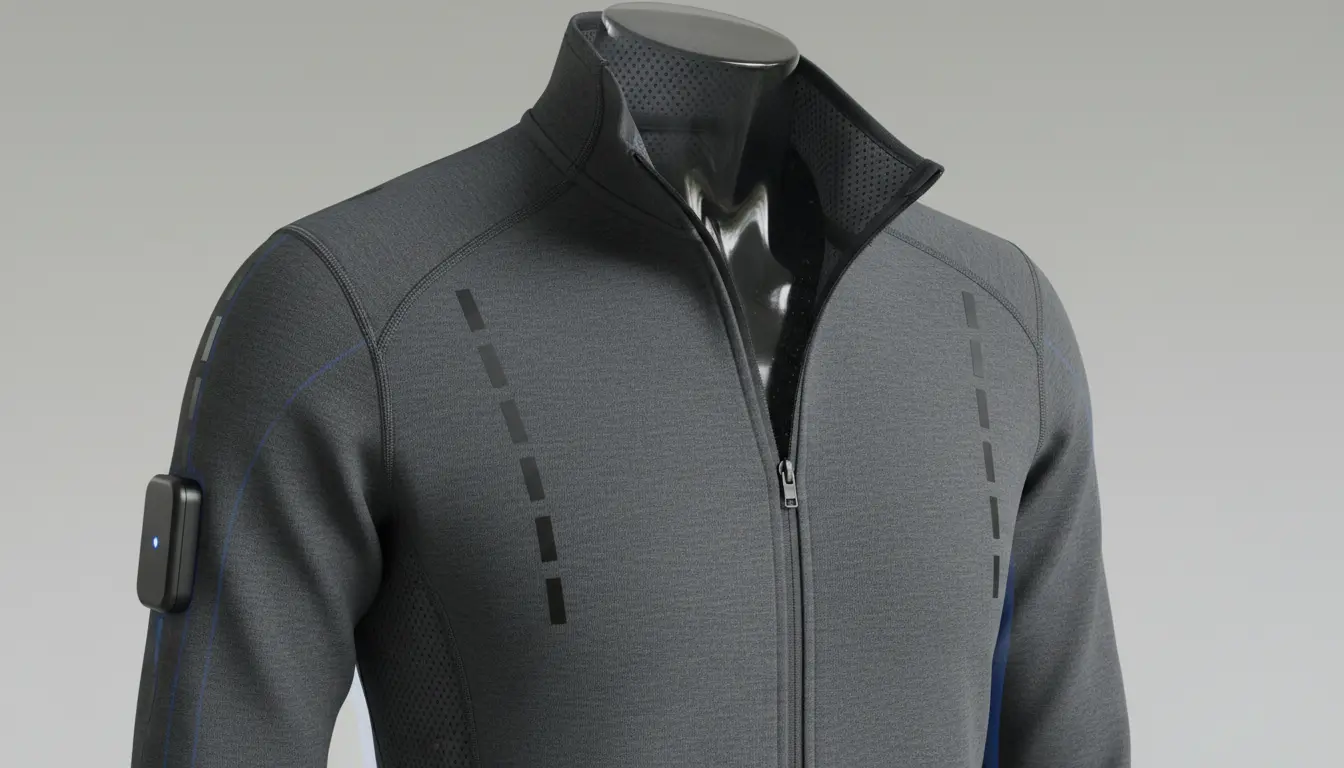

As wearable technology evolves, a new frontier is emerging that blends material science, energy harvesting, and smart textiles: thermoelectric clothing. This innovation uses the temperature difference between the human body and the surrounding environment to generate electricity. By integrating thermoelectric generators (TEGs) into fabrics, garments can power low-energy devices such as health sensors, smartwatches, or Bluetooth beacons—without the need for traditional batteries. This article explains how thermoelectric apparel works, its benefits and limitations, current materials and design strategies, use cases, and what’s next for this rapidly growing field.
How Thermoelectric Clothing Works
Thermoelectric energy generation is based on the Seebeck effect, where a voltage is produced across a material when there is a temperature gradient. In apparel, the “hot side” is the body surface (roughly 32–37°C), and the “cold side” is ambient air, which is often cooler. Tiny thermoelectric modules embedded within the textile convert this difference into electrical energy. The resulting power output depends on:
- Temperature gradient (ΔT) between skin and environment
- Material’s Seebeck coefficient and figure of merit (ZT)
- Surface area of active modules and heat flow management
- Electrical load matching and power management circuitry
While individual modules produce small amounts of power (microwatts to milliwatts), optimizing surface area, thermal pathways, and power conditioning can make this a practical solution for ultra-low-power electronics.
Materials and Fabric Integration
The two main classes of thermoelectric materials used in clothing are inorganic and organic/polymer-based systems:
- Inorganic materials: Bismuth telluride (Bi2Te3) and antimony telluride are common due to their high ZT near room temperature. They deliver stronger performance but are rigid, costly, and less breathable.
- Organic and polymer-based materials: Conductive polymers (e.g., PEDOT:PSS), carbon nanotubes, and printed composites are flexible, lightweight, and more textile-friendly. Their performance is improving, and they can be coated, woven, or printed directly onto fabrics.
To maintain comfort, designers use:
- Flexible interconnects and serpentine traces that stretch with the fabric
- Breathable substrates and spacer textiles to preserve airflow
- Thermally conductive yet soft interface layers to boost heat flow without discomfort
- Modular panel construction to position TEGs in high-heat areas (back, chest, underarms) while keeping mobility
Power Management and Electronics
Energy from thermoelectric modules is low and variable, requiring efficient power electronics:
- Ultra-low-voltage DC-DC converters with cold-start capability
- Maximum power point tracking (MPPT) to optimize energy extraction
- Supercapacitors or thin-film microbatteries for buffering
- Intelligent duty-cycling to match power availability with device operation
These circuits ensure reliable operation for intermittent tasks like sensor sampling, BLE advertising, and data bursts to a smartphone. The system can be hybridized with other energy harvesters (solar, kinetic) to form a multi-source power architecture.
Advantages of Thermoelectric Apparel
- Battery-free or battery-extended wearables: Reduces maintenance and waste.
- Continuous, passive energy: Operates as long as there is a temperature gradient.
- Silent and solid-state: No moving parts, low maintenance, and robust.
- Comfort-focused design: Emerging materials enable flexibility, washability, and breathability.
Challenges and Design Trade-offs
- Limited power density: Output depends on ΔT, which can be small indoors or in warm climates.
- Thermal management: Clothing aims to insulate, but TEGs require heat flow—balancing warmth with energy capture is tricky.
- Durability and washability: Repeated laundering, sweat, and mechanical strain challenge module longevity.
- Cost and scalability: High-performance materials can be expensive; manufacturing must scale to textile volumes.
- Aesthetics and comfort: Modules must be unobtrusive, lightweight, and non-irritating.
Engineers often solve these with selective placement of TEGs in naturally warmer zones, using spacer meshes to create a stable temperature gradient, and incorporating detachable electronics for washing.
Key Applications
- Health and fitness monitoring: Powering temperature, heart rate, respiration, and hydration sensors without frequent recharging.
- Industrial safety: Supporting location beacons and exposure monitors for workers in remote or hazardous environments.
- Military and first responders: Extending mission duration by powering comms and physiological monitoring with on-body energy.
- Smart sportswear: Enabling real-time analytics for athletes where reliable, light power is essential.
- Medical wearables: Supporting long-term, low-profile monitoring for chronic conditions.
Performance Expectations
In typical conditions, thermoelectric garments can produce tens to hundreds of microwatts, sometimes reaching a few milliwatts in favorable environments with a larger ΔT and optimized thermal pathways. This level is well-suited to:
- Periodic sensor measurements (duty-cycled)
- Intermittent data transmission via Bluetooth Low Energy
- Trickling energy into a small storage element to smooth operation
Sustained operation of power-hungry devices remains challenging; however, combining thermoelectric power with low-power electronics design and edge processing can make systems viable for everyday use.
Sustainability and Lifecycle
Thermoelectric clothing promotes sustainability by:
- Reducing disposable batteries and e-waste
- Enabling longer product lifetimes through energy autonomy
- Encouraging modularity, where energy modules and electronics can be detached and upgraded
Still, material sourcing (e.g., tellurides) and end-of-life recycling strategies must be considered. Ongoing research into abundant, lead-free, and recyclable thermoelectric materials aims to minimize environmental impact.
Future Directions
- Higher ZT materials near skin temperature: Incremental gains translate to meaningful power improvements.
- Textile-native fabrication: Printing, knitting, and weaving TEGs directly into yarns and fabrics.
- Hybrid energy systems: Combining thermoelectric with flexible photovoltaics and piezoelectric elements.
- Advanced thermal engineering: Microstructured interfaces and phase-change layers to enhance ΔT while maintaining comfort.
- Smart power orchestration: AI-driven energy management that learns user routines and optimizes energy allocation.
As the ecosystem matures, expect thermoelectric clothing to move from prototypes to mainstream products in health monitoring, sports, and safety-critical fields—particularly where reliability and maintenance-free power are essential.
Practical Tips for Teams Building Thermoelectric Garments
- Start with realistic power budgets: Target sub-milliwatt devices, aggressive duty-cycling, and efficient radios.
- Optimize ΔT: Use breathable fabrics outward and thermally conductive inner layers; consider airflow channels.
- Leverage modular design: Detachable nodes for washing and serviceability; place TEGs on high-heat zones.
- Use energy-aware firmware: Batch sensing, compress data, and adapt sampling rates based on available power.
- Validate in real environments: Test across seasons, activities, and microclimates to tune performance.
Conclusion
Thermoelectric clothing transforms body heat into a practical, on-the-go energy source for low-power wearables. By uniting advanced materials, smart thermal design, and ultra-efficient electronics, these garments promise safer, more sustainable, and more autonomous digital experiences. While challenges remain in power density, comfort, and durability, the trajectory is clear: thermoelectric apparel is becoming a cornerstone of the next generation of smart textiles and energy-harvesting wearables.