
Flying a drone in the United States for work or business? The Federal Aviation Administration’s Part 107 rules are your foundation for flying safely, legally, and professionally. This comprehensive, easy-to-read guide explains what Part 107 covers, who needs it, how to get certified, the operational rules you must follow, and how to secure waivers for advanced missions. It’s written for creators, real-estate pros, surveyors, inspectors, marketers, and any commercial drone operator seeking clarity and compliance while keeping content SEO-optimized and natural.
What is FAA Part 107?
Part 107 is the U.S. regulation governing the commercial use of small unmanned aircraft systems (sUAS) weighing less than 55 lbs (25 kg). If you’re earning money with your drone—directly or indirectly—you’re operating under Part 107 unless a specific exemption applies. Hobby flights are governed by the Exception for Recreational Flyers; everyone else should plan for Part 107 certification.
Who Needs a Part 107 Certificate?
You need a Remote Pilot Certificate (often called a Part 107 license) if you:
- Fly for business, client work, or any compensation
- Use drones for real estate, mapping, inspections, agriculture, journalism, events, or marketing
- Operate on behalf of a company or organization, even if unpaid but for non-recreational purposes
Note: Each mission also needs operational compliance, not just a certified pilot.
How to Get Your Part 107 Remote Pilot Certificate
- Eligibility:
- Be at least 16 years old
- Read, speak, write, and understand English
- Be physically and mentally fit to safely operate a UAS
- Study:
- Learn airspace classes, weather, loading/performance, crew resource management, emergency procedures, and Part 107 rules. Use FAA materials and reputable practice tests.
- Schedule and Pass the Knowledge Test:
- Take the Part 107 Aeronautical Knowledge Test at an FAA-approved testing center.
- Apply via IACRA:
- After passing, apply in the FAA’s IACRA system for your certificate and complete TSA security vetting.
- Recurrent Training:
- Complete FAA recurrent training as required to stay current on regulatory updates and safety practices.
Tip: Practice sectional charts, METAR/TAF weather, and controlled airspace requirements—these frequently appear on the exam.
Core Part 107 Operational Rules
- Visual Line of Sight (VLOS): Keep the drone within unaided line of sight. A visual observer can help, but you remain responsible.
- Altitude: Max 400 feet AGL (above ground level), or within 400 feet of a structure.
- Speed: Max groundspeed of 100 mph (87 knots).
- Daylight Operations: Day or civil twilight with appropriate anti-collision lighting, unless you have a waiver for night (rules updated to allow certain night ops with training and lighting).
- Airspace: Class G is generally allowed without authorization. Class B, C, D, and some E-surface areas require prior authorization (e.g., via LAANC or FAA DroneZone).
- People and Property:
- No operations over uninvolved people unless you meet the “Operations Over People” categories (1–4) and have the required aircraft compliance and lighting.
- Maintain safe distances from property and vehicles not involved in the operation.
- Operations from Moving Vehicles: Allowed in sparsely populated areas with conditions; otherwise restricted.
- Hazardous Materials: No carriage of hazardous materials.
- Registration and Marking: Register your drone if required and display the registration marking. Comply with Remote ID requirements for eligible aircraft and locations.
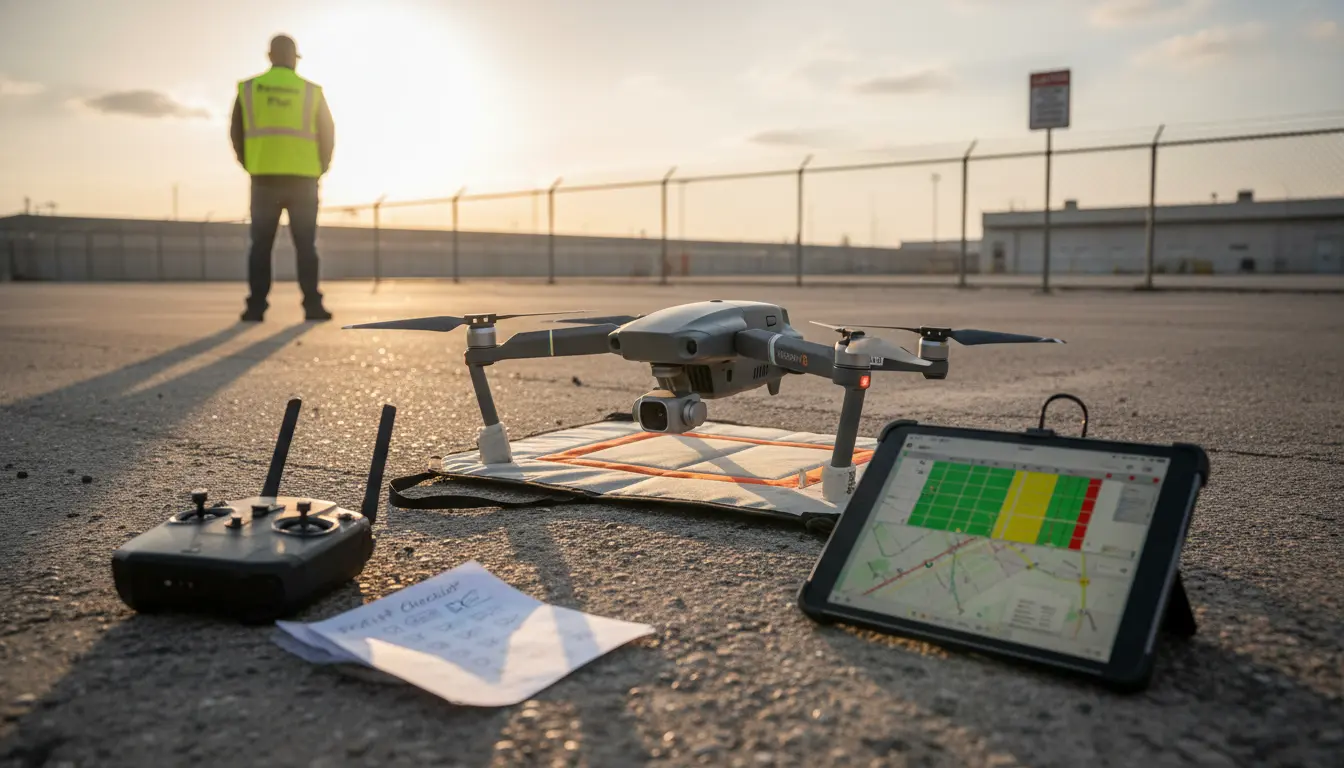
- Preflight: Inspect the drone, batteries, propellers, links, firmware, and environment before each mission.
Note on Remote ID: Most commercial operations now require Remote ID broadcasting or use of an FAA-Recognized Identification Area (FRIA) if applicable. Ensure your aircraft firmware and hardware support Remote ID.
Airspace Authorizations and LAANC
- LAANC (Low Altitude Authorization and Notification Capability) provides fast authorization in controlled airspace near many airports.
- If LAANC is unavailable or your request is outside LAANC parameters, use FAA DroneZone for manual authorizations.
- Consult UAS Facility Maps for grid ceilings to plan compliant altitudes.
Weather and Performance
- Weather minimums: Basic VFR conditions are required—no flying in clouds, maintain required visibility.
- Check METARs/TAFs for winds, visibility, cloud ceilings, temperature, and pressure.
- Battery and payload planning: Cold or hot temperatures affect performance and flight time. Always include reserves.
Operations Over People and At Night
- Operations Over People: Allowed under Categories 1–4 if your drone meets specific weight, design, and injury-limitation thresholds and, for some categories, has a declaration of compliance.
- Night Operations: Permitted if the pilot has completed the required training and the drone has anti-collision lighting visible for at least 3 statute miles with adequate flash rate.
Waivers for Advanced Operations
You can request waivers for certain rules to enable:
- Beyond Visual Line of Sight (BVLOS)
- Higher altitude above 400 feet (e.g., certain inspection corridors)
- Operations over people/vehicles beyond the standard categories
- Night ops (where additional conditions apply), or other restricted scenarios
Waiver Tips:
- Provide a risk assessment and mitigations: crew roles, detect-and-avoid strategy, containment, communication, geofencing, emergency procedures.
- Start with pilot projects in controlled environments to gather safety data supporting your waiver.
Safety Management and Best Practices
- Standard Operating Procedures (SOPs): Document preflight checks, lost-link procedures, emergency landings, and post-flight logs.
- Crew Resource Management (CRM): Assign a visual observer for complex missions. Define roles clearly.
- Checklists: Use preflight, inflight, and post-flight checklists to reduce human error.
- Maintenance: Track hours, battery cycles, firmware updates, and component replacements.
- Data and Privacy: Follow local privacy expectations, especially in residential areas. Obtain site permissions when needed.
Compliance Pitfalls to Avoid
- Flying in controlled airspace without authorization
- Exceeding 400 feet AGL without structure proximity or waiver
- Operating over uninvolved people without meeting category requirements
- Ignoring Remote ID obligations
- Complacency about weather, NOTAMs, TFRs, or temporary restrictions
- Inadequate documentation of flights, incidents, and maintenance
Insurance, Recordkeeping, and Client Readiness
- Insurance: Consider liability coverage tailored to UAS operations and payloads.
- Records: Keep logs of flights, maintenance, firmware updates, authorizations, and waivers.
- Client Education: Explain constraints (airspace ceilings, over-people rules, weather buffers) so expectations are realistic.
Staying Current with Changes
The FAA periodically refines UAS rules, authorizations, and Remote ID guidance. Subscribe to official updates and industry sources, and complete recurrent training on time.
Quick Checklist Before Each Mission
- Airspace checked and authorization secured if needed
- Drone registered and Remote ID active (if required)
- Weather acceptable with reserves and lighting as needed
- Batteries healthy; payload secured; firmware current
- VLOS plan and observer (if used) briefed
- Takeoff/landing zones clear; people and property protected
- Emergency procedures reviewed
By understanding and applying Part 107, you’ll reduce risk, stay compliant, and confidently deliver professional results—while protecting your team, clients, and the public.