
Best Cameras for Travel Blogging and Instagram
If you’re building a travel blog and Instagram presence in the U.S., the right camera is a growth lever—not just a gadget. You need a lightweight system that delivers sharp images, standout color, smooth 4K video, and reliable autofocus for run‑and‑gun moments. In this conversion‑oriented guide, you’ll find the best cameras for different creator profiles, why they convert for social, and exactly how to kit them for maximum ROI. We’ll also cover workflow, lenses, and accessories to help you publish faster and rank higher with authentic, high‑quality content.
What matters most for Instagram and travel blogs
- Portability: Under ~1.5 lb/700 g keeps you shooting all day.
- Autofocus: Eye/face/subject tracking saves misses for selfies, street, and food content.
- Stabilization: IBIS or great lens OIS lets you film handheld reels that look pro.
- 4K video: 24/30/60p with good color; 10‑bit is a bonus for consistent grading.
- Battery + USB‑C: Top up on buses, trains, and flights.
- Connectivity: Fast phone transfer and vertical‑video friendly UIs for Reels/Stories.
Below are top picks sold widely in the U.S., each with a conversion‑ready mini pitch, ideal user, key specs, and suggested add‑ons. Prices fluctuate—focus on value and fit.
1) Sony ZV‑E10 (APS‑C mirrorless) — Best value for hybrid creators
- Why it sells: Creator‑focused body, strong Sony autofocus, flip screen, great colors for skin tones, and excellent lens ecosystem at approachable prices.
- Who it’s for: New to intermediate travel bloggers/Instagram creators who want interchangeable lenses and smooth 4K without a steep learning curve.
- Highlights: 24MP APS‑C sensor, superb Eye AF, product showcase mode for quick focus pulls, clean audio options, USB‑C.
- Ideal travel kit:
- Lens: Sony 11mm f/1.8 (ultra‑wide vlogging) + Sigma 18‑50mm f/2.8 (everyday zoom).
- Audio: Sony ECM‑W2BT wireless or a compact on‑camera mic.
- Stabilization tip: Use a mini gimbal for walking reels.
- Why it converts: Competitive price, proven social features, and simple “record and post” workflow.
- TL;DR: The easiest on‑ramp to pro‑looking content with room to grow.
2) Canon EOS R10 (APS‑C mirrorless) — Fast AF and crisp reels on a budget
- Why it sells: Canon color science, quick burst shooting, reliable face tracking for photos and video.
- Who it’s for: U.S. creators who want crisp travel photos, quick vertical video clips, and a familiar shooting experience.
- Highlights: 24MP sensor, 4K 30p oversampled, responsive Dual Pixel AF.
- Ideal travel kit:
- Lens: RF‑S 18‑45mm kit for light days + RF‑S 18‑150mm for one‑lens trips.
- Prime add‑on: RF 35mm f/1.8 (via adapter) for food/portraits and low light.
- Why it converts: Great out‑of‑camera color and approachable ergonomics for creators moving up from smartphones.
3) Fujifilm X‑S20 (APS‑C mirrorless) — A creator’s sweet spot with awesome film looks
- Why it sells: Strong IBIS, great battery life, color‑rich film simulations that reduce editing time.
- Who it’s for: Creators who love a distinctive aesthetic and want stabilized 4K with excellent handling.
- Highlights: 26MP X‑Trans sensor, IBIS, 4K 60p, selfie‑flip screen, headphone/mic jacks.
- Ideal travel kit:
- Lens: XF 18‑55mm f/2.8‑4 (versatile, sharp) + XF 23mm f/2 (compact street/food).
- Filters: 52/58mm variable ND for smooth shutter in daylight video.
- Why it converts: Faster, more consistent look straight out of camera—less time grading, more content published.
4) Sony a7C II (Full‑frame mirrorless) — Compact cinematic look for Instagram and blogs
- Why it sells: Full‑frame depth, low‑light strength, and Sony’s elite autofocus in a travel‑friendly body.
- Who it’s for: Serious creators who want the “big camera” aesthetic without big‑camera weight.
- Highlights: 33MP full‑frame, advanced AF with subject recognition, IBIS, 4K 60p, strong battery life.
- Ideal travel kit:
- Lens: Sony 28‑60mm (ultra‑compact zoom) + 35mm f/1.8 (low‑light/portraits).
- Add‑ons: SmallRig cage/handgrip and a mini tripod for self‑shooting.
- Why it converts: Delivers that creamy background and night performance brands love, in a body that fits small sling bags.
5) Canon EOS R8 (Full‑frame mirrorless) — Lightweight full‑frame for low‑light cityscapes
- Why it sells: Excellent image quality and Canon color in one of the lightest full‑frame bodies.
- Who it’s for: City, night, and event‑focused travelers who want strong stills and high‑quality 4K.
- Highlights: 24MP full‑frame sensor, superb Dual Pixel AF, 4K 60p, great subject detection.
- Ideal travel kit:
- Lens: RF 24‑50mm for minimal weight + RF 35mm f/1.8 for cafés and food.
- Why it converts: Full‑frame results without overwhelming size; compelling for U.S. creators pitching brand partners.
6) Nikon Z fc (APS‑C mirrorless) — Stylish travel camera with reliable performance
- Why it sells: Retro look that photographs well for behind‑the‑scenes posts, plus Nikon’s sharp Z lenses.
- Who it’s for: Aesthetic‑driven creators who want strong stills and attractive carry‑everywhere design.
- Highlights: 20.9MP sensor, solid AF, flip screen, USB‑C charging.
- Ideal travel kit:
- Lens: NIKKOR Z 16‑50mm (compact) + Z 28mm f/2.8 (tiny prime with beautiful rendering).
- Why it converts: Unique style + dependable performance—content and camera both look great on the grid.
7) Panasonic Lumix G9 II (Micro Four Thirds) — Stabilization king for handheld video
- Why it sells: Industry‑leading stabilization for smooth handheld reels, great color, robust video tools.
- Who it’s for: Video‑heavy creators who want steady footage without a gimbal.
- Highlights: 25MP sensor, top‑tier IBIS, 4K 60p/120p options, solid battery life.
- Ideal travel kit:
- Lens: 12‑60mm f/2.8‑4 (do‑it‑all) + 20mm f/1.7 (tiny, low‑light street).
- Why it converts: Effortlessly stable video and versatile lens options keep your production nimble.
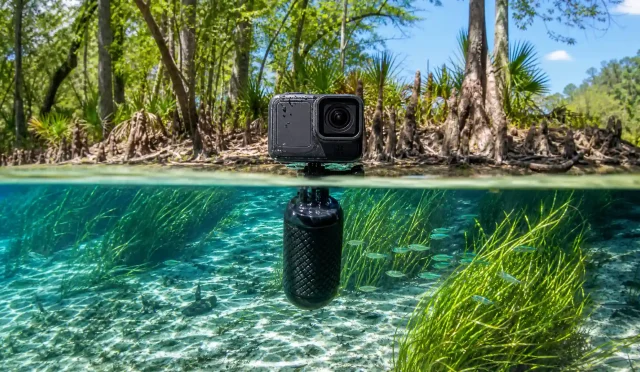
8) GoPro HERO12 Black (Action cam) — Adventure‑ready reels and POV stories
- Why it sells: Tiny, waterproof, hyper‑stabilized, and perfect for first‑person shots that boost watch time.
- Who it’s for: Hikers, cyclists, divers—anyone who films action or wants an easy “B‑roll machine.”
- Highlights: Excellent stabilization, horizon leveling, crisp 4K, easy vertical framing.
- Ideal travel kit:
- Mounts: Head/chest, clamp for scooters/bikes, floaty for water.
- Why it converts: Eye‑catching POV boosts engagement and complements your main camera.
9) DJI Osmo Pocket 3 (Pocket gimbal cam) — Smooth cinematic footage in your pocket
- Why it sells: Built‑in gimbal = buttery footage without setup time. Great for walk‑and‑talks, markets, and room tours.
- Who it’s for: Solo travelers who want professional stabilization and fast deployment.
- Highlights: 4K, superb stabilization, face tracking, easy vertical output.
- Why it converts: Zero friction to capture cinematic clips that look premium in Reels.
10) iPhone 15 Pro/Pro Max (Smartphone) — Always‑with‑you content hub
- Why it sells: Class‑leading computational photography, native vertical workflows, and quick edits on the go.
- Who it’s for: Social‑first creators or anyone already in the Apple ecosystem.
- Highlights: Strong HDR, ProRAW/Log video, solid stabilization; pairs perfectly with a compact mic and mini LED.
- Ideal travel kit:
- Add‑ons: Small MagSafe grip, tiny LED, and a clip‑on lav mic for better dialogue.
Which camera should you choose?
- Budget creator upgrading from a phone: Sony ZV‑E10 or Canon R10 with a fast prime.
- Aesthetic‑driven storyteller: Fujifilm X‑S20 or Nikon Z fc with a small prime for characterful looks.
- Night and cinematic depth: Sony a7C II or Canon R8 with a 35mm fast prime.
- Adventure and POV: GoPro HERO12 + your main camera, or DJI Osmo Pocket 3 for instant smooth footage.
- Phone‑first workflow: iPhone 15 Pro/Max with a mini mic and preset‑driven editing.
Lenses that make a difference
- One‑lens travel solution: 24–70mm equivalent (full‑frame: 24–70mm f/2.8 or f/4; APS‑C: 16–55mm or 18–50mm f/2.8).
- Low‑light and portraits: 28–35mm f/1.8 (or APS‑C equivalents ~18–23mm) for cafés, food, and street.
- Ultra‑wide vlogging: 10–12mm APS‑C, 14–20mm full‑frame for scenic interiors and landmarks.
Must‑have accessories for a lean creator kit
- Audio: Compact shotgun or wireless lav for clean dialogue.
- Stabilization: Mini tripod or travel gimbal for walking reels.
- Power: 10,000–20,000 mAh USB‑C power bank; charge camera and phone.
- Filtration: Variable ND to keep 1/50–1/60 shutter outdoors for cinematic motion.
- Protection: Sling bag with quick access; microfiber cloth; weather cover.
Check Also