
Best Travel Cameras: Lightweight with Long Battery Life
Travel photography demands a balance between portability and performance. For many travelers, the ideal camera is one you don’t notice in your bag but that still delivers stunning images and lasts through a full day of exploration. This guide explains what to look for when choosing the best travel cameras that are both lightweight and offer long battery life, and provides practical tips and a buying checklist to help you pick the right one.
Why weight and battery life matter
When you travel, every gram counts. A lighter camera reduces fatigue, makes packing easier, and encourages more spontaneous shooting. Battery life matters just as much: unfamiliar locations, long excursions, or multi-day tours can leave you far from charging options. A camera that balances low weight with high endurance lets you shoot more photos and video without carrying bulky chargers or hunting for outlets.
Key features to prioritize
- Sensor size vs. weight: Larger sensors (APS-C, full-frame) deliver better image quality and low-light performance, but usually cost extra weight. Premium compacts and some mirrorless bodies balance an APS-C or full-frame sensor with reduced size.
- Battery rating (and CIPA numbers): Look at real-world user reports in addition to manufacturer CIPA ratings, which are measured under specific testing conditions and can be conservative.
- Power-efficient processors: Newer camera models often include more efficient processors that improve performance without draining the battery faster.
- Lens system and flexibility: Interchangeable-lens mirrorless systems give more creative control, but a high-quality fixed-lens compact can be far lighter overall.
- In-body image stabilization (IBIS) and lens stabilization: Stabilization lets you use slower shutter speeds without a tripod, reducing the need for extra gear.
- Autofocus and shooting speed: Fast AF and burst mode matter for travel action shots; consider how these features impact battery life.
- Video needs vs. stills: Video (especially 4K) consumes significantly more power. If you vlog or film a lot, prioritize models known for efficient video power use.
- Connectivity and charging: USB-C charging and power delivery are invaluable for travel; being able to top up from a power bank is a major convenience.
Camera types that work well for travel
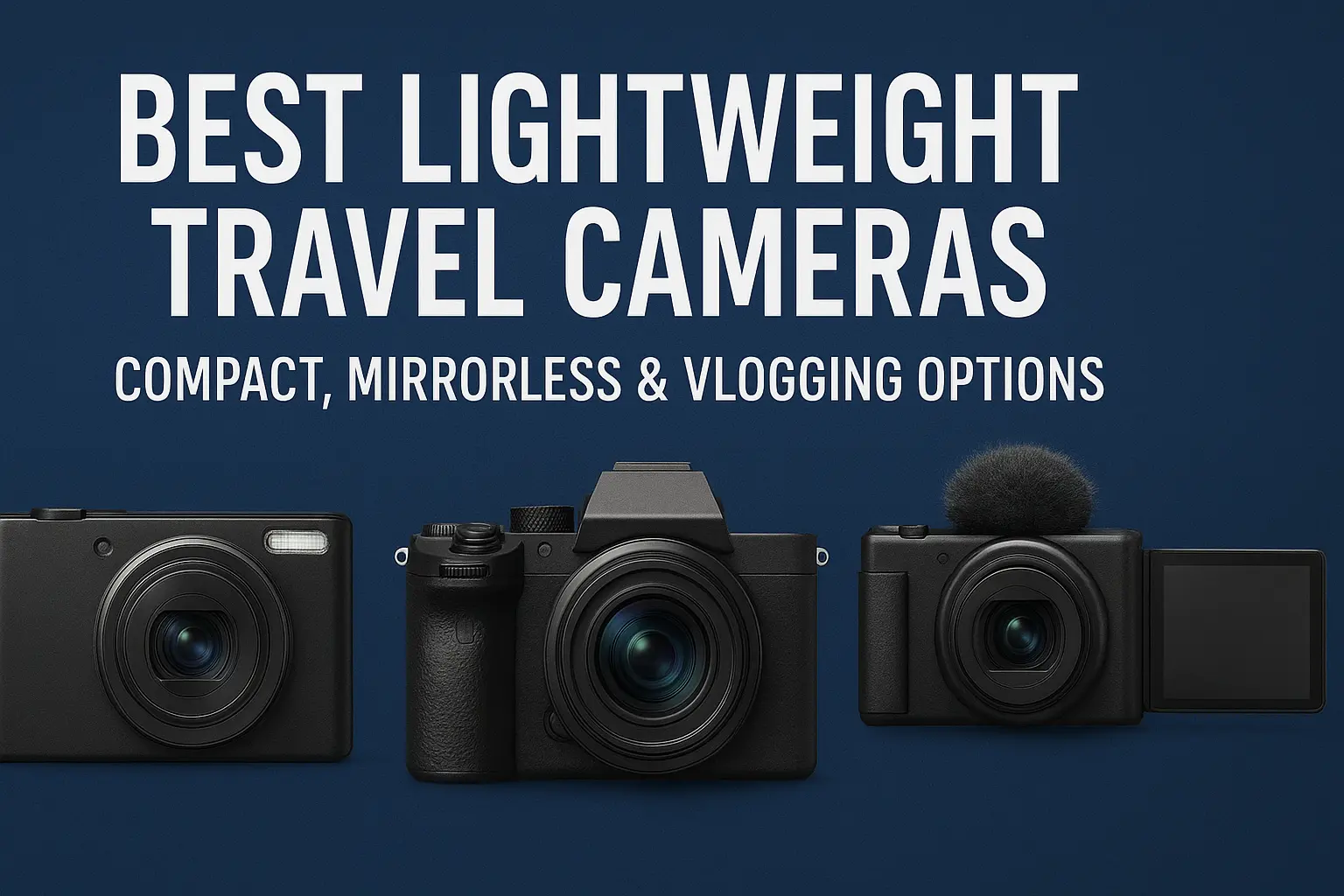
- Compact point-and-shoots: These are often the lightest and simplest option. High-end compacts like the premium travel point-and-shoots combine good sensors and fast lenses in tiny bodies.
- Mirrorless APS-C: Offers an excellent balance of image quality and size. Many APS-C mirrorless cameras are lighter than DSLRs and accept a wide range of lenses.
- Full-frame compact or small-body full-frame: If top image quality is essential, some manufacturers now produce smaller full-frame bodies that remain relatively light while offering superb low-light performance.
- Bridge cameras: Provide large zoom ranges in a single body, great for travelers who want flexibility without swapping lenses. Battery life varies—check real-world reviews.
Real-world battery tips
- Carry 1–2 spare batteries: Lightweight spares are the simplest insurance policy. Keep them charged in a protective pouch.
- Use USB-C charging and power banks: Many modern cameras can be charged on the go. A high-capacity power bank (20,000 mAh or more) can recharge batteries multiple times.
- Enable power-saving modes: Lower screen brightness, disable constant live view or Wi‑Fi when not needed, and set the camera to sleep quickly.
- Limit video recording: Video will shorten battery life far more than stills; record in short clips and use efficient codecs if possible.
- Turn off image review and other background features: Auto-review, GPS, and Bluetooth can add up in drain.
- Use airplane mode or disable wireless when not necessary: Wireless connections are convenient but can reduce endurance.
Accessories that boost travel readiness
- Lightweight spare batteries: Choose manufacturer or high-quality third-party batteries and store them safely.
- USB-C PD power bank: Ensures you can charge on long drives or day trips without access to a mains outlet.
- Compact tripod or gorillapod: For low-light or landscape shots where you want to avoid higher ISO values.
- Fast, reliable memory cards: Fast write speeds help for burst shooting and video; bring at least two so you can rotate them.
- Protective carry solution: A slim camera pouch or insert keeps your kit secure without bulk.
Practical buying checklist
- Weight and dimensions — can you comfortably carry it for a day?
- Battery specs and USB charging support — can it be charged from a power bank?
- Sensor size and resolution — is image quality sufficient for your goals?
- Lens options — do you want fixed-lens simplicity or the flexibility of interchangeable lenses?
- Stabilization — is IBIS or lens stabilization important to you?
- Real-world battery performance — read user reviews and field tests.
- Durability and weather sealing — essential if you travel in varied climates.
- Video capabilities — if you vlog, check continuous recording limits and heat management.
- Connectivity — fast transfers and remote control can save time when traveling.
- Price and resale value — travel gear often gets traded up; think long-term.
Example camera picks (types and why they fit travel)
- Premium compact (high-quality fixed lens): Ultra-portable, great for street and everyday travel photography. Excellent balance of weight and image quality.
- APS-C mirrorless: If you want more reach and interchangeable lenses without DSLR bulk, APS-C mirrorless provides great flexibility.
- Small full-frame mirrorless: For photographers prioritizing low-light performance and shallow depth of field, small full-frame bodies are increasingly travel-friendly.
- Superzoom bridge camera: Ideal for travelers who prefer one-body convenience and long zooms for wildlife or distant landscapes.
Note: Specific models change quickly; focus on the features above to choose the best model for your needs rather than on a single “best” camera.

How to maximize image quality while staying light
- Choose fast prime or compact zoom lenses: A single fast lens (e.g., 24mm or 35mm equivalent) can cover many travel situations and be lighter than a kit with multiple zooms.
- Use RAW for critical shots: RAW gives you more dynamic range and editing flexibility, but it uses more storage. Balance by shooting RAW+JPEG only when necessary.
- Embrace natural light and prime lenses: Good technique reduces the need for heavier gear like big lenses and tripods.
- Post-processing: A lightweight camera plus smart editing can produce results comparable to heavier setups.
Final thoughts
Finding the best travel camera is about understanding trade-offs. Lightweight bodies with long battery life empower you to stay nimble and shoot more, but they may require compromises in sensor size or lens versatility. Focus first on the features that will matter most for how you travel—do you hike a lot, vlog, or prefer street photography? From there, balance weight, battery strategy, and essential accessories. With the right choices, you’ll carry less and capture more, making each trip both easier and more rewarding.
1) Sony A7C — Compact Full‑Frame
Why: Combines full‑frame image quality with a small, travel‑friendly body. Great for low‑light, portraits and high‑quality stills while staying compact.
Pros:
- Excellent full‑frame image quality and dynamic range
- Small, lightweight body for a full‑frame camera
- Strong autofocus and reliable real‑world battery life using the
NP‑FZ100battery - USB‑C charging/top‑up support
Cons: - Lenses can add weight and cost if you build a full kit
- Not as compact as premium fixed‑lens compacts if you need ultimate minimalism
Best for: Photographers who want maximum image quality in a compact full‑frame package (night, portraits, travel).
2) Fujifilm X‑S20 — APS‑C Mirrorless (Travel + Vlog Friendly)
Why: Lightweight APS‑C system with very good battery efficiency, strong stabilization, and video features suited for travel and vlogging.
Pros:
- Excellent balance of size, image quality and weight (APS‑C sensor)
- Efficient
NP‑W235battery and USB‑C PD charging support for on‑the‑go top‑ups - Good in‑body stabilization and user‑friendly controls (flip screen for vlogging)
- Lighter lens options than full‑frame systems
Cons: - Slightly less low‑light performance than full‑frame, but often negligible for travel use
Best for: Travelers and vloggers who want a lightweight, versatile system with long battery life and good video features.