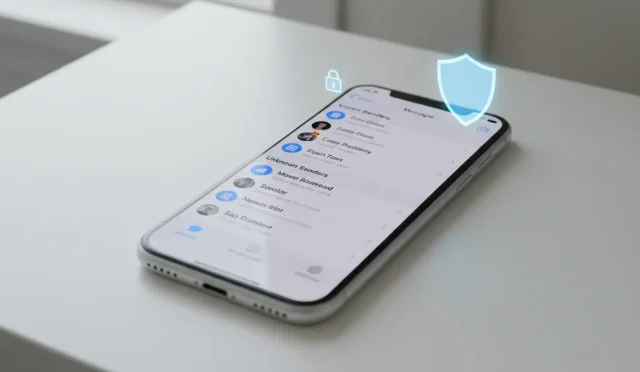

Mobile Local Password Vault and Key Management: The Future of Secure Digital Identity
In today’s hyperconnected world, mobile devices have become the primary gateway to our digital identities. From social media to banking, almost every service we use requires authentication and credential management. This increasing reliance on passwords, digital keys, and tokens makes proper security not just an option but a necessity. One of the most effective solutions for this challenge is the mobile local password vault — an on-device key management system that ensures strong data protection while maintaining user convenience.
What Is a Mobile Local Password Vault?
A mobile local password vault, also known as an on-device password manager, is a secure storage environment designed to keep digital credentials—like usernames, passwords, and cryptographic keys—encrypted and locally accessible only to the authorized user. Unlike cloud-based password managers, which synchronize data across devices via online storage, local vaults keep sensitive data within the device’s secure enclave or file system. This reduces exposure to network-based attacks and data breaches, emphasizing privacy, control, and encryption.
Modern smartphones, especially those powered by Android and iOS, integrate these vaults natively. Technologies like Apple’s Secure Enclave and Android’s Keystore System ensure that encryption keys never leave the hardware, making the stored credentials incredibly hard to extract even if the device is compromised.



Why Choose Local Key Management Over Cloud-Based Solutions?
Cloud-based password managers offer convenience through automatic synchronization, but they also present potential vulnerabilities such as server breaches, man-in-the-middle attacks, and cross-platform data exposure. On the other hand, a local password vault minimizes dependency on external networks.
Local vaults prioritize data sovereignty — your credentials remain under your complete control, protected by your device’s hardware encryption and biometric authentication. Even if hackers target the service provider, your local vault’s data remains untouched and offline.
Furthermore, with advancements in zero-knowledge encryption, users can enjoy both high-level protection and usability. The service provider or application developer has no access to the encryption keys, making privacy intrinsic rather than optional.
How Does Mobile Key Management Work?
At its core, mobile key management revolves around generation, storage, rotation, and destruction of cryptographic keys. Here’s how it works:
- Key Generation: When a password or encryption key is created, it’s generated securely within the device’s Trusted Execution Environment (TEE) or Secure Enclave. These are tamper-resistant hardware modules isolated from the main operating system.
- Secure Storage: The generated key never leaves the secure hardware module. Instead, an encrypted reference or token is stored, making unauthorized copying impossible.
- Key Usage: Applications requiring decryption or authentication request temporary access through a controlled API, ensuring the key never gets exposed in memory or logs.
- Key Rotation and Expiration: To maintain high security hygiene, keys are rotated periodically or upon certain system triggers. This reduces the risk of long-term key compromise.
- Key Destruction: When a user deletes data or resets the vault, destruction commands ensure that previously stored keys become completely unrecoverable, meeting compliance standards like GDPR and NIST SP 800-57.
Security Benefits and Safeguards
Mobile devices are often targeted as they serve as both personal and professional tools. However, local password vaults offer several safeguards:
- Hardware-backed encryption: Keys are generated and stored in chips that are physically separated from the main CPU.
- Biometric authentication: Access to the vault requires the user’s fingerprint or facial recognition data, offering strong non-repudiation.
- Offline protection: Since the vault operates offline, phishing and network hacking risks are significantly reduced.
- Tamper detection: Attempts to root or jailbreak the device trigger security alerts or complete data wipe protocols.
- Minimal attack surface: With no external data synchronization, attack vectors are limited to the physical device only.
Together, these security layers establish Defense in Depth, a multi-layered approach combining hardware, software, and cryptographic enforcement.
Balancing Security and Usability
One common criticism of local password vaults is the lack of cross-device synchronization. However, emerging technologies are bridging this gap securely. Features like encrypted local backups, QR-based key sharing, and manual export-import via encrypted channels allow users to maintain usability without compromising privacy.
Furthermore, mobile operating systems now support platform-bound credentials. When a user upgrades or replaces their device, the credentials migrate through secure transfer protocols, ensuring continuity without exposing data.
This balance between safety and convenience is crucial for user adoption. The higher the usability, the lower the likelihood of unsafe habits, such as writing passwords down or reusing them across services.
The Role of Cryptography and Biometrics
A critical component of any local vault system is asymmetric cryptography. Public-private key pairs allow the vault to authenticate transactions or decrypt data without ever revealing the private key. Elliptic Curve Cryptography (ECC) and AES-256-bit encryption are industry standards ensuring unbreakable security.
When paired with biometric identification such as Touch ID, Face ID, or Android’s BiometricPrompt API, users gain a seamless yet secure login experience. The biometric templates never leave the device, making them resilient to replay attacks or impersonation.
Compliance and Regulatory Implications
In regulated environments like fintech, healthcare, or defense, local key management systems provide not only strong encryption but also compliance benefits. Adhering to frameworks such as FIPS 140-2, ISO/IEC 27001, and GDPR Article 32 requires demonstrable control over encryption keys, which a local management approach natively provides.
Additionally, organizations using local key management reduce liability risks in case of breaches since user keys and credentials never touch centralized systems.
The Future of Local Password Vaults
As threats evolve, mobile local vaults are also becoming more intelligent. Integration with AI-driven anomaly detection, behavioral analysis, and device attestation will soon allow vaults to detect fraudulent access attempts dynamically. Moreover, with the rise of passwordless authentication (like passkeys and WebAuthn), local key storage will play an even more central role as the guardian of device-bound credentials.
We’re moving toward a digital future where users maintain full control over their identity and secrets. Decentralized key management and secure local vaults will be the standard pillars of personal security.