
The Future of Secure Authentication: A Deep Dive into Biometric Vein Recognition Technology
In an era where digital security is constantly under threat from sophisticated cyber-attacks, traditional authentication methods like passwords and even first-generation biometrics are becoming increasingly vulnerable. Enter biometric vein scanning—a cutting-edge technology that offers a near-impenetrable layer of security. Unlike fingerprints or facial recognition, which rely on external characteristics, vein recognition looks beneath the skin, making it one of the most spoof-resistant technologies available today.
Understanding the Science of Vein Pattern Recognition
Biometric vein scanning, also known as vascular biometrics, works by capturing the unique patterns of blood vessels in a person’s finger or palm. The process utilizes near-infrared (NIR) light, which is absorbed by the deoxidized hemoglobin in the blood. Because the blood absorbs this specific wavelength of light, the veins appear as a dark, intricate map when captured by a specialized sensor.
This internal map is unique to every individual—even identical twins have different vein structures. Furthermore, these patterns remain stable throughout a person’s life, providing a consistent and reliable biometric identifier. The complexity of these patterns ensures that the probability of two people having identical vein structures is statistically negligible.
Why Vein Scanning is Virtually Spoof-Proof
The primary advantage of vascular biometrics over other modalities is its resistance to forgery and “spoofing.” Fingerprints can be lifted from surfaces or replicated using silicone molds. Facial recognition can sometimes be fooled by high-resolution photographs or 3D masks. However, vein patterns are hidden inside the body, making them impossible to steal or copy without the subject’s knowledge.
One of the most critical security features of this technology is “liveness detection.” Since the system relies on the flow of deoxidized hemoglobin, it requires an active blood flow to function. This means that a severed limb or a synthetic replica cannot be used to bypass the system. This inherent requirement for a living, breathing subject makes it the gold standard for high-security environments.
Key Advantages of Vascular Biometrics
Beyond its security benefits, vein scanning offers several operational advantages that make it superior to traditional biometric systems:
- High Accuracy: The False Acceptance Rate (FAR) and False Rejection Rate (FRR) for vein recognition are among the lowest in the industry. This precision ensures that authorized users gain access quickly while intruders are effectively blocked.
- Non-Invasive and Hygienic: Palm vein scanners, in particular, are often touchless. Users simply hover their hand over the sensor, which is a significant advantage in a post-pandemic world where hygiene is a priority.
- Resilience to External Factors: Fingerprint scanners often struggle with dry, oily, or scarred skin. Since vein scanning looks internally, it is unaffected by the condition of the skin’s surface, moisture, or minor injuries.
- Privacy Protection: Because vein patterns are not visible to the naked eye and cannot be captured without a specialized NIR sensor, they are much harder to harvest for malicious purposes compared to facial images or fingerprints.
Applications Across Industries
The robustness of biometric vein scanning has led to its adoption across various sectors that demand the highest levels of security:
- Banking and Finance: Many financial institutions use palm vein recognition for ATM withdrawals and secure vault access, replacing vulnerable PINs and cards.
- Healthcare: Hospitals use vascular biometrics to accurately identify patients, ensuring that medical records are correctly matched and preventing identity theft or insurance fraud.
- Corporate Security: High-tech firms and government agencies utilize vein scanners for physical access control to sensitive areas like data centers and research labs.
- Time and Attendance: Businesses are increasingly using vein recognition to eliminate “buddy punching” (where employees clock in for each other), as the system is impossible to cheat.
The Technical Architecture of a Vein Scanner
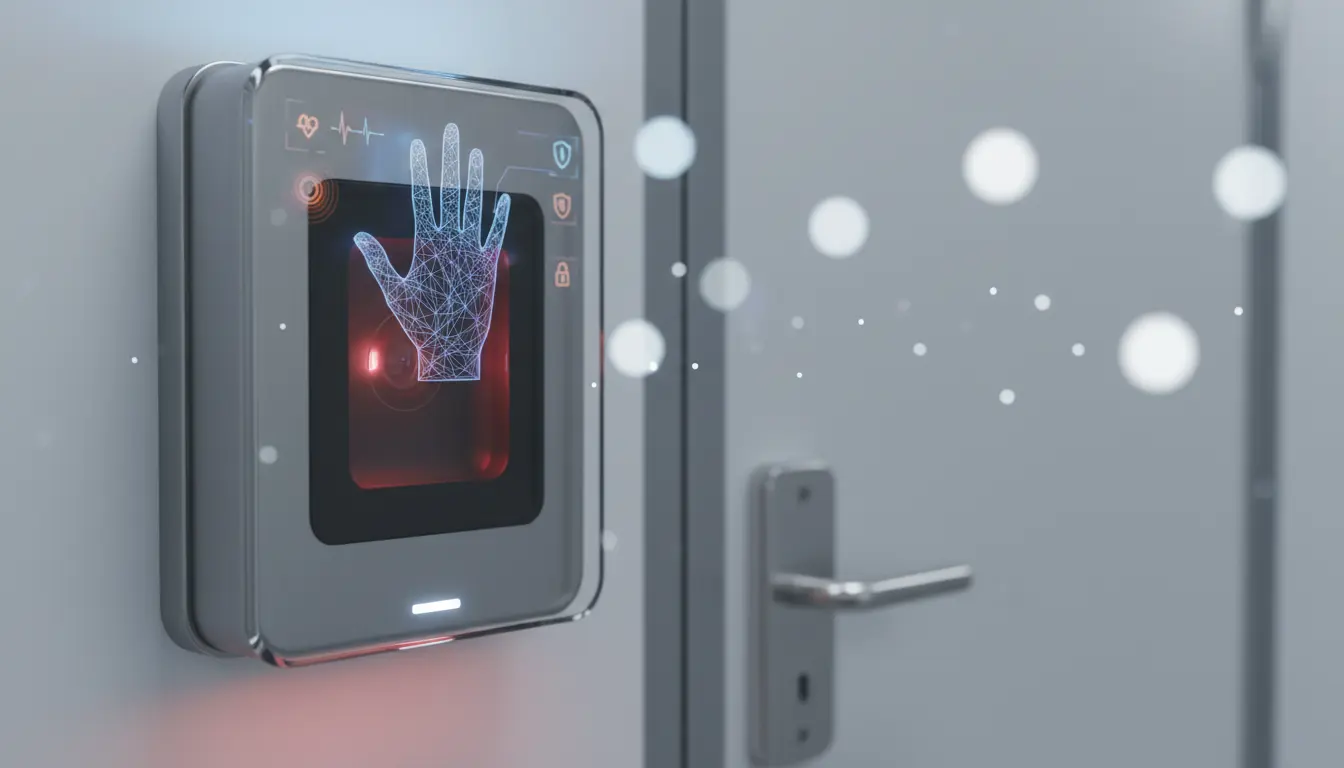
A typical vein recognition system consists of an infrared light source, a camera equipped with an infrared filter, and a processing unit. When a user places their hand or finger near the device, the NIR light penetrates the skin. The camera captures the reflected light, and the internal software converts the visual pattern into a mathematical template.
This template is then encrypted and stored in a database. During authentication, the system compares the live scan with the stored template. Because the system compares mathematical representations rather than raw images, the user’s actual biometric data remains secure even if the database is compromised.
Challenges and Future Outlook
While vein scanning is highly secure, it is not without challenges. The hardware required for NIR scanning is generally more expensive than simple capacitive fingerprint sensors. Additionally, the size of palm scanners can be a limitation for integration into small mobile devices, though finger-vein technology is rapidly shrinking in size.
Looking forward, we can expect to see “multimodal biometrics,” where vein scanning is combined with other methods like iris or face recognition to create a multi-layered security protocol. As the cost of NIR sensors continues to drop, this technology will likely move from high-security niches into mainstream consumer electronics and smart home systems.
Conclusion
Biometric vein scanning represents the pinnacle of modern authentication. By leveraging the unique, internal, and life-dependent patterns of our vascular system, it provides a level of security that external biometrics simply cannot match. For organizations and individuals looking for a spoof-resistant, hygienic, and highly accurate way to protect their assets, vascular recognition is no longer a futuristic concept—it is the most reliable solution available today.