
Next-Generation Service Robots: From U.S. Restaurants to Global Smart Cities
A New Era of Service Robots
Next-generation service robots are transforming how we live, work, and interact with technology. What began as small pilot projects in a few U.S. restaurants has evolved into a global shift, affecting hospitality, retail, healthcare, logistics, and public services. Today, these robots are becoming key components of smart cities, enabling more efficient, safe, and personalized services for millions of people.
Service Robots in U.S. Restaurants
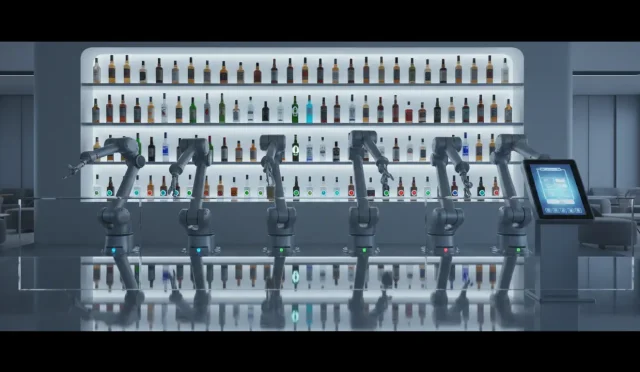
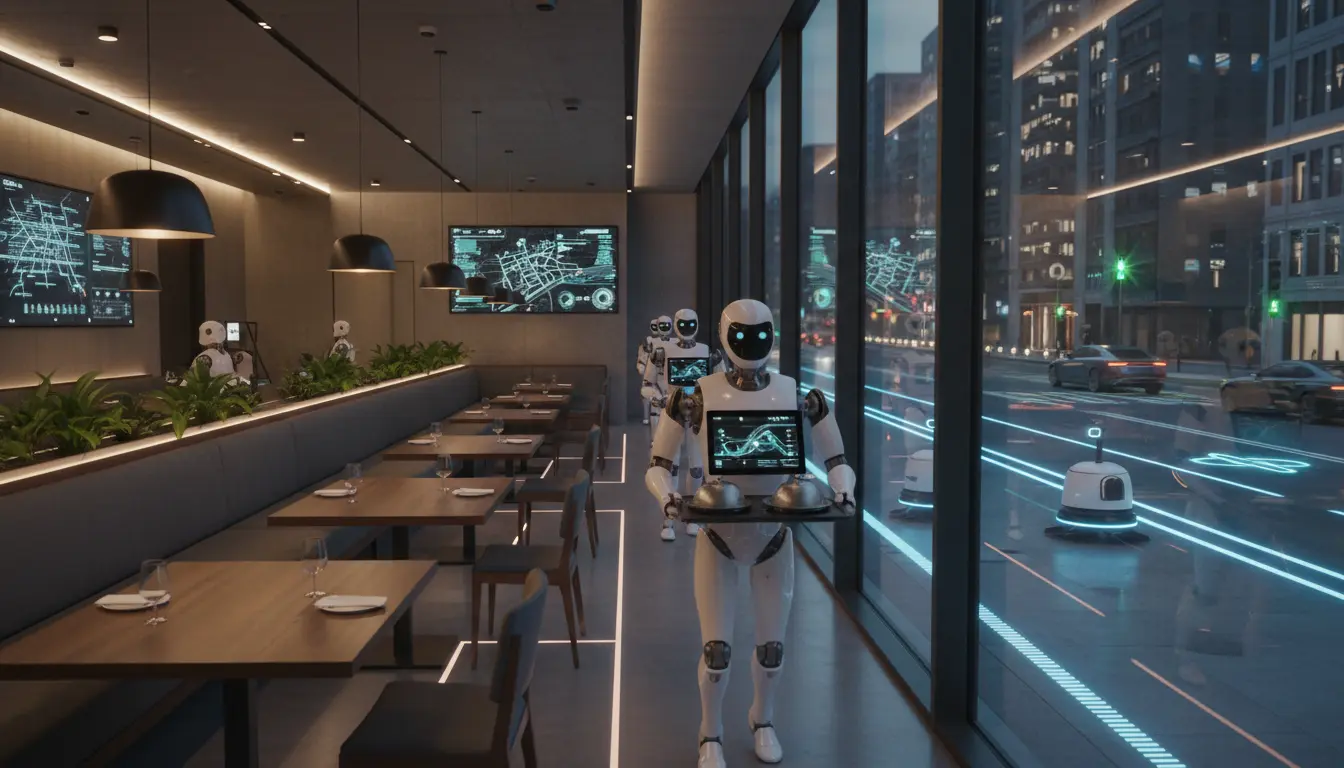
In the United States, restaurants have been among the earliest and most visible adopters of service robots. Robotic waiters that deliver dishes, automated host robots that greet guests, and autonomous cleaning robots that sanitize floors are increasingly common.
These robots help restaurants to:
- Reduce the impact of staff shortages
- Maintain consistent service quality
- Improve hygiene and safety
- Stabilize operating costs
After the COVID-19 pandemic, many businesses turned to automation to reduce operational risk. For them, next-generation service robots are not just gadgets; they are strategic investments that support long-term resilience.
How Next-Generation Service Robots Work
Modern service robots are designed to operate safely in dynamic, people-filled environments. They use:
- Advanced sensors and LiDAR
- Computer vision for object and people recognition
- AI-based navigation and route optimization
- Real-time obstacle detection and avoidance
This autonomy allows robots to move smoothly through crowded dining rooms or hotel lobbies while human staff focus on high-value tasks such as customer interaction, problem-solving, and upselling. Routine, repetitive, or physically demanding work is delegated to the robots.
Expansion Beyond Restaurants: Hotels, Hospitals, and Retail
The same technologies proven in U.S. restaurants are being scaled and adapted worldwide. In different sectors, service robots now perform critical roles:
- Hotels: Deliver luggage, room service, and amenities directly to guests
- Hospitals: Transport medications, samples, and equipment, reducing infection risks
- Retail and Shopping Malls: Provide cleaning, security patrols, and customer guidance
- Airports and Large Campuses: Offer navigation assistance and automated logistics
These deployments improve efficiency, reduce operational costs, and create smoother, more convenient experiences for users.
The Role of Service Robots in Smart Cities
Smart cities aim to integrate digital technology into physical infrastructure to optimize resources and improve quality of life. Service robots fit naturally into this vision. They can:
- Connect to city-wide digital platforms
- Share data with traffic, energy, and security systems
- Respond to real-time demands and changing conditions
For example, delivery robots can coordinate with intelligent traffic systems to choose safe and fast routes. Cleaning robots can operate based on sensor data about foot traffic and waste levels, ensuring that high-use areas are prioritized instead of following fixed schedules.
Demographic and Economic Drivers
In many regions, demographic and economic pressures are accelerating the adoption of service robots:
- Workforce shortages affect hospitality, logistics, and retail
- Businesses need more flexible, predictable operations
Robots do not replace human empathy or creativity, but they take over tasks that are repetitive, dangerous, or physically exhausting. This hybrid model improves both safety and quality of service.
AI, Data, and Continuous Learning
A key feature of next-generation service robots is the deep integration of AI and data analytics. They are no longer simple, pre-programmed machines. Instead, they learn and adapt over time.
Using machine learning and cloud-connected robotics, they can:
- Analyze patterns from thousands of interactions
- Predict peak usage times and optimize schedules
- Reduce energy consumption and idle time
- Improve service quality based on real-world feedback
As robots connect to cloud and edge computing platforms, they can share knowledge, receive remote updates, and collaborate with other robots. This creates a flexible, scalable robotic ecosystem within smart cities.
Challenges: Regulation, Privacy, and Security
Despite their advantages, large-scale deployment of service robots brings serious challenges:
- Regulation: Laws and standards must evolve to cover robots in public spaces
- Safety and Liability: Clear rules are needed for accidents or malfunctions
- Data Privacy: Robots often use cameras and sensors, raising surveillance concerns
- Cybersecurity: Connected robots can be targets for hacking or misuse
Cities and businesses need robust governance frameworks and technical safeguards to ensure that automation remains safe and trustworthy. Transparent policies and open communication with citizens are essential to building long-term acceptance.
Human Experience and Social Acceptance
Technology alone is not enough; people must feel comfortable interacting with robots every day. This requires thoughtful design of:
- Robot appearance and size
- Movement patterns and behavior
- Voice, language options, and user interface
- Social cues, politeness, and clarity of instructions
Many companies are experimenting with social robotics, adding basic emotional expressions, friendly voices, or simple facial animations to make interactions more natural. The aim is to present service robots as helpful assistants, not as cold machines or threats.
Sustainability and Environmental Impact
Next-generation service robots can support more sustainable urban development. When integrated into smart city infrastructure, they help:
- Optimize cleaning and maintenance based on real-time needs
- Support low-emission last-mile deliveries
- Reduce waste through precise resource management
At the same time, manufacturers are pushed to design robots that are durable, energy-efficient, repairable, and recyclable. Sustainability is becoming a competitive advantage in the robotics industry.
The Future: Integrated Robotic Ecosystems in Smart Cities
The convergence of robotics, 5G/6G networks, edge AI, and the Internet of Things will unlock more advanced capabilities:
- Service robots interacting with smart buildings and connected vehicles
- Swarms of smaller robots collaborating on large-scale tasks
- Robots supporting disaster response and emergency services
A robot in a shopping mall might access real-time data about elevator status, crowd density, or air quality and adjust its tasks accordingly. In emergencies, robots could assist in search and rescue or deliver medical supplies where human access is risky.
Conclusion: From Restaurants to Human-Centered Smart Cities
The journey of next-generation service robots—from early adoption in U.S. restaurants to large-scale deployment in global smart cities—shows how innovation spreads and matures. Early pilots prove the value, standards emerge, and technology becomes more reliable and affordable.
If guided responsibly, service robots will:
- Increase operational efficiency
- Enhance safety and hygiene
- Support aging societies and labor-constrained sectors
- Contribute to more responsive, human-centered urban environments
From serving food in a busy diner to operating within the complex systems of a smart city, next-generation service robots are set to become one of the defining technologies of our time.