
The Ultimate Home Gym Setup Guide for Bodybuilding
Designing the perfect home gym for bodybuilding is one of the smartest investments you can make for your health and performance. With a well‑planned setup, you can build muscle, gain strength, and train consistently without wasting time commuting or waiting for machines at a commercial gym. This guide walks you through everything you need to know to create an effective, space‑efficient, and budget‑friendly home gym that supports serious bodybuilding goals.
1. Define Your Bodybuilding Goals and Training Style
Before buying equipment, get clear on your goals. A home gym for bodybuilding should be built around:
- Hypertrophy (muscle growth)
- Progressive overload
- Consistency and safety
Ask yourself:

- Are you training for pure size, aesthetics, or overall strength?
- How many days per week will you train?
- Do you prefer free weights, machines, or a mix?
Your answers will shape which pieces of equipment are essential and which are optional. For example, if your priority is maximum muscle mass, you’ll want a setup that allows heavy compound lifts plus isolation work.
2. Plan Your Space and Layout
Even a small room can become an excellent bodybuilding home gym with smart planning. Measure your space and consider:
- Ceiling height: Important for overhead presses and pull‑ups.
- Floor strength: Heavy weights require solid flooring.
- Ventilation and lighting: A bright, well‑ventilated area keeps you motivated.
A simple but effective layout:
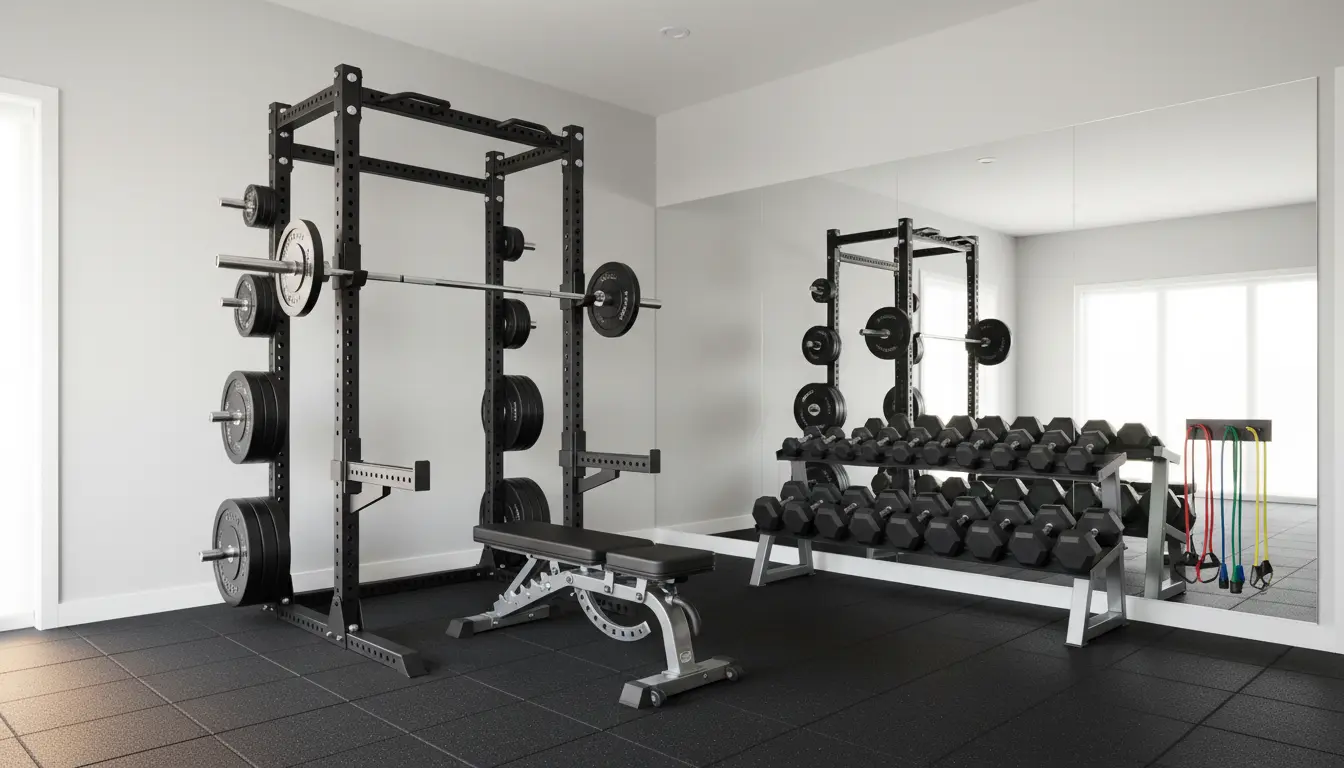
- Lifting Zone: Power rack or squat rack, barbell, and bench.
- Dumbbell Area: Adjustable dumbbells or a small rack.
- Accessory Corner: Resistance bands, ab wheel, yoga mat, foam roller.
- Storage: Wall hooks, shelves, or storage boxes to keep the area clean and safe.
Efficient organization makes your workouts smoother and encourages you to train more often.
3. Must‑Have Equipment for a Bodybuilding Home Gym
For serious muscle building, prioritize multi‑purpose, heavy‑duty equipment that will grow with your strength levels.
3.1 Power Rack or Squat Rack
A power rack is the backbone of a bodybuilding‑focused home gym. It lets you safely perform key compound exercises such as:
- Squats
- Bench presses (with a bench)
- Overhead presses
- Rack pulls and rows
Look for:
- Strong steel construction
- Adjustable safety pins or straps
- Pull‑up bar integrated on top
A rack with safety bars gives you the confidence to push close to failure even when you train alone, which is crucial for hypertrophy.
3.2 Olympic Barbell and Weight Plates
A high‑quality Olympic barbell and a solid set of weight plates are non‑negotiable for bodybuilding at home. They allow you to overload major muscle groups and progress over time.
Choose:
- A 20 kg (45 lb) barbell with decent knurling
- A mix of plates (2.5, 5, 10, 15, 20 kg or their lb equivalents)
- Preferably bumper plates if you plan to do deadlifts or heavy rows on a less forgiving floor
With just a barbell and plates, you can train your entire body effectively.
3.3 Adjustable Bench
A sturdy adjustable bench lets you target muscles from multiple angles, which is essential for bodybuilding.
Key features:
- Flat, incline, and preferably decline settings
- High weight capacity
- Stable, non‑wobbly base
You’ll use the bench for:
- Flat and incline bench presses
- Dumbbell presses and flyes
- Seated shoulder presses
- Bulgarian split squats and more
4. Dumbbells and Isolation Equipment
Bodybuilding training relies heavily on isolation movements to fully develop each muscle group.
4.1 Adjustable Dumbbells
If space is limited, adjustable dumbbells are ideal. They replace an entire rack and allow you to:
- Perform biceps curls, triceps extensions, lateral raises
- Do dumbbell presses and rows
- Add variety to your hypertrophy workouts
Choose a pair with a wide weight range so you don’t outgrow them quickly.
4.2 Resistance Bands and Cables
Resistance bands are inexpensive, portable, and perfect for adding volume and constant tension. They help:
- Warm up joints and muscles
- Add extra resistance to compound lifts
- Perform isolation moves like face pulls, band pull‑aparts, and triceps pressdowns
If your budget allows, a wall‑mounted cable station or a compact pulley system attached to the rack can significantly enhance your home bodybuilding setup.
5. Flooring, Mirrors, and Safety Essentials
A professional‑feeling gym environment keeps you motivated and reduces injury risk.
5.1 Gym Flooring
Protect both your floor and your equipment with rubber mats or interlocking gym tiles. Good flooring:
- Absorbs impact from dropped weights
- Reduces noise
- Improves traction and stability during lifts
5.2 Mirrors for Form and Mind‑Muscle Connection
Large wall mirrors are more than just aesthetic. They help you:
- Monitor technique and alignment
- Improve mind‑muscle connection during isolation movements
- Track visual progress over time
5.3 Safety Accessories
Don’t overlook:
- Collars or clips for barbells
- Lifting belt for heavy squats and deadlifts
- Wrist wraps or straps if needed
- First aid kit in the training area
Safety allows you to train hard and consistently, which is the real secret to muscle growth.
6. Structuring a Bodybuilding Workout at Home
Even the best home gym is useless without a clear program. For bodybuilding, base your routine on:
- Compound lifts for overall size and strength
- Isolation exercises to shape and bring up weak points
- Progressive overload—add weight, reps, or sets over time
A simple weekly split using your home gym might look like:
- Day 1: Chest & Triceps
- Bench press, incline dumbbell press, flyes, triceps dips or extensions
- Day 2: Back & Biceps
- Bent‑over rows, pull‑ups or lat pulldowns (if you have a pulley), curls
- Day 3: Legs & Shoulders
- Squats, Romanian deadlifts, lunges, overhead presses, lateral raises
- Day 4: Full Body or Weak Point Training
- Additional volume for lagging muscle groups
Track your workouts in a log and aim to improve each week. That’s how you turn a home gym into a true muscle‑building powerhouse.
7. Budget and Upgrade Strategy
You don’t need to buy everything at once. Start with the core setup:
- Power rack or squat rack
- Barbell and plates
- Adjustable bench
Then expand as your budget allows:
- Adjustable dumbbells
- Resistance bands and pulley system
- Additional specialty bars or machines
Think of your home gym as a long‑term project. Each upgrade increases your training options and keeps your workouts fresh and effective.
8. Keeping Your Home Gym Motivating and Organized
A clean, inspiring environment makes it easier to stay consistent.
- Keep weights racked and organized after every session.
- Add a small speaker for music or a wall‑mounted screen for training videos.
- Set clear training times in your schedule, just like appointments.
Treat your home gym like a professional facility and you’ll naturally train with more focus and intensity.
Recommended Amazon Product
For a versatile and durable centerpiece to your home bodybuilding setup, consider the “Fitness Reality 810XLT Super Max Power Cage” on Amazon.com. It offers a strong frame, adjustable safety bars, and a pull‑up bar, making it an excellent foundation for heavy compound movements in a home gym.