
LIDAR vs Camera‑Only: What US AV Startups Are Betting on for Self‑Driving Cars
As the race toward fully autonomous vehicles accelerates, one debate continues to divide US autonomous driving startups: LIDAR vs camera‑only systems. Both technologies aim to give self‑driving cars a precise understanding of their surroundings, yet they do so in fundamentally different ways. What startups choose today will shape not only the performance and safety of their vehicles, but also the cost, scalability, and business viability of their future fleets.
This article explains how each approach works, why leading US AV startups are betting on one or the other, and what this means for the future of self‑driving cars.
How LIDAR Works in Autonomous Vehicles
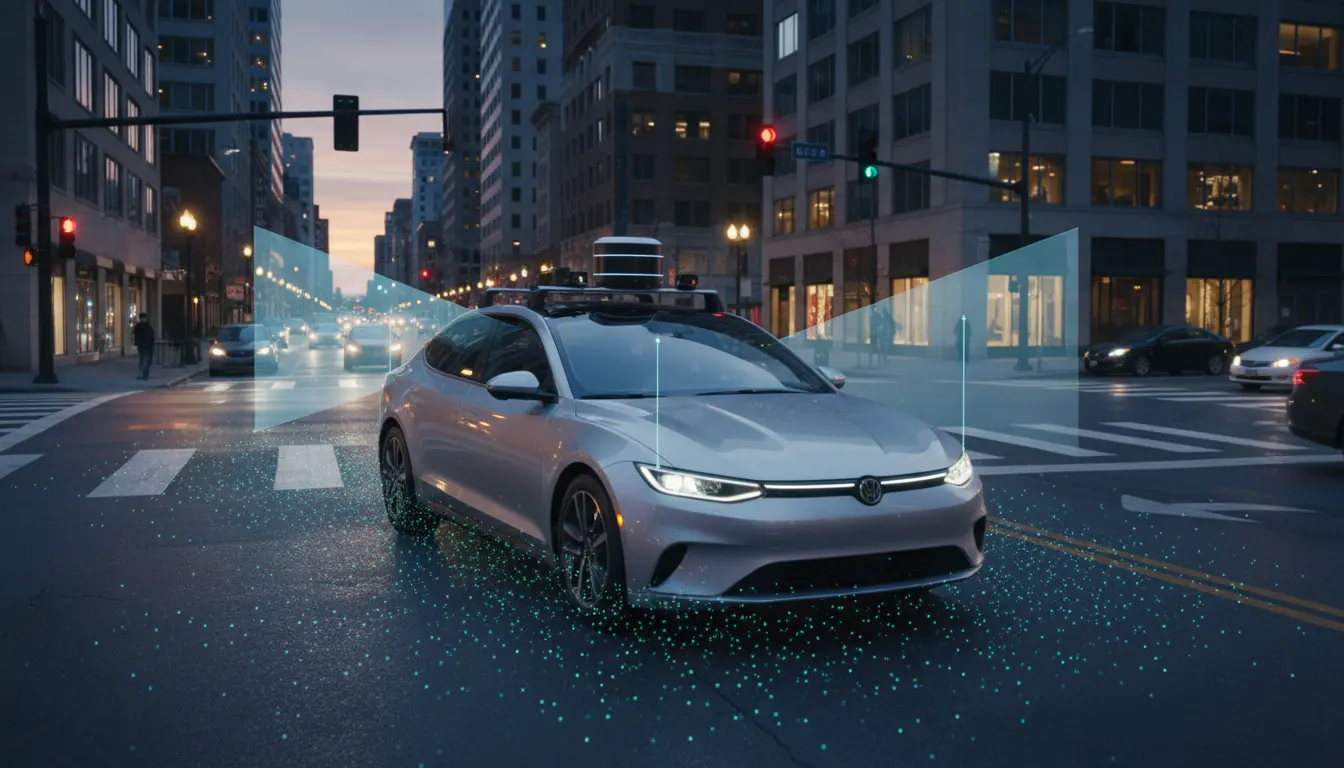
LIDAR uses laser pulses to measure distances and build a precise, high‑resolution 3D map of the surrounding environment.
The sensor emits beams of light, times their return, and converts reflections into a detailed, structured point cloud.
Key advantages of LIDAR in AV systems:
- Accurate depth perception: LIDAR delivers highly reliable distance measurements, which helps the vehicle understand exactly how far away obstacles are.
- Works well in low‑light conditions: Unlike cameras, LIDAR does not depend on ambient light, so it can perform consistently at night.
- Strong object separation: The 3D point cloud clearly distinguishes between objects like pedestrians, vehicles, and road barriers.
However, LIDAR has notable drawbacks:
- High cost: Historically, LIDAR units were thousands of dollars each, a major factor for startups trying to build cost‑effective consumer vehicles.
- Mechanical complexity: Many LIDAR sensors have moving parts, which can raise concerns about long‑term durability and maintenance.
- Integration challenges: AV software must process huge volumes of point‑cloud data in real time, which can require more powerful hardware.
LIDAR remains critical for many US AV robotaxi and commercial fleets, where safety, perception accuracy, and sensor redundancy are essential.
How Camera‑Only Systems Compete
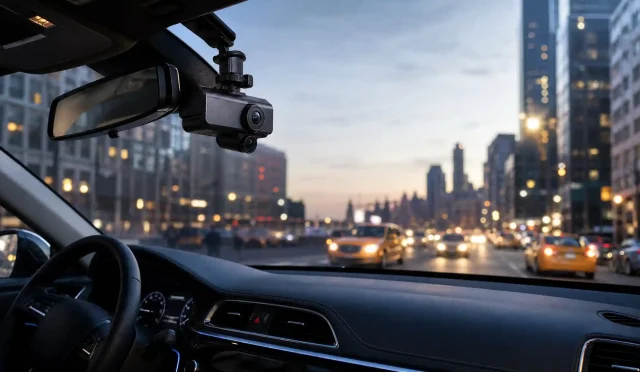
In contrast, camera‑only systems rely purely on arrays of optical cameras around the vehicle. These systems mimic human vision, then use advanced computer vision and deep learning models to interpret the scene.
Core strengths of camera‑only autonomous driving:
- Low hardware cost: Cameras are cheap, mature, and mass‑produced; this dramatically lowers the bill of materials for each vehicle.
- High‑resolution imagery: Cameras capture rich visual detail, including lane markings, traffic signs, and subtle context like brake lights or hand signals.
- Scalability via software: Camera‑based AV perception can be improved primarily through better models and more training data, not more hardware.
But camera‑only AV systems face real challenges:
- Depth estimation complexity: Unlike LIDAR, cameras must infer depth indirectly using stereo vision, motion, or neural networks, which can introduce uncertainty.
- Sensitivity to lighting and weather: Glare, fog, heavy rain, and low sun angles can degrade camera performance.
- Higher reliance on AI: These systems depend on extremely robust machine learning models, trained on massive, diverse datasets to cover rare edge cases.
Several prominent US startups and automakers argue that camera‑only or camera‑first strategies can ultimately scale better, because they more closely reflect how human drivers use vision and can leverage rapid progress in AI.
Why US AV Startups Split on LIDAR vs Camera‑Only
The choice between LIDAR and camera‑only is not just technical; it is deeply strategic. US autonomous vehicle startups evaluate a mix of cost, safety, performance, and market positioning when making this decision.
Startups Favoring LIDAR
US AV companies that focus on robotaxis, autonomous shuttles, or freight trucks often prioritize safety and redundancy over raw cost. For them, LIDAR offers:
- Robust safety margins: Redundant perception layers (LIDAR + cameras + radar) reduce the risk that an edge case will slip through.
- Regulatory confidence: Regulators and partners may view LIDAR‑equipped vehicles as more conservative and safer, which can help with pilots and city approvals.
- Complex urban navigation: LIDAR’s 3D mapping can be especially useful in dense downtown cores with complex intersections and unpredictable pedestrians.
These startups are effectively betting that premium hardware plus conservative operation will win trust and open up high‑value markets first, even if costs remain relatively high.
Startups Betting on Camera‑Only
On the other side, US startups that emphasize consumer vehicles and mass‑market adoption often lean toward camera‑only or camera‑dominant sensor suites. Their bet rests on:
- Cost leadership: Eliminating expensive LIDAR can significantly reduce the price of an autonomous‑ready car.
- Software‑driven improvement: They believe that rapidly improving AI models, trained on billions of real‑world miles, will eventually match or surpass LIDAR‑based perception.
- Manufacturing simplicity: Fewer sensor types mean fewer integration points, simpler supply chains, and easier scaling.
Performance, Safety, and Real‑World Trade‑Offs
Both camps claim superior safety and performance, but in practice, their systems shine in different scenarios.
Where LIDAR‑centric systems excel:
- Nighttime driving with limited street lighting
- Complex environments with many static and dynamic obstacles
- Precise localization in mapped areas using high‑definition 3D maps
Where camera‑only systems shine:
- Recognizing visual details like unofficial signs, roadworks, and subtle cues
- Learning from scale: more miles and more data directly translate into better perception models
- Cost‑effective deployment across large consumer fleets
In the short term, hybrid approaches remain common: many AV stacks combine LIDAR, cameras, and radar to mitigate the weaknesses of any one sensor. Over time, startups will likely refine their preferred mix based on operational data, economics, and regulatory feedback.
Business and Regulatory Implications
The sensor strategy that US AV startups adopt strongly influences their business models and regulatory narratives.
- Robotaxi and logistics players often highlight their multi‑sensor (including LIDAR) stacks as proof of safety and redundancy to cities, insurers, and partners.
- Camera‑only advocates highlight scalability, cost efficiency, and rapid over‑the‑air upgrades as key to eventually making autonomous driving accessible to everyday drivers.
Regulators, meanwhile, are less prescriptive about the specific technology and more focused on demonstrated safety performance. As more pilot programs expand and more real‑world data becomes available, policy guidance may shift in favor of whichever approach consistently shows safer outcomes in diverse conditions.
What This Means for the Future of Self‑Driving Cars
Over the next decade, US AV startups will continue experimenting with sensor configurations, business models, and deployment strategies. It is possible that:
- LIDAR‑heavy systems dominate early commercial fleets in controlled geofenced areas, where safety and reliability trump cost.
- Camera‑only or camera‑first systems gradually expand through consumer vehicles, using millions of human‑supervised miles to refine their models.
In reality, the future of autonomous vehicles may not be strictly “LIDAR vs camera‑only,” but a dynamic spectrum where each company fine‑tunes its stack for its target market. Still, the bets US startups place today will lock in ecosystems of hardware suppliers, mapping partners, and AI tooling that are hard to change later.
For investors, regulators, and consumers, understanding these sensor strategies is crucial. They determine not only how self‑driving cars see the world, but also how quickly they will arrive in your city and at what price.