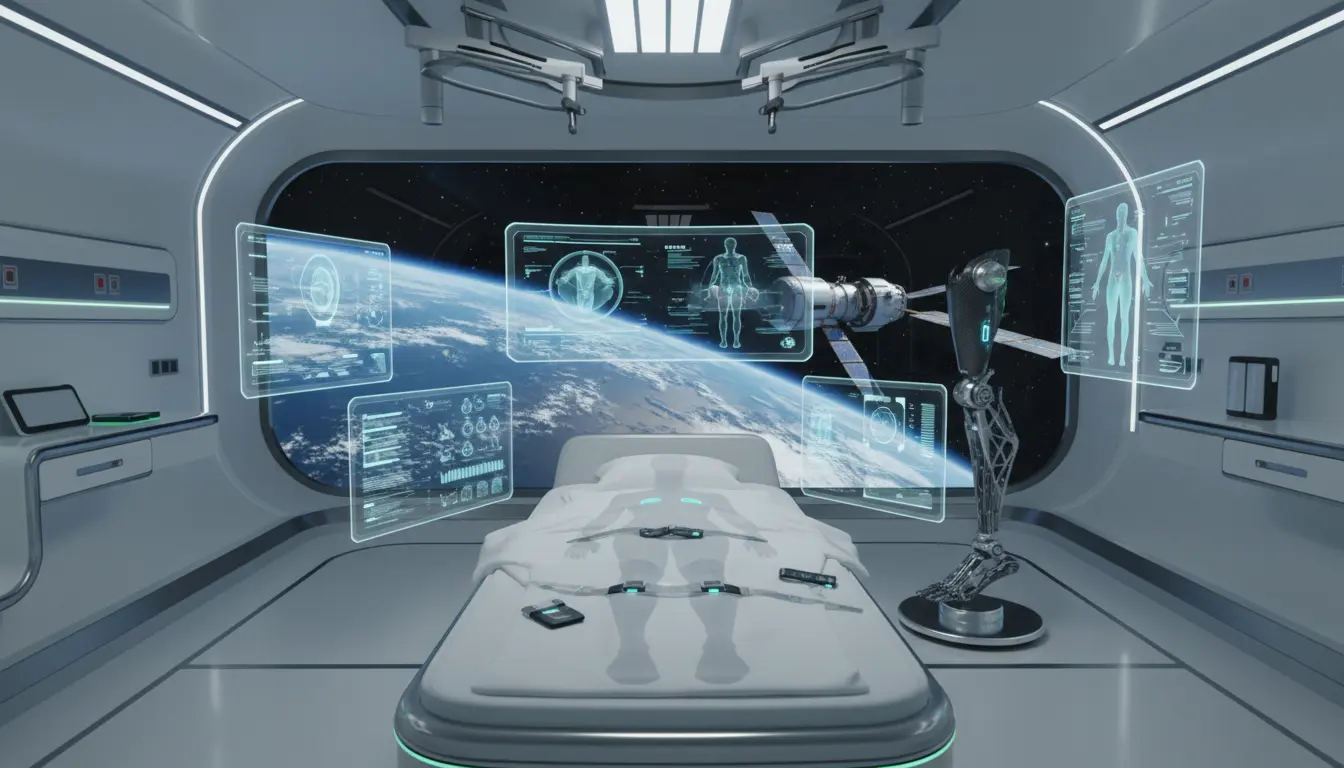

Spinoffs from NASA and Their Medical Applications
From the early space race to modern deep‑space missions, NASA has consistently pushed technology to its limits. Many of the solutions created for extreme conditions in space later become NASA spinoffs that transform life on Earth. Nowhere is this more visible than in healthcare. NASA‑driven innovations are improving diagnostics, treatment, and patient monitoring, turning space technology into powerful medical applications that save lives every day.
NASA Spinoffs and the Evolution of Medical Technology
NASA’s core challenge is to keep astronauts safe, healthy, and productive in a hostile environment. To do this, the agency invests heavily in advanced engineering, materials science, data analysis, and biomedical research. When these technologies are adapted for hospitals, clinics, and home care, they become space technology in healthcare.
This evolution is not accidental. NASA actively collaborates with private companies and research institutions to transfer its innovations to the medical market. As a result, NASA medical spinoffs appear in everything from surgical tools and imaging systems to wearable health monitors and emergency equipment.
Space Imaging Technologies and Modern Medical Scans
One of the most powerful NASA spinoffs in medicine is medical imaging technology. To capture faint signals from distant galaxies, stars, and planets, NASA developed ultra‑sensitive digital sensors, advanced optics, and sophisticated image‑processing algorithms. These same innovations now drive:
- Higher resolution MRI and CT scanning systems
- More accurate digital X‑ray machines
- Enhanced image reconstruction algorithms that reduce noise and improve clarity
By increasing image quality and reducing exposure times, NASA‑inspired imaging enables earlier detection of tumors, internal bleeding, and organ damage. What started as technology to explore the universe now allows doctors to “explore” the human body with unprecedented detail.
Telemedicine and Remote Patient Monitoring Inspired by Space
Because astronauts cannot visit a traditional clinic, NASA had to invent ways to monitor health remotely. This resulted in early forms of telemedicine and remote patient monitoring. Technologies first used to track astronauts’ vital signs in orbit now play a central role in modern healthcare:
- Wearable biometric sensors for heart rate, blood oxygen, and temperature
- Real‑time data transmission from remote locations to expert medical centers
- Telehealth platforms that connect patients and doctors via video and secure data channels
These NASA‑inspired systems are especially valuable for rural areas, disaster zones, and mobile clinics. They help reduce healthcare inequality by allowing patients to access expertise without traveling long distances or entering overcrowded hospitals.
Cardiovascular Innovations from Space Research
Space missions place significant stress on the human body, especially the cardiovascular system. To protect astronauts, NASA developed compact cardiac monitoring devices and algorithms to interpret complex biomedical signals. Over time, these technologies contributed to:
- More accurate heart monitors and wearable ECG devices
- Improved algorithms for detecting arrhythmias and early signs of heart failure
- Advances in pacemaker and implantable device monitoring
These NASA health innovations now support cardiologists in preventing heart attacks, customizing treatments, and continuously observing high‑risk patients.
Advanced Materials, Prosthetics, and Rehabilitation
NASA’s need for lightweight, strong, and durable materials has had a direct impact on prosthetics and rehabilitation. Spacecraft components must withstand vibration, radiation, and temperature extremes while keeping mass to a minimum. The same design principles and materials science research helped create:
- High‑performance prosthetic limbs that are lighter, stronger, and more comfortable
- Ergonomic joint designs that imitate natural movement more closely
- Robotic and exoskeleton‑based rehabilitation systems inspired by space robotics
Robotic technologies originally meant to assist astronauts in microgravity now assist patients in regaining strength and mobility after injuries, strokes, or surgeries.
Infection Control, Sterilization, and Clean Environments
To avoid contaminating other planets and to protect spacecraft systems, NASA places strict requirements on cleanliness, sterilization, and microbial control. Research from these programs has been repurposed in hospitals through:
- Advanced HEPA filtration and air‑purification systems
- Antimicrobial surface coatings and materials
- Effective sterilization protocols and controlled environments
These NASA spinoffs support safer operating rooms, intensive care units, and isolation wards by reducing the risk of hospital‑acquired infections, improving air quality, and maintaining hygienic surfaces.
Wearable Health Sensors and Everyday Medical Devices
The need to continuously monitor astronauts’ health led to early development of compact, low‑power biosensors. Today, many consumer and clinical wearable health devices are based on concepts tested in space:
- Smartwatches with ECG and blood‑oxygen monitoring
- Fitness trackers that measure sleep, stress, and activity
- Home health devices that send data directly to physicians
By empowering patients to track their own health metrics, these NASA‑derived tools encourage prevention, early intervention, and personalized care plans.
Space Materials in Medical Devices and Patient Care
Beyond electronics and software, NASA has also influenced the physical materials used in healthcare. Polymers and foams created for spacecraft seats and protective gear are now used in:
- Medical mattresses and cushions that prevent pressure ulcers
- Orthopedic supports, braces, and casts with improved comfort
- Heat‑resistant and biocompatible materials for surgical tools and implants
These aerospace materials in prosthetics and medical devices help hospitals provide safer, more comfortable, and more durable solutions for patients.
Data Analysis, AI, and Satellite‑Enabled Health Insights
NASA processes enormous amounts of data from satellites, telescopes, and onboard instruments. Techniques developed to handle this complexity paved the way for AI‑supported medical diagnostics:
- Algorithms similar to those used for analyzing satellite images assist in reading MRI and CT scans
- Machine learning models inspired by space research help classify tissue samples and detect anomalies
- Satellite technology supports epidemiology and public health by monitoring pollution, climate, and environmental risk factors linked to disease
By combining satellite technology in medical diagnostics with clinical data, researchers gain deeper insights into how environment and climate influence human health.
Emergency Medicine and Portable Life‑Support Systems
Finally, NASA’s focus on reliability and portability in extreme environments has directly shaped emergency medicine. Space‑grade design has influenced:
- Compact ventilators and life‑support systems usable in ambulances and field hospitals
- Portable diagnostic devices that function in harsh conditions
- Rugged monitors for vital signs used by paramedics and rescue teams
These robust devices, born from space missions, enable high‑quality care in disaster zones, conflict areas, and other challenging settings.
Why NASA Medical Spinoffs Matter for the Future of Healthcare
NASA’s medical spinoffs demonstrate that investment in space exploration is also an investment in public health. Each mission drives new breakthroughs in imaging, materials, data science, and biology. When adapted for clinical use, they enhance diagnostics, enable earlier interventions, and support more personalized treatments.
As humanity prepares for longer missions to the Moon and Mars, the need to maintain health far from Earth will only increase. This will likely accelerate the development of new space derived medical devices, autonomous health systems, and AI‑driven diagnostics that will eventually reach hospitals and homes worldwide. The ongoing relationship between NASA and medicine ensures that space exploration will continue to generate life‑saving innovations for decades to come.