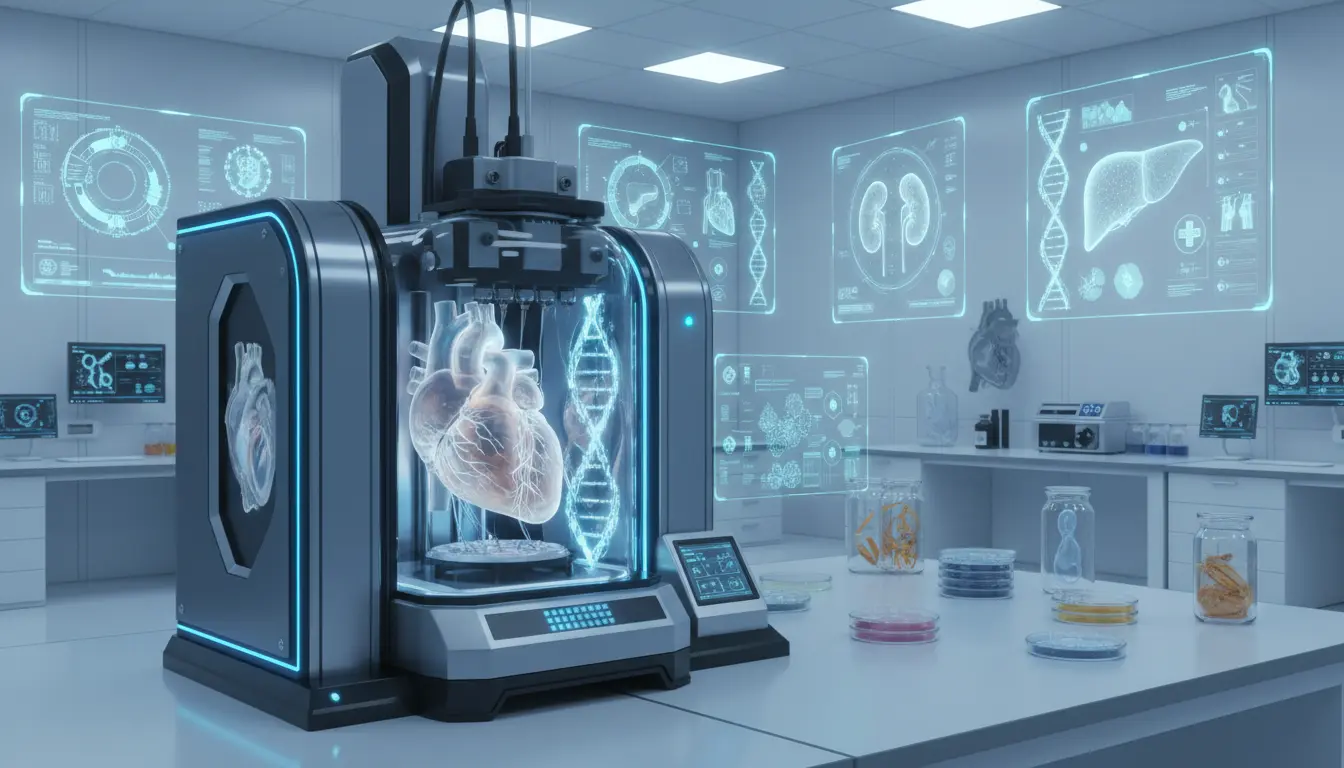

3D Printed Organs: U.S. Research and Global Ethical Debates
3D printing technology has rapidly evolved from creating simple plastic prototypes to producing complex biological structures. Among its most groundbreaking applications is 3D bioprinting of organs, a field that promises to transform modern medicine. In the United States, research institutions, start‑ups, and hospitals are investing heavily in this technology, while the rest of the world closely watches both the scientific progress and the ethical implications. As the possibility of printing functional human organs becomes more realistic, debates about safety, justice, and human dignity are intensifying.
The Science Behind 3D Bioprinting
3D bioprinting uses specialized printers that deposit layers of bioink—a mixture of living cells and biomaterials—according to a digital model. Instead of plastic or metal, the printer builds soft tissue structures that can potentially function like natural organs. Researchers typically start by taking cells from a donor or the patient, expanding them in the lab, and combining them with hydrogels or scaffolds that give the tissue shape and mechanical strength.
The process usually involves three main stages:
- Imaging and modeling: Medical imaging techniques such as MRI and CT scans are used to create highly detailed 3D models of organs or tissue segments.
- Bioink preparation: Scientists select and prepare cell types—such as stem cells, endothelial cells, or organ‑specific cells—and mix them with biomaterials that support growth.
- Layer‑by‑layer printing and maturation: The bioprinter deposits the bioink according to the model. The printed construct is then placed in a bioreactor, where it matures and develops more natural structure and function.
U.S. laboratories have already successfully printed relatively simple structures, such as cartilage, skin, and blood vessel segments. The long‑term goal is to print complex organs like kidneys, livers, and hearts that can be transplanted into patients.
U.S. Research Landscape and Regulatory Environment
The United States is one of the global leaders in 3D bioprinting research due to its robust ecosystem of universities, biotech companies, and federal funding programs. Major research centers collaborate with engineering schools, medical institutions, and private industry to accelerate innovation. This multidisciplinary approach, combining materials science, cell biology, and computer engineering, is essential for translating prototypes into clinical solutions.
However, scientific progress is only part of the story. The U.S. Food and Drug Administration (FDA) plays a central role in determining how and when 3D printed tissues and organs can be used in humans. While the FDA has already issued guidance on 3D printed medical devices, fully functional printed organs pose far more complex questions. Regulators must consider:
- Long‑term safety and performance of printed tissues
- Risk of immune reactions or tumor formation
- Standardization and quality control across different printers and laboratories
- Ethical approval for early‑stage clinical trials
The regulatory framework is still evolving, and U.S. policymakers are engaged in an ongoing dialogue with scientists, ethicists, and patient advocacy groups to create guidelines that foster innovation while protecting patients.
Addressing the Organ Shortage Crisis
One of the strongest motivations for 3D printed organ research in the U.S. is the persistent shortage of donor organs. Thousands of patients die each year while waiting for transplants. If scientists can reliably print patient‑specific organs using their own cells, it could radically reduce waiting lists and minimize the risk of rejection.
Potential benefits include:
- Personalized organs: Tissues printed with a patient’s own cells may integrate better and reduce the need for lifelong immunosuppressive drugs.
- On‑demand production: Hospitals could one day print organs when needed, avoiding the logistics and time pressure of organ retrieval and transportation.
- Drug testing and disease modeling: Even before fully functional organs are available, bioprinted tissues allow researchers to test new medications and study diseases on human‑like models, reducing reliance on animal experiments.
These advantages drive massive investment within the U.S., positioning it as a hub for clinical translation. Yet, they also amplify global ethical concerns about fairness and access.
Global Ethical Debates and Inequality
As U.S. research advances, a central global question emerges: Who will actually benefit from 3D printed organs? If this technology remains expensive and concentrated in wealthy countries, it could widen existing health disparities.
Key ethical concerns include:
- Global access and affordability
Low‑ and middle‑income countries already struggle to provide basic healthcare and conventional organ transplants. If 3D printed organs are patented and tightly controlled by a few large companies, the cost may be prohibitive. Ethical discussions therefore focus on models of pricing, licensing, and technology transfer that could make the technology more widely available. - Commercialization and commodification of the body
Many scholars worry that highly commercialized 3D organ printing will encourage viewing body parts as products. The ability to “order” a customized organ from a company raises concerns about the commodification of human life and the erosion of respect for bodily integrity. - Informed consent and use of patient cells
The cells used to create bioinks may come from patients who do not fully understand how their tissues will be used, stored, or licensed. Global ethical guidelines stress transparent informed consent, clear data protection rules, and fair benefit‑sharing when profitable therapies arise from patient‐derived cells. - Dual‑use and enhancement
Another debate centers on the possibility of using bioprinting not just to restore normal health, but to enhance physical performance or cognitive abilities. Some ethicists warn that powerful countries or private actors could exploit 3D printing for military or enhancement purposes, deepening geopolitical and social inequalities.
Cultural and Religious Considerations
Ethical reactions to 3D printed organs vary widely across cultures and religious traditions. While some see the technology as a continuation of life‑saving medical practice, others view it as crossing a moral or spiritual boundary. Questions include:
- Does printing an organ challenge the idea of humans as created beings?
- Is there a difference between transplanting a donated organ and inserting a fully engineered one?
- How should we treat failed or discarded printed tissues that contain human cells?
International ethics committees and religious authorities are beginning to issue opinions and guidance. For global consensus to emerge, U.S. researchers and policymakers must engage honestly with these perspectives rather than assuming a single, uniform ethical standard.
The Role of International Governance
Because scientific collaboration and medical tourism are global, national regulations alone are not enough. There is growing recognition that international governance frameworks are needed to guide 3D organ printing. Organizations such as the World Health Organization and UNESCO are potential platforms for:
- Developing shared definitions and ethical benchmarks
- Encouraging transparency in clinical trials and safety reporting
- Promoting equitable technology sharing between countries
- Preventing unethical experimentation on vulnerable populations
Ideally, the U.S. will work with international partners to create guidelines that balance innovation with respect for human rights and social justice.
Looking Ahead: Responsible Innovation
3D printed organs could become one of the most transformative medical breakthroughs of the 21st century. U.S. research institutions are at the forefront of this shift, driving rapid progress in bioinks, printing precision, and tissue maturation. Yet the global ethical debates remind us that technological capability is not the only measure of success.
For 3D organ printing to be truly beneficial, scientists, regulators, and industry leaders must:
- Prioritize patient safety and transparency in clinical research
- Design pricing and access models that do not leave poorer communities behind
- Respect cultural and religious diversity in ethical decision‑making
- Anticipate potential misuse and build safeguards into governance systems
If these challenges are taken seriously, 3D printed organs may not only save individual lives but also reshape global health systems in a more just and sustainable way.