
Humanoid Robots: U.S. Laboratories and Asian Robotics Giants
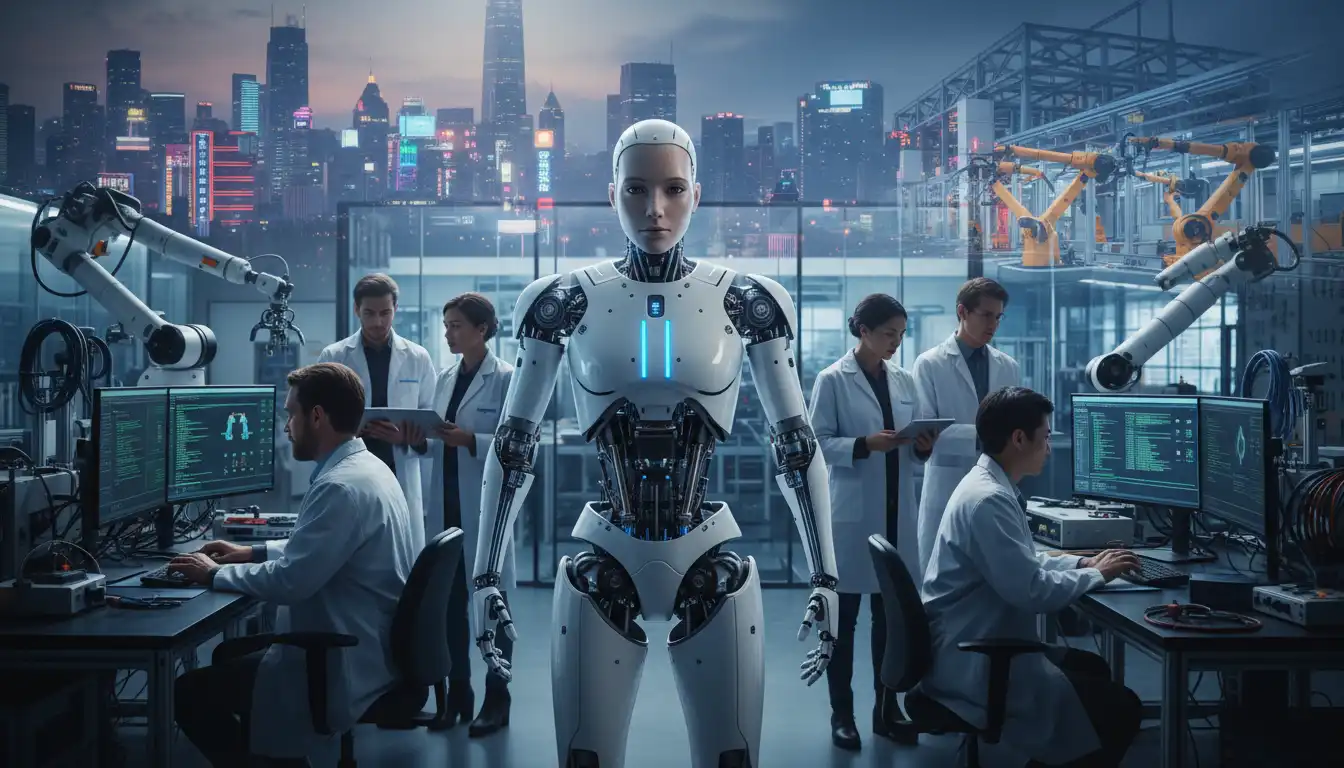
Humanoid robots have rapidly moved from science fiction to real-world laboratories, factories, and even homes. Around the world, two key power centers are shaping this transformation: advanced research laboratories in the United States and large-scale robotics manufacturers in Asia. Together, they are writing the next chapter of human–machine interaction and redefining how we think about work, mobility, and intelligence.
In the United States, university labs, private research centers, and tech companies are pushing the boundaries of what humanoid robots can do. Their main focus is not only on hardware, but also on artificial intelligence, perception, and safe human–robot collaboration. These U.S. laboratories often act as innovation engines, developing breakthrough technologies that later become commercial products.
By contrast, Asian robotics giants specialize in scaling these ideas into robust, market-ready solutions. Companies in Japan, South Korea, and China combine engineering discipline with manufacturing power. They excel at building reliable humanoid robot platforms, integrating them into real-world environments such as logistics centers, hospitals, and retail spaces. This synergy between U.S. research and Asian industrialization is accelerating the global adoption of humanoid robots.
The Role of U.S. Labs in Humanoid Robotics
U.S. laboratories are particularly strong in fundamental research. Many of today’s iconic humanoid robots started as experimental projects in American universities or government-funded research institutes. These labs explore crucial topics like balance control, whole-body motion planning, and dexterous manipulation.
For example, advanced teams work on locomotion algorithms that allow humanoid robots to walk over uneven terrain, climb stairs, or recover from sudden impacts. Machine learning is used to teach robots how to adapt their gait and posture in real time. Other groups focus on vision systems that enable robots to understand complex human environments, detect objects, and navigate safely around people.
Another major U.S. strength is software architecture. Researchers design modular, open-source frameworks that make it easier to test new control strategies and deploy them across different humanoid robot platforms. These frameworks reduce development time and promote collaboration between academia, startups, and large technology companies.
Ethics and safety are also central themes. Many American projects investigate how to make humanoid robots transparent in their decision-making, predictable in their movements, and secure against cyberattacks. This is critical as these systems begin to work alongside humans in sensitive environments like healthcare, eldercare, and disaster response.
Asian Robotics Giants and Scalable Manufacturing
While U.S. laboratories excel at creating prototypes and new concepts, Asian robotics giants have unmatched experience in mass production and quality control. Companies in Japan and South Korea have been building industrial robots for decades. They are now transferring this knowledge to humanoid forms.
These manufacturers design humanoid robots that can operate for long hours, require minimal maintenance, and integrate smoothly with existing industrial systems. In logistics centers, humanoid robots lift and carry boxes, scan barcodes, and support human workers during peak demand periods. In public spaces, service robots greet customers, answer questions, and guide visitors.
Asian engineering culture emphasizes reliability and long product lifecycles. As a result, many of their humanoid robots are built with standardized components and highly tested actuators. This reduces the risk of failure and makes it easier to repair or upgrade the machines. Combined with efficient supply chains, this approach lowers costs and accelerates global deployment.
In China, huge investments in AI and robotics ecosystems are creating new generations of versatile humanoid platforms. These robots are increasingly used as development testbeds for AI companies, which integrate speech recognition, natural language understanding, and computer vision to create more human-like behavior.
Collaboration and Competition Across the Pacific
The relationship between U.S. laboratories and Asian robotics giants is both collaborative and competitive. On one side, many Asian companies license technologies, algorithms, or software frameworks originally developed in American research institutes. Joint research projects, conferences, and open-source initiatives connect researchers and engineers across borders.
On the other side, both regions compete aggressively to lead the next wave of robotics innovation. U.S. startups are racing to build general-purpose humanoid robots for warehouse automation and light industrial tasks. Meanwhile, Asian corporations are expanding their global presence and investing in AI talent. This healthy competition drives rapid progress in humanoid robot design, performance, and affordability.
The result is a vibrant global ecosystem in which ideas, components, and expertise flow back and forth. A new control algorithm might be born in a U.S. lab, optimized by an Asian engineering team, and finally appear in a commercial humanoid robot used in Europe or the Middle East. This international circulation of knowledge accelerates the maturity of the entire field.
Real-World Applications Transforming Everyday Life
Humanoid robots are not only experimental showpieces; they are becoming practical tools. “They fill production labor gaps by automating tough jobs. In warehouses, they move cargo through human-friendly layouts.”
In healthcare and eldercare, humanoid robots assist with basic tasks such as carrying items, reminding patients to take medicine, or providing simple social interaction. Their human-like form factor makes it easier for patients and staff to understand the robots’ movements and intentions. This can increase acceptance and trust, which are essential for long-term integration.
Education and research also benefit. Humanoid robots are used as platforms to teach programming, AI, and robotics concepts. Students can test algorithms on physical machines that react to gravity, friction, and real-world uncertainty, rather than purely in simulation. This experience prepares a new generation of engineers for careers in advanced automation.
Future Trends in Humanoid Robotics
In the near future, collaboration between U.S. research centers and Asian manufacturers will likely intensify. We can expect humanoid robots to gain more robust hands, better tactile sensing, and more energy-efficient actuators. Advancements in battery technology and lightweight materials will allow them to operate longer on a single charge and move more naturally.
AI progress will further transform humanoid capabilities. Large language models and multimodal perception systems will enable robots to understand spoken commands, interpret gestures, and respond contextually. Over time, humanoid robots will shift from pre-programmed tools to adaptive partners that can learn from demonstration and real-world experience.
Regulation and standards will also evolve. Both American and Asian organizations are working on guidelines for safe deployment, data privacy, and ethical use of humanoid robots. Clear frameworks will help companies innovate responsibly while protecting users and workers.
Ultimately, the combination of U.S. laboratory innovation and Asian industrial strength is likely to define the global trajectory of humanoid robotics. As these two ecosystems continue to influence each other, humanoid robots will become more capable, accessible, and integrated into everyday life—changing how we work, care, and interact in the decades to come.