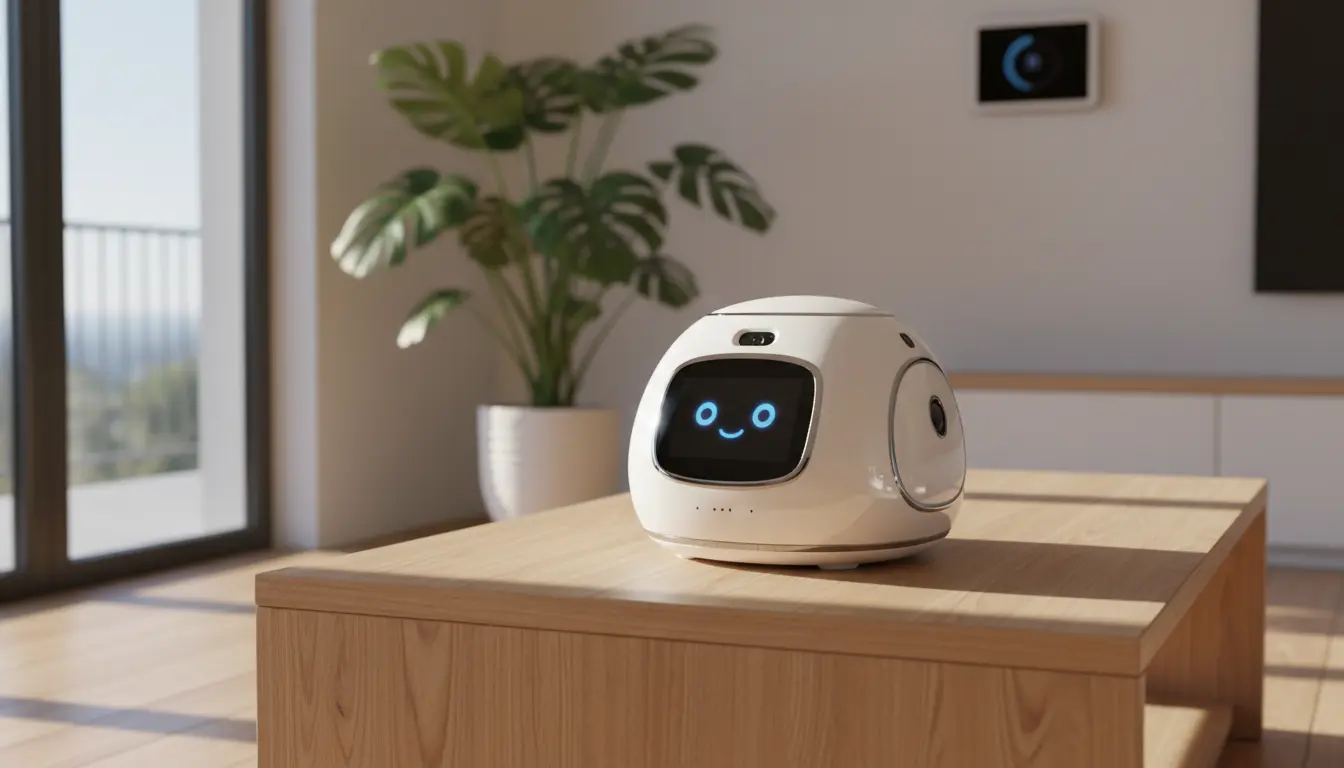

Personal companion robots—once confined to science fiction—are quickly becoming a real consumer category. From friendly tabletop bots that chat, remind you of tasks, and manage smart homes, to more advanced mobile units designed to offer emotional support and light assistance, the market is expanding at a pace that forces a serious question: Are personal robot companions overhyped, or are they the final, inevitable stage of a global consumer technology wave?
This article breaks down the hype, the true drivers of demand, the limitations that still matter, and where the category is likely headed in the next decade.
Why “Companion Robots” Are Suddenly Everywhere
The surge in interest isn’t random—it’s the result of several trends converging at once:
First, AI has become conversational and useful. Large language models made voice-first interaction feel natural, which is exactly what a “companion” product needs. Second, hardware costs have dropped while sensors, microphones, and on-device processing have improved. Third, society itself changed: remote work, single-person households, and aging populations have increased the desire for technology that feels supportive rather than purely functional.
In marketing, these robots are often positioned as a blend of assistant, friend, and lifestyle device. That positioning is powerful—but also risky—because it creates expectations that the technology may not consistently meet.
The Case for “Overhyped”
It’s clear why skepticism exists. The category has a long history of flashy demos and disappointing real-world use. Here are the main reasons people call personal robot companions overhyped:
1) The “emotional promise” is bigger than the reality.
Many devices can simulate empathy through language, tone, and facial expressions (or on-screen animations). But a simulated bond can break quickly when responses feel generic, repetitive, or inconsistent over time.
2) Hardware reliability and maintenance are underrated problems.
Consumers tolerate app bugs; they are less tolerant of physical products that need charging, calibration, cleaning, repair, or replacement parts. A robot that gets stuck under a chair or loses connection mid-conversation becomes a frustration rather than a companion.
3) Privacy and trust concerns are not a footnote.
A device that listens, sees, and lives inside the home faces a much higher trust barrier than a phone. If people don’t believe their data is protected—or if the product is unclear about recording and storage—adoption stalls.
4) Most “robots” are still stationary smart speakers with a body.
Many products labeled as robots are essentially voice assistants with personality. Mobility, useful manipulation, and dependable autonomy remain hard and expensive.
If you define “robot companion” as a machine that provides consistent, safe, meaningful support across months and years—then yes, much of the market today is still in the early stage.
The Case for a Global Consumer Wave Endgame
Despite the hype risks, there’s a strong argument that companion robots represent the logical endpoint of consumer technology evolution: from tools → to platforms → to partners.
Smartphones made computing personal. Social apps made it social. Wearables made it continuous. The next step is technology that feels present—something you can talk to, that recognizes your routines, supports your goals, and occupies physical space.
Here’s what makes the “endgame” thesis credible:
1) Demographics are doing the heavy lifting.
Aging populations and caregiver shortages are real. Many households will need support for reminders, medication routines, basic monitoring, and companionship. Even a modestly capable companion robot can deliver value if it reduces isolation and supports daily structure.
2) Loneliness is a consumer problem now—whether we like it or not.
People are seeking frictionless emotional support. Apps attempted to fill that gap; robots bring it into the home in a more “alive” way. For many buyers, the product isn’t replacing people—it’s filling quiet moments with interaction.
3) The smart home needs a “face.”
Homes are already full of connected devices, but managing them through apps is tiring. A robot companion can become the interface: a single conversational hub that controls lights, temperature, security, schedules, and entertainment.
4) Subscription economics can sustain fast improvement.
Unlike traditional appliances, these products can improve via software updates, feature releases, and better models. That ongoing evolution helps justify the cost—if companies remain transparent and users feel real progress.
In short: companion robots may not be perfect, but the underlying demand signals are strong and global.
What Consumers Actually Want (Not What Ads Say)
To judge whether this is hype or inevitability, we have to focus on what consumers reliably pay for.
Most consumers are not asking for a “best friend robot.” They’re asking for:
- Simple daily structure: reminders, calendars, routines, and follow-through
- Low-effort interaction: voice conversation that doesn’t feel like programming
- Comforting presence: a sense that “something is there,” especially for people living alone
- Light utility: music, news summaries, smart home control, basic monitoring, and check-ins
- Personalization: remembering preferences without being creepy or invasive
The winning products will likely be the ones that deliver consistent small wins, not dramatic sci-fi capabilities.
Where the Technology Still Struggles
To keep the discussion honest, several barriers remain:
Context and long-term memory: Robots often fail to build a coherent “relationship” across time. If it can’t recall your preferences accurately—or does so in a way that feels unsafe—users disengage.
Safety in physical spaces: True autonomous navigation in a cluttered home is hard. Pets, toys, cables, rugs, and stairs are messy variables.
Natural behavior: Humans are sensitive to awkward timing, unnatural movement, and repetitive dialogue. The uncanny valley isn’t only visual—it’s behavioral.
Cost vs. value: Consumers compare the price to phones, tablets, or even a pet. To win, companion robots must offer something distinctly better: presence, routine support, and ease.
The Most Likely Future: Not One Robot, but Many Roles
Instead of one universal humanoid assistant, we’ll likely see specialized categories:
- Desk companions for focus, organization, and light conversation
- Family hubs that manage schedules, chores, and home automation
- Elder-support companions focused on reminders, check-ins, and gentle monitoring
- Therapeutic companions designed for anxiety reduction, social support, or autism-friendly interaction
- Hospitality and retail companions that guide, greet, and answer questions
This mirrors the evolution of consumer electronics: many devices, each optimized for a role, rather than one device doing everything.
What Will Decide If This Market “Sticks”
The category will succeed or fail based on a handful of non-negotiables:
1) Trust design
Clear privacy controls, transparent data handling, and obvious indicators of recording/active listening.
2) Useful personality
Personality shouldn’t be a gimmick. It should reduce friction, encourage habits, and create a pleasant interaction loop without emotional manipulation.
3) Strong offline behavior
If everything breaks when Wi‑Fi is unstable, the robot feels unreliable. Basic functions must work consistently.
4) Real product integrity
Sturdy hardware, good microphones, battery life that fits daily routines, and customer support that doesn’t disappear after launch hype.
Final Verdict: Overhyped Today, Inevitable Tomorrow
So—overhyped or endgame? The most realistic answer is both.
The current generation is often over-promised in marketing, and many devices still struggle to deliver a deep “companion” experience day after day. However, the broader movement is not going away. Consumer tech is heading toward embodied AI—systems that live with us, talk naturally, adapt to routines, and become part of our environment.
In that sense, personal robot companions aren’t the end of consumer demand; they may be the next container for it—shifting value from screens and apps toward presence, voice, and daily-life integration.
If brands focus on trust, reliability, and small-but-consistent usefulness, personal robot companions could become as normal as smart speakers—only more human-centered, more helpful, and more integrated into the rhythms of home life.
Recommended product: ENERGIZE LAB Eilik — a cute desktop companion robot (“robot pet”) designed for home or workspace use, offering expressive interactions and light companionship in a realistic, non-humanoid form.