
Solid-State Batteries and U.S. Automakers: When Will Toyota, Ford, and GM Bring Them to Market?
Solid-state batteries have become one of the most anticipated breakthroughs in electric vehicles (EVs). They promise higher energy density, faster charging, and improved safety compared with today’s lithium-ion packs. At the same time, they remain difficult and expensive to manufacture at automotive scale. That tension—huge potential, hard execution—explains why drivers keep asking the same question: when will major automakers like Toyota, Ford, and GM actually sell vehicles with solid-state batteries?
This article explains what solid-state batteries are, why they matter, what the biggest obstacles are, and the most realistic timelines for market rollout—especially for Toyota, Ford, and General Motors (GM). It also covers what “market launch” truly means (pilot fleets vs. mass production) so expectations stay grounded.
What a Solid-State Battery Really Is (and Why It’s Different)
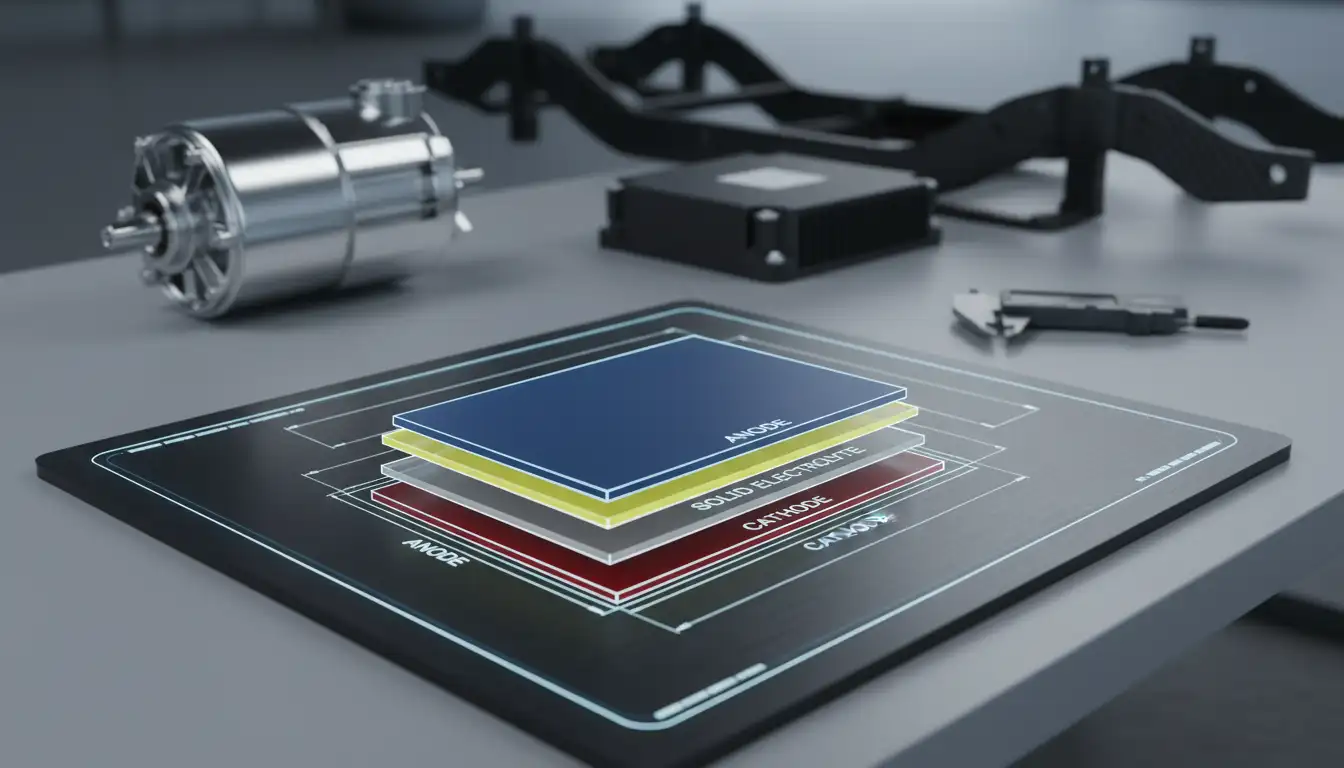
A conventional EV battery uses a liquid electrolyte to move ions between the anode and cathode. A solid-state battery replaces that liquid with a solid electrolyte (such as sulfides, oxides, or polymers). That single design change triggers multiple advantages.


Automakers and researchers expect solid electrolytes to reduce fire risk and enable more compact cell designs. In many concepts, it also opens the door to lithium-metal anodes, which could boost range without making the battery heavier. In practical terms, that means EV engineers can chase longer driving range, lighter packs, and better thermal stability all at once.
Still, “solid-state” covers several architectures. Some designs are fully solid. Others are “semi-solid” or “hybrid,” where a small amount of liquid remains. When brands talk about solid-state progress, it’s important to ask which type they mean and whether it’s proven in real driving conditions.
Why Automakers Want Solid-State: The Business Case
EV competition increasingly revolves around battery cost, charging speed, and durability. Solid-state technology could improve all three—if it can be produced reliably. Automakers care about:
- Energy density improvements that allow smaller packs for the same range
- Fast charging potential without extreme heat buildup
- Safety improvements and simpler pack protection strategies
- Cycle life and durability, especially under cold/heat stress
- Lower total cost once manufacturing yields stabilize
In other words, solid-state isn’t just a science project. If it works, it rewrites the economics of EV platforms.
The Hard Part: Manufacturing and Reliability
Solid-state batteries face several stubborn hurdles before they become mainstream:
- Interface resistance and dendrites
Solid-to-solid contact can be imperfect. Microscopic gaps raise resistance and limit power. Meanwhile, lithium-metal designs can still form dendrites that compromise safety and performance. - Cracking and mechanical stress
Materials expand and contract during charging cycles. Solid electrolytes can crack, leading to performance loss. - Moisture sensitivity (for some chemistries)
Certain sulfide electrolytes require very controlled dry-room environments, increasing cost. - Scaling yield and quality control
Making small lab cells is one thing. Making millions of consistent automotive cells is the real challenge.
Because of these issues, most experts expect the first wave of solid-state batteries to appear in limited quantities, often in premium vehicles or early pilot programs, before widespread adoption.
Toyota: Likely First Mover, But Still Gradual
Toyota has been among the most vocal large automakers about solid-state batteries. The company has repeatedly signaled strong R&D investment and a desire to commercialize earlier than many rivals. Toyota’s public messaging over the years has generally pointed to the later 2020s for meaningful rollout, though exact dates have shifted as development realities set in.
What to expect from Toyota:
- Toyota is more likely to start with a limited production run rather than immediate mass-market saturation.
- Early deployments may appear in higher-priced models where the cost premium is easier to absorb.
- Toyota may also prioritize reliability and warranty confidence over rushing to a big headline launch.
Realistic takeaway: Toyota has the strongest narrative and depth in the space, but even Toyota’s solid-state arrival will likely begin as a controlled introduction before scaling.
Ford: Watching the Technology Curve and Partner Ecosystems
Ford has shown strong interest in next-generation battery tech, but its approach has tended to balance ambition with near-term execution. Like many U.S. automakers, Ford must justify massive capital decisions around battery factories, supply chains, and model cycles. Solid-state batteries require new production methods, which makes timing dependent on readiness across the entire ecosystem.
What to expect from Ford:
- Ford may pursue solid-state through strategic partnerships and select vehicle programs first.
- Early releases could show up as demonstration vehicles or limited fleets before broad consumer availability.
- Ford will likely keep improving conventional lithium-ion packs in parallel (cost reduction, better charging curves, improved thermal management).
Realistic takeaway: Ford’s solid-state “market launch” is more likely to mean a limited, high-visibility pilot before it becomes a mainstream option.
GM (General Motors): Scaling Discipline, Platform Compatibility, and Timing
GM has invested heavily in EV platforms, battery supply, and manufacturing scale. For GM, the question is not only “can solid-state work,” but “can it integrate into a high-volume production system without disrupting reliability targets and cost curves?”
Solid-state batteries may arrive at GM when the company can match three factors:
- Proven automotive-grade performance
- Manufacturable at scale with acceptable yields
- Clear cost roadmap versus advanced lithium-ion
What to expect from GM:
- GM could introduce solid-state in premium or performance trims first.
- The first “real” appearance may not be a full lineup shift—it may be a single flagship or specialized model.
- GM’s broader EV strategy will likely continue to rely on improved lithium-ion chemistries until solid-state clears a high bar.
Realistic takeaway: GM may move decisively once the economics work, but that likely means a later and more controlled ramp rather than an early splash.
So When Will These Companies Bring Solid-State EVs to Consumers?
Because automakers define “launch” differently, it helps to separate timelines into phases:
Phase 1: Prototype and validation (ongoing)
All three are in a world of testing: safety validation, fast-charging stress tests, cold-weather cycles, vibration durability, and pack-level thermal behavior.
Phase 2: Limited market introduction (most likely)
This is the stage where you might see:
- small-volume production
- specific regions or trims
- premium pricing
- cautious marketing claims
Most realistic window: late 2020s for meaningful consumer availability, with earlier “announcements” and pilot deployments possible before that.
Phase 3: Mass-market scaling (hardest step)
This is when solid-state becomes common in high-volume models. It requires stable supply chains, high yields, and predictable costs.
Most realistic window: early-to-mid 2030s for broad adoption—unless there’s an unexpected breakthrough in manufacturing.
What Solid-State Could Mean for Drivers (If Timelines Hold)
If Toyota, Ford, and GM successfully commercialize solid-state batteries, drivers could see benefits such as:
- More range without a larger battery pack
- Shorter charging times in real-world conditions
- Improved safety and potentially lower insurance risk over time
- Better cold-weather performance (depending on chemistry and pack design)
- Longer cycle life if durability targets are met
That said, early solid-state vehicles may come with trade-offs: higher sticker prices, limited availability, and cautious charging recommendations until the technology proves itself at scale.
How to Judge Announcements Without Getting Misled
When you hear “solid-state is coming soon,” check for these specifics:
- Is it a prototype, a pilot line, or mass production?
- Are they discussing cell-level results or pack-level performance?
- Do they mention charging time, cycle life, and operating temperature range?
- Is there a factory plan with yield targets, or just lab milestones?
This approach keeps you informed without falling for hype cycles.
One Amazon Product Recommendation (Practical for EV Owners)
If you’re tracking battery tech because you care about EV usability day-to-day, a high-quality home charging option matters right now—regardless of solid-state timelines. Consider:
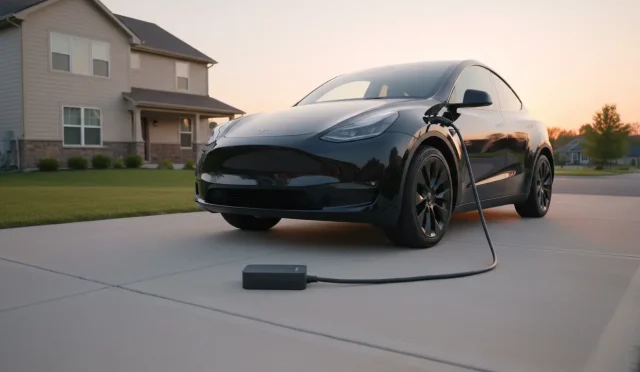
- ChargePoint Home Flex Level 2 EV Charger