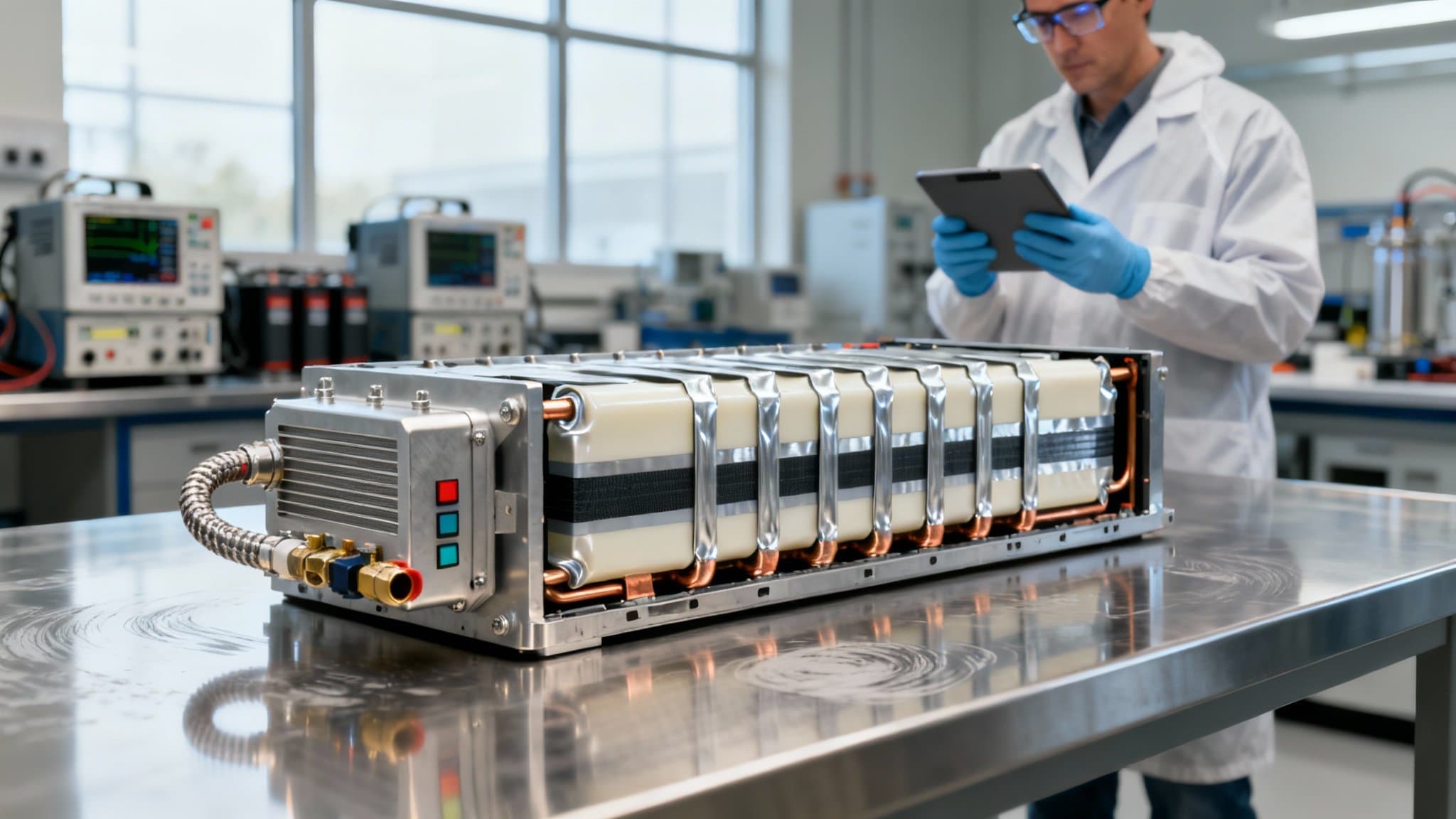

Solid-state batteries are widely regarded as the next big leap in energy storage, promising safer operations, higher energy density, faster charging, and longer lifespan than today’s lithium-ion batteries. Instead of using a flammable liquid electrolyte, solid-state designs rely on solid electrolytes—ceramic, glass, or polymer materials—that conduct ions with less risk and higher stability. For U.S.-based readers and businesses, the shift to solid-state technology aligns with national priorities: electrifying transportation, strengthening domestic supply chains, and accelerating the clean energy transition.
What Makes Solid-State Batteries Different?
- Solid electrolytes replace liquid electrolytes, reducing fire risk and thermal runaway.
- They enable the use of lithium-metal anodes, which pack more energy into the same volume, boosting energy density.
- Solid interfaces can tolerate wider operating temperatures and help slow down degradation, potentially extending cycle life.
In conventional lithium-ion batteries, the liquid electrolyte can form dendrites—needle-like metal deposits that may pierce the separator and cause short circuits. Solid-state cells, with the right electrolyte chemistry and interface engineering, can suppress dendrite growth or redirect it, leading to both safety and longevity improvements.
Key Performance Advantages
- Higher energy density:
- Lithium-metal anodes can theoretically deliver up to 50–100% more energy density than today’s graphite-based cells.
- For EVs, that translates into longer range without increasing pack weight, or similar range with smaller, lighter packs that improve efficiency.
- Safety and stability:
- Non-flammable solid electrolytes minimize risks associated with leakage and combustion.
- Greater thermal stability helps manage heat during fast charging and high-power operations.
- Faster charging potential:
- Reduced interfacial resistance and improved ion transport in optimized solid electrolytes enable higher C-rates, bringing charging times closer to refueling times for combustion vehicles.
- Longer cycle life:
- Better control of side reactions and stable solid–solid interfaces slow capacity fade, lowering total cost of ownership for fleets and grid storage.
Materials and Chemistries Under Development
- Sulfide-based solid electrolytes: High ionic conductivity, good for fast charging, but sensitive to moisture and require careful sealing.
- Oxide-based (ceramic) electrolytes: Chemically stable and safe, but brittle, requiring precise manufacturing to manage mechanical stress.
- Polymer electrolytes: Flexible and easier to process; improving conductivity at room temperature is an active area of R&D.
- Composite approaches: Combine ceramic and polymer phases to balance conductivity, flexibility, and manufacturability.
On the cathode side, manufacturers are optimizing high-nickel NMC and exploring cobalt-lean or cobalt-free formulations to cut costs and reduce supply risks. Interface engineering—thin coatings, interlayers, and surface treatments—plays a pivotal role in reducing resistance and maintaining performance over thousands of cycles.



Manufacturing Challenges and Scaling in the U.S.
Despite clear technical merits, mass production remains complex:
- Interface contact: Achieving uniform, defect-free contact across large-area solid–solid interfaces is difficult.
- Dendrite suppression: While improved, it’s not “solved” for all materials and operating conditions; pressure management and clever architecture are required.
- Cost and yield: Ceramic processing, dry-room requirements, and multilayer lamination add cost. Yield loss from micro-cracks or pinholes can be significant.
- Standardization: Industry standards for testing, safety, and reliability are still evolving.
U.S. manufacturers are investing in pilot lines and gigafactory expansions to localize production and reduce reliance on overseas supply chains. Public–private funding, tax incentives, and clean manufacturing programs are accelerating development, particularly for EVs, aerospace, defense, and grid-scale storage.
Use Cases: Why Solid-State Matters
- Electric vehicles (EVs): Longer range, faster charging, improved safety, and higher durability—key for consumer adoption and fleet economics.
- Consumer electronics: Thinner, safer devices with longer battery life.
- Aviation and eVTOL: High energy density is critical for weight-sensitive applications; solid-state can improve mission range and safety margins.
- Grid storage: Enhanced safety and longevity reduce operational risks, especially in urban settings and critical infrastructure.
Timeline and Market Outlook
Near-term deployments will likely appear first in premium or performance EV segments, where higher costs can be justified by range and fast-charging benefits. As yields improve and materials mature, costs should fall, enabling broader adoption across mainstream vehicles and stationary storage. Many analysts anticipate commercial solid-state EV packs in limited volumes over the next few years, ramping meaningfully as manufacturing challenges are resolved.
Sustainability and Supply Chain Considerations
Solid-state batteries can reduce reliance on certain critical materials and may facilitate cobalt-lean cathodes. Higher energy density means fewer cells and potentially less material per kWh. End-of-life strategies—including second-life reuse and recycling—are being designed in parallel, with attention to safely processing solid electrolytes and reclaiming valuable metals like nickel and lithium. Domestic sourcing and onshoring key steps of the value chain are strategic priorities for U.S. competitiveness.
What to Watch: Technical Milestones
- Room-temperature ionic conductivity approaching or exceeding liquid electrolyte performance.
- Stable cycling with lithium-metal anodes at practical areal capacities (>3–5 mAh/cm²) and fast charge rates.
- Scalable manufacturing: roll-to-roll processes, dry electrode coating, and robust quality control.
- Verified safety metrics under abuse testing (nail penetration, crush, overcharge, high-temp exposure).
- Cost per kWh trending toward parity with advanced lithium-ion as yields improve.
Practical Considerations for Adoption
- Pack design: Solid-state may allow smaller thermal management systems, offsetting cell costs.
- Warranty and performance guarantees: Longer cycle life can improve total cost of ownership for fleets.
- Charging infrastructure: Fast-charge capability pairs with high-power chargers; grid upgrades may be needed for widespread rapid charging.
- Regulatory approvals: Safety certifications and transport regulations will shape early market access.
Bottom Line
Solid-state batteries promise a safer architecture, substantially higher energy density, and robust performance that can unlock the next wave of electrification in the United States. While manufacturing scale and interface engineering remain the key hurdles, rapid progress across materials science, production processes, and supply chain development suggests that commercial adoption is not a question of if, but when. Organizations planning for EV transitions, grid resilience, or advanced aerospace applications should begin pilot evaluations now to capture early advantages in cost, performance, and safety.