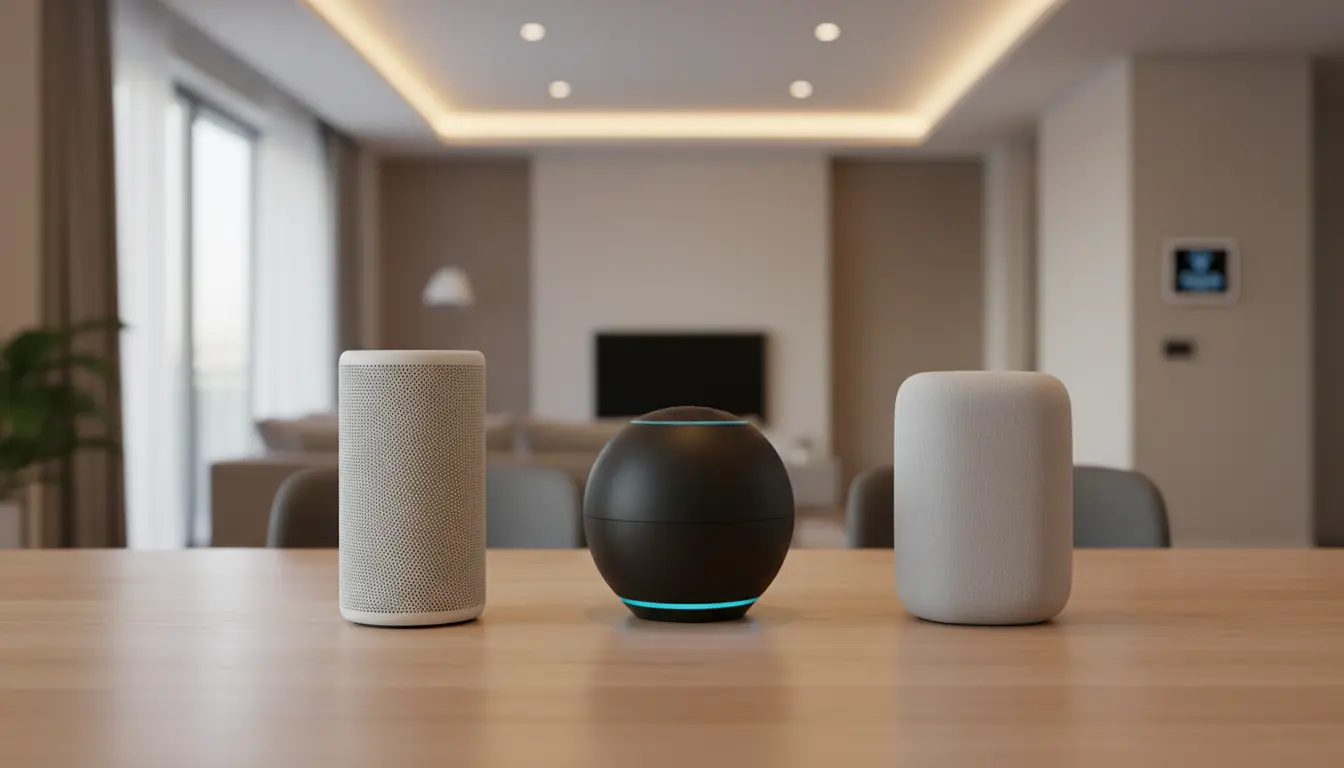

Apple HomePod vs. Amazon Echo vs. Google Nest: Which Smart Home Ecosystem Should You Choose?
Smart home technology has moved from luxury to everyday convenience. Whether you want voice control, automation, or seamless device integration, choosing the right ecosystem is the foundation of your smart home experience. The three dominant players—Apple HomePod, Amazon Echo, and Google Nest—offer powerful solutions, but each serves a different type of user.
In this guide, you will discover the strengths, weaknesses, and ideal use cases of each ecosystem so you can make a confident, future-proof decision.
Understanding Smart Home Ecosystems
A smart home ecosystem connects devices like speakers, lights, thermostats, and security systems into a unified network. You control everything through voice assistants such as Siri, Alexa, or Google Assistant.



Your choice of ecosystem affects:
- Device compatibility
- Voice assistant performance
- Privacy and security
- Integration with your existing devices
Making the right choice ensures a smoother and more enjoyable smart home experience.
Apple HomePod Ecosystem: Premium Experience and Privacy
Apple’s HomePod ecosystem focuses on seamless integration, high-quality audio, and strong privacy protection. If you already use Apple devices like iPhone, iPad, or Mac, this ecosystem feels natural.
Key Features
- Powered by Siri voice assistant
- Deep integration with Apple HomeKit
- Strong emphasis on data privacy
- Superior sound quality
Apple HomeKit supports a growing number of smart home devices, although it still lags behind competitors in compatibility.
Pros
- Excellent audio performance
- Tight ecosystem integration
- Strong privacy and security
- Clean and simple user interface
Cons
- Limited device compatibility compared to Alexa
- Higher price point
- Siri is less advanced than competitors
Best For
Users who prioritize privacy, already use Apple products, and want a premium, minimalistic smart home setup.
Amazon Echo Ecosystem: Flexibility and Affordability
Amazon Echo devices, powered by Alexa, dominate the smart home market due to their affordability and massive compatibility.
Key Features
- Alexa voice assistant
- Supports thousands of smart home devices
- Wide range of Echo devices (Echo Dot, Echo Show, etc.)
- Advanced automation via Alexa routines
Alexa excels in smart home automation, making it ideal for users who want full control over their environment.
Pros
- Largest smart home compatibility
- Budget-friendly devices
- Powerful automation features
- Frequent updates and improvements
Cons
- Privacy concerns for some users
- Interface can feel complex for beginners
- Audio quality varies by model
Best For
Users who want flexibility, affordability, and extensive smart home integration options.
1. Google Nest Ecosystem: Intelligence and AI Power
Google Nest combines smart home functionality with Google’s powerful AI and search capabilities.
Key Features
- Google Assistant integration
- Smart learning features
- Excellent voice recognition
- Seamless integration with Google services
Google Nest devices work exceptionally well for users who rely on Google apps like Gmail, Google Calendar, and Google Maps.
Pros
- Best-in-class voice recognition
- Strong AI-driven automation
- Clean and intuitive interface
- Good device compatibility
Cons
- Fewer compatible devices than Alexa
- Privacy concerns related to data usage
- Limited customization compared to Alexa
Best For
Users who value AI-driven experiences, accurate voice commands, and deep Google integration.
Smart Home Compatibility Comparison
Compatibility is one of the most important factors when choosing an ecosystem.
- Amazon Alexa: Supports the widest range of smart home devices
- Google Nest: Strong compatibility, but slightly behind Alexa
- Apple HomeKit: Limited but growing ecosystem
If you plan to build a large smart home network, Alexa offers the most flexibility.
Voice Assistant Performance
Voice assistants are the heart of each ecosystem.
- Alexa: Best for smart home control and automation
- Google Assistant: Best for answering questions and natural conversations
- Siri: Best for privacy and Apple device integration
Google Assistant leads in understanding complex commands, while Alexa shines in smart home control.
Privacy and Security Considerations
Privacy is a major concern for smart home users.
- Apple HomePod: Leads in privacy-focused design
- Google Nest: Offers transparency but collects data
- Amazon Echo: Provides controls, but concerns remain
If privacy is your top priority, Apple is the safest choice.
Pricing and Value
Price plays a crucial role in ecosystem selection.
- Amazon Echo: Most affordable options
- Google Nest: Mid-range pricing
- Apple HomePod: Premium pricing
Amazon provides the best entry point for beginners, while Apple targets premium users.
Ease of Use and Setup
All three ecosystems offer relatively simple setup processes, but differences exist.
- Apple HomeKit provides a clean and intuitive experience
- Google Nest offers a balanced and user-friendly interface
- Alexa may require more setup but offers deeper customization
Which Ecosystem Should You Choose?
Your ideal ecosystem depends on your priorities:
- Choose Apple HomePod if you value privacy, sound quality, and Apple integration
- Choose Amazon Echo if you want maximum compatibility and affordability
- Choose Google Nest if you prefer AI-powered features and accurate voice control
There is no one-size-fits-all solution. Each smart home ecosystem delivers unique advantages. Apple focuses on privacy and premium design, Amazon emphasizes flexibility and affordability, and Google leads with AI intelligence.
Before making your decision, consider your existing devices, budget, and long-term smart home goals. A well-chosen ecosystem will transform your daily life and simplify your routines.