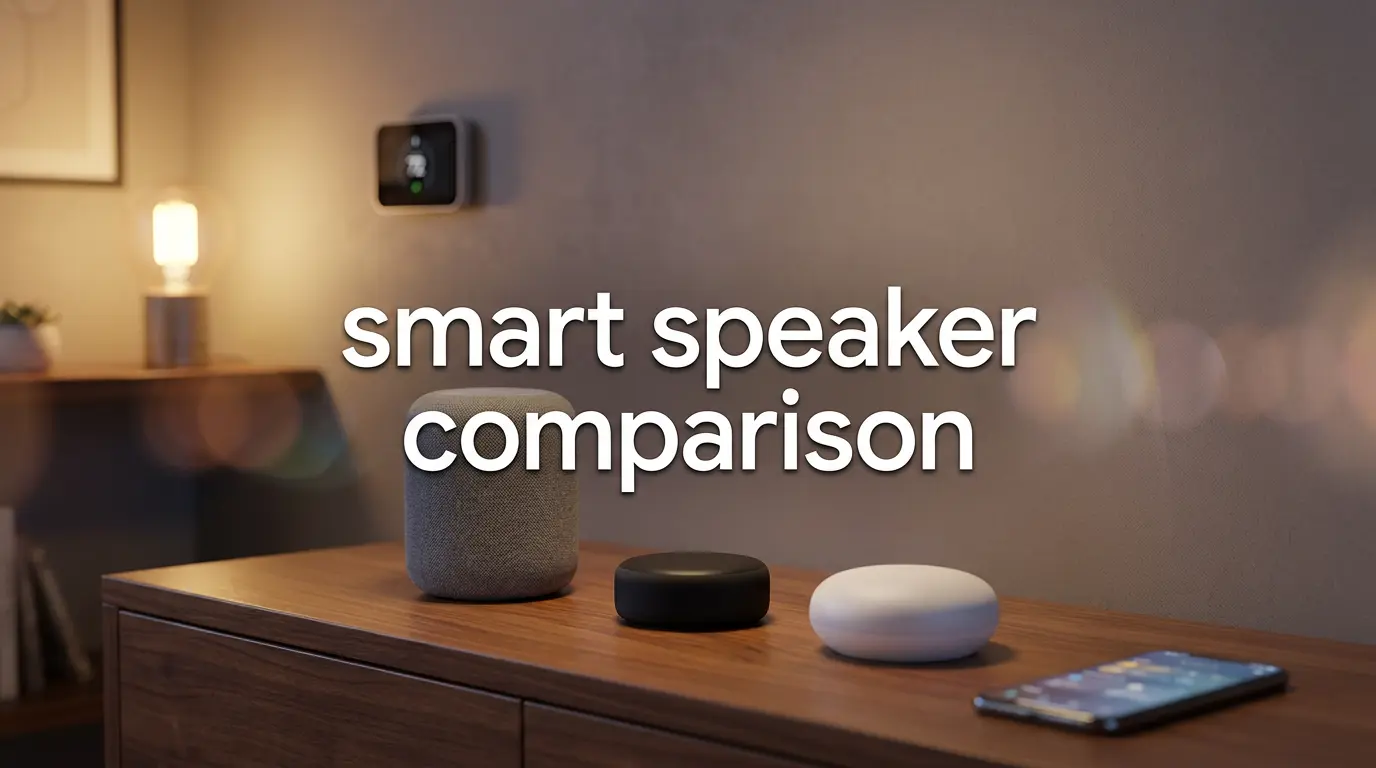

Smart Home Ecosystem Face-Off: Apple HomePod vs. Amazon Echo vs. Google Nest (2026 Edition)
Choosing a smart speaker in 2026 isn’t really about one device. You’re choosing an ecosystem: how your lights respond at 11 p.m., how your music fills multiple rooms, how smoothly automation runs when the internet hiccups, and how comfortable you feel with always-on microphones. Apple HomePod, Amazon Echo, and Google Nest all handle the basics—timers, weather, reminders—but they diverge sharply once you care about privacy controls, home automation routines, and broad device compatibility.
This guide compares the three platforms in plain English, with practical angles you can use to decide today and still feel good about the choice later.
1) The Big Difference: Ecosystem First, Speaker Second
Most buyers start with sound and price. Smart-home owners should start with your phone, your apps, and your standards:
- If you live in Apple’s world (iPhone, Apple Music, Apple TV), HomePod feels native and cohesive.
- If you want the widest “it just works with everything” approach, Echo usually wins on integrations and product variety.
- If you use Android heavily and rely on Google services for daily life, Nest often feels the most frictionless.
In a smart speaker comparison, that ecosystem pull matters more than small spec differences.
2) Setup and Daily Use: Which One Feels Effortless?
Apple HomePod
HomePod setup is usually painless if you already use an iPhone. You scan, confirm, and you’re in. Apple emphasizes a curated experience: fewer confusing toggles, more “default good settings.” HomePod also shines when you want speakers to behave consistently across rooms with minimal fiddling.
Trade-off: HomePod can feel restrictive if you enjoy tinkering, mixing brands, or chasing niche integrations.
Amazon Echo
Echo devices often set up quickly, but the Alexa app can feel dense because Amazon supports so many device types, skills, and settings. If you like customizing voice triggers, trying new smart gadgets, or building complicated scenes, Echo gives you room to grow.
Trade-off: More power also means more menus, more options, and sometimes more maintenance.
Google Nest
Nest tends to feel natural for people already living in Google’s services. Voice recognition, calendars, and everyday queries can feel intuitive, especially if your household uses Android phones. It’s often a smooth “hands-free help” experience.
Trade-off: Some users find platform changes over time can shift how features are organized, so you may periodically relearn where settings live.
3) Smart Home Compatibility in 2026: Matter, Thread, Zigbee, and Reality
In 2026, the smartest strategy is to buy for standards, not promises. Look for ecosystems that play well with Matter-enabled devices so you can swap brands without rebuilding your entire house.
- Matter aims to reduce compatibility headaches across Apple, Amazon, and Google.
- Thread improves reliability and responsiveness for many devices; a Thread border router helps your Thread network operate smoothly.
- Zigbee integration (available on select hubs/speakers) can still matter if you own many Zigbee sensors and bulbs.
Practical advice: If you plan to expand beyond a few bulbs, prioritize a platform that supports your preferred mix of Matter/Thread (and Zigbee if you already own it). This is where “best smart home hub” thinking beats “best speaker” thinking.
4) Audio Quality: Who Wins for Music?
HomePod: “Sound-first” personality
HomePod generally targets people who care about balanced sound and room-filling playback. If you want a speaker that makes music feel like a main event—without tuning knobs—HomePod often fits that expectation. Many buyers also love how well it pairs into a home theater pairing with Apple TV for a cohesive living-room setup.
Echo: Wide range, value scaling
Echo’s audio story depends on which model you choose. Amazon offers a broad ladder—from budget to premium—so you can scale cost and sound room by room. If you want a consistent brand across the home with flexible price points, Echo usually makes that easier.
Nest: Clean, casual listening
Nest speakers often deliver pleasant everyday audio that suits kitchens, bedrooms, and offices. If your priority is convenience—music while cooking, podcasts in the morning—Nest holds up well.
Tip: If you care about whole-home music, focus on multiroom audio stability and how easy it is to group speakers, not just “bass” or “loudness.”
5) Voice Assistant Strength: Siri vs Alexa vs Google Assistant
In 2026, all three assistants can run smart-home basics, but their strengths differ:
- Alexa smart home tends to excel at breadth: lots of supported brands, routines, and niche devices.
- Google often feels strongest for general knowledge questions and natural language, especially if you rely on Google services.
- Siri’s appeal is tight Apple integration and a controlled, privacy-focused approach—especially if you want your smart speaker to stay “quietly competent” rather than a platform you constantly manage.
Household reality check: If multiple people will talk to the speaker daily, choose the assistant your family already uses naturally. Adoption beats features.
6) Automation and Routines: Who Builds the Best “Invisible” Smart Home?
A great smart home doesn’t ask for attention. It reacts reliably, at the right time, without random failures.
- Echo often gives you lots of building blocks for home automation routines, including time-based triggers, device states, and multi-step actions.
- Google Nest also supports routines and helpful household flows, especially when tied to Google services.
- HomePod works well for Apple-centric automations, especially if you value consistency, simple scenes, and fewer “mystery behaviors.”
Rule of thumb: If you want deep experimentation, Alexa usually feels like a workshop. If you want simplicity and fewer knobs, HomePod feels like an appliance.
7) Privacy, Data, and Comfort: What You Should Actually Decide
People talk about privacy like it’s one setting. It’s really a comfort level with the platform’s business model, permissions, and controls.
- If voice assistant privacy is your top priority, HomePod’s positioning often appeals to buyers who want tighter controls and less ad-like behavior.
- Echo and Nest offer privacy controls too (mute buttons, deletion options, account settings), but their ecosystems also lean more into broad cloud services and personalization features.
What to do today: Don’t just read marketing claims. Open the app, explore the privacy panel, and ask yourself: “Would I trust this platform in my home long-term?”
8) Reliability and Responsiveness: The “It Worked Yesterday” Test
A smart home fails when it becomes unpredictable. Reliability usually comes down to:
- Strong local connectivity (Thread, Zigbee where relevant)
- Stable Wi‑Fi
- Clear device naming and room organization
- Not overloading your setup with too many overlapping automations
If you plan to grow beyond a starter setup, pick a platform that supports cross-platform smart home planning through standards like Matter, so you don’t get trapped.
9) Costs You Don’t See at Checkout
Beyond speaker price, consider:
- Music service preferences (and whether the speaker favors your choice)
- Potential subscription costs for advanced features
- Expansion cost (adding more speakers, displays, or hubs)
- The “switching tax” (rebuilding rooms, renaming devices, recreating scenes)
A cheaper speaker can become expensive if it pushes you into workarounds or constant troubleshooting.
10) Which One Should You Choose? Clear Buyer Profiles
Choose Apple HomePod if you…
- Use iPhone daily and want seamless Apple integration
- Want consistent performance with minimal tinkering
- Care about privacy posture and a more controlled ecosystem
- Like the idea of a speaker that doubles as a polished audio device
This is especially true if you want a setup that naturally works with iPhone and feels cohesive.
Choose Amazon Echo if you…
- Want the widest device compatibility and smart-home experimentation
- Plan to add lots of devices over time and want flexible options
- Prefer a platform with strong routine-building potential
- Want many models at different price points
Echo is often the practical choice when you’re hunting for the best smart home hub behavior and broad device support.
Choose Google Nest if you…
- Live in Google services and want convenient day-to-day help
- Prefer a clean experience that naturally supports your Google life
- Want an assistant that feels conversational for household questions
Nest often fits households where everything already works with Android and Google accounts.
Conclusion: Buy the Ecosystem You’ll Enjoy Managing (or Not Managing)
In 2026, the “best” smart speaker is the one you’ll trust to run quietly in the background. If you value polished sound and Apple-native simplicity, HomePod makes sense. If you want maximum compatibility and customization, Echo usually leads. If you rely on Google services and want frictionless daily help, Nest remains a strong pick. Whatever you choose, buy with Matter and Thread in mind so your home can evolve without a full reset later.
Amazon.com Product Recommendation
If you want a strong all-rounder that’s widely available and easy to expand, consider Amazon Echo (4th Gen) – Smart speaker with premium sound (commonly available on Amazon.com). It’s a practical anchor device for an Alexa-based setup and a good starting point for routines and room-by-room growth.