
AI-Driven Workforce Planning: The Power of Predictive Analytics in Human Resources
The landscape of Human Resources is undergoing a seismic shift. Gone are the days when HR departments functioned solely as administrative hubs focused on payroll and compliance. Today, the integration of Artificial Intelligence (AI) and predictive analytics has transformed HR into a strategic powerhouse. AI-driven workforce planning allows organizations to move beyond reactive hiring and embrace a proactive, data-backed strategy that anticipates future needs, identifies skill gaps, and optimizes talent management.
The Evolution of Workforce Planning
Traditional workforce planning often relied on historical data and gut feelings. Managers would look at last year’s turnover rates and project similar numbers for the following year. However, this linear approach fails to account for market volatility, rapid technological shifts, and changing employee expectations. Predictive analytics changes the game by using sophisticated algorithms to analyze vast datasets, identifying patterns that the human eye might miss.
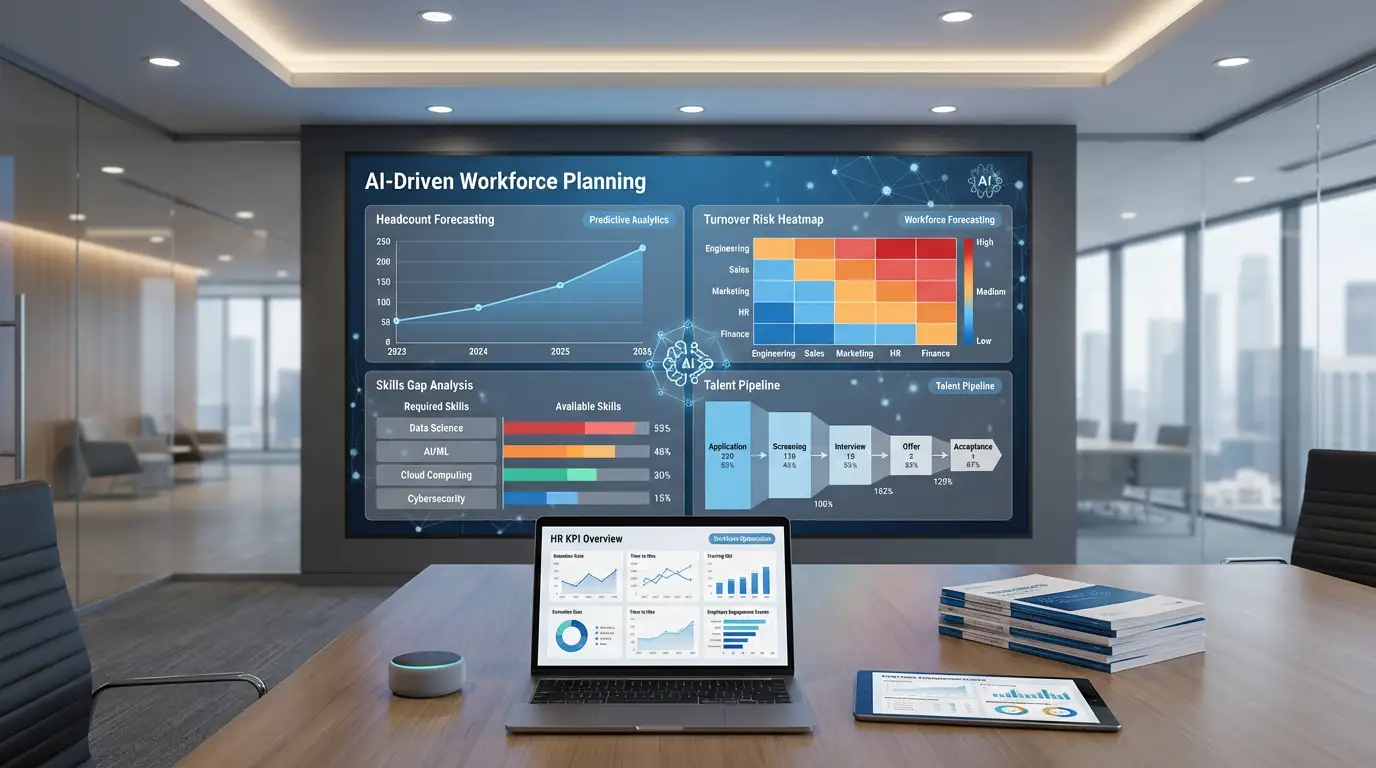
By leveraging AI, companies can now forecast labor demand with remarkable precision. This involves analyzing internal factors like employee performance metrics and external factors such as economic trends or industry benchmarks. The result is a dynamic workforce model that adapts to the real-time needs of the business, ensuring that the right people are in the right roles at the right time.


Anticipating Talent Needs with Predictive Modeling
One of the most significant advantages of AI in HR is its ability to predict future talent requirements. Predictive modeling tools analyze current workforce capabilities against long-term business goals. If a tech company plans to pivot toward cloud computing over the next three years, AI can identify which current employees have transferable skills and which roles will need to be filled by external hires.
This foresight reduces the “time-to-hire” and “cost-per-hire” metrics significantly. Instead of scrambling to find a specialist when a vacancy arises, HR teams can build talent pipelines in advance. Active recruitment becomes a continuous process rather than a desperate reaction to a resignation.
Enhancing Employee Retention and Engagement
Predictive analytics does not just help with bringing people in; it is equally powerful at keeping them. AI tools can monitor “flight risk” indicators by analyzing patterns such as decreased engagement, missed training sessions, or even changes in communication frequency. When the system flags an employee as a high flight risk, HR managers can intervene with personalized retention strategies, such as career development opportunities or flexible work arrangements.
Furthermore, AI-driven sentiment analysis helps organizations understand the “pulse” of their workforce. By analyzing anonymous feedback and internal communication platforms, AI provides insights into employee morale. This allows leadership to address cultural issues before they lead to mass turnover, fostering a more stable and productive work environment.
Closing the Skills Gap
The rapid pace of digital transformation has created a widening skills gap in many industries. AI-driven workforce planning addresses this by performing comprehensive skills gap analyses. These tools map the existing skills within the organization and compare them to the competencies required for future success.
Once the gaps are identified, AI can recommend specific upskilling and reskilling programs tailored to individual employees. This personalized approach to professional development not only prepares the company for future challenges but also boosts employee loyalty, as workers feel the organization is invested in their long-term growth.
Data-Driven Diversity and Inclusion
Diversity, Equity, and Inclusion (DEI) are no longer just buzzwords; they are essential components of a high-performing workforce. AI helps eliminate unconscious bias in the recruitment and promotion processes. By focusing strictly on data points—such as skills, experience, and performance—predictive tools ensure that talent is recognized based on merit.
Moreover, predictive analytics can track the progress of DEI initiatives over time. It can highlight areas where the pipeline might be leaking or where certain groups are underrepresented in leadership roles. This transparency allows HR leaders to make informed adjustments to their strategies, ensuring a truly inclusive workplace culture.
Overcoming Implementation Challenges
While the benefits of AI-driven workforce planning are clear, implementation requires a strategic approach. Data quality is the foundation of any predictive model. If the input data is fragmented or inaccurate, the insights will be flawed. Therefore, organizations must invest in robust data integration and cleaning processes.
Ethical considerations and data privacy are also paramount. Employees must feel confident that their data is being used responsibly. Transparency regarding how AI models work and maintaining a “human-in-the-loop” approach ensures that technology augments human judgment rather than replacing it entirely.
The Future of HR is Intelligent
As AI technology continues to evolve, the capabilities of predictive analytics in HR will only expand. We are moving toward a future where “prescriptive analytics” will not only tell us what will happen but also suggest the best course of action to achieve desired outcomes. The integration of generative AI will further streamline job description creation, personalized onboarding, and real-time coaching.
Organizations that embrace AI-driven workforce planning today will gain a significant competitive advantage. They will be more agile, more efficient, and better equipped to navigate the complexities of the modern global economy. By turning data into actionable intelligence, HR becomes the ultimate driver of organizational resilience and success.
Product Recommendation
To effectively manage the data required for advanced workforce planning, a high-performance computing setup is essential. We recommend the Apple 2024 MacBook Pro Laptop M4 Max chip available on Amazon.com. Its immense processing power and memory capacity make it the ideal tool for HR data scientists and analysts running complex predictive models and handling large-scale employee datasets.