
Human Resources in the Age of AI: How Global Companies Automate Talent Management
Artificial intelligence is rapidly transforming how global companies attract, develop, and retain talent. What started as simple candidate screening tools has evolved into end‑to‑end AI‑driven talent management ecosystems. From recruitment and onboarding to performance management and workforce planning, AI is reshaping Human Resources (HR) into a more strategic, data‑driven function.
For multinational organizations managing thousands of employees across countries and time zones, the pressure to modernize HR is intense. They must fill roles faster, reduce bias, cut administrative workload, and personalize employee experiences at scale. AI in human resources offers exactly that: automation, intelligent insights, and predictive capabilities that traditional HR processes simply cannot deliver.
AI in recruitment and candidate screening
Global companies receive tens of thousands of applications every month. Manually reviewing each résumé is not only time‑consuming but also prone to human error and unconscious bias. AI‑powered applicant tracking systems (ATS) help automate this process by:
- Parsing CVs and applications using natural language processing (NLP)
- Matching candidate profiles with job descriptions based on skills, experience, and keywords
- Shortlisting the most relevant applicants in seconds
- Flagging potential high‑potential candidates for future roles
Many organizations also use AI chatbots on career portals to answer candidate questions, pre‑qualify applicants, and schedule interviews automatically. This improves candidate experience while freeing recruiters from repetitive tasks. Instead of spending their time on manual screening, talent acquisition teams can focus on strategic activities such as employer branding, diversity initiatives, and relationship building.
Intelligent onboarding and learning personalization
Once a candidate is hired, AI continues to add value through smarter onboarding. Virtual assistants guide new employees through forms, compliance training, and introductions to tools, policies, and teams. These systems can recommend personalized onboarding content based on the employee’s role, location, and previous experience.
In learning and development, AI‑based recommendation engines analyze skills gaps, performance data, and career interests to suggest relevant courses, micro‑learning modules, and certifications. Global organizations use these tools to create scalable, individualized learning paths without overloading HR and L&D teams. As employees complete trainings, AI continuously updates their skill profiles and adjusts recommendations, making talent development more dynamic and precise.
Performance management and continuous feedback
Traditional annual performance reviews are increasingly seen as outdated. AI allows companies to move toward continuous, data‑driven performance management. By integrating data from project management tools, collaboration platforms, and HR systems, AI can:
- Identify top performers and rising talent
- Detect productivity trends and engagement risks
- Support managers with objective performance insights
- Provide real‑time feedback suggestions and coaching prompts
Some platforms use AI to analyze written feedback to detect sentiment, recurring themes, and skill signals. This helps HR leaders monitor culture health across regions and departments. For employees, AI‑assisted performance tools can offer personalized suggestions to improve skills, track goals, and prepare for future roles, creating a more transparent and motivating career journey.
Workforce analytics and predictive talent planning
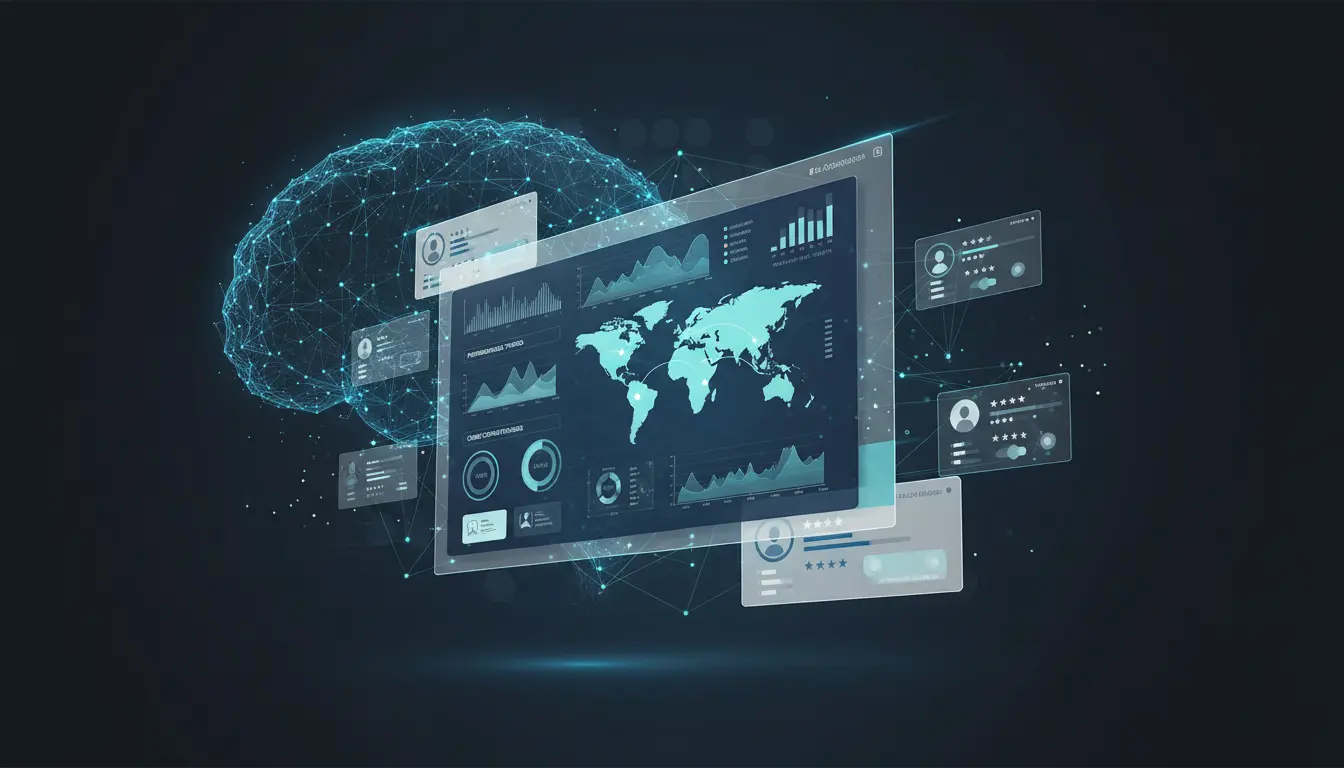
One of the most powerful applications of AI in HR is predictive analytics. Global companies rely on large amounts of workforce data – headcount, turnover, performance, engagement scores, skills inventories, compensation, and more. AI models can analyze these data sets to:
- Predict employee turnover and identify flight‑risk talent
- Forecast future hiring needs based on business growth
- Reveal skill shortages across regions and business units
- Simulate different workforce scenarios and costs
With these insights, HR and business leaders can proactively design succession plans, implement retention strategies, and plan reskilling programs long before problems become critical. For example, if AI indicates that data scientists in a particular region are at high risk of leaving, HR can respond by adjusting compensation, offering new development paths, or moving key projects to keep them engaged.
Reducing bias and improving fairness in talent decisions
A major promise of AI in talent management is the potential to make hiring and promotion decisions more fair and inclusive. When designed correctly, AI can help:
- Remove gender, age, and race indicators from résumés before screening
- Focus decisions on skills, experience, and performance data
- Highlight diversity gaps in shortlists and leadership pipelines
- Provide analytics on pay equity and promotion fairness
However, global organizations are aware that AI systems can inherit or amplify existing human biases if not monitored carefully. Leading companies invest in rigorous model auditing, bias testing, and transparent governance frameworks. Cross‑functional teams from HR, legal, and data science regularly review algorithms to ensure that AI tools support diversity, equity, and inclusion goals instead of undermining them.
Employee experience and HR service automation
Beyond recruitment and performance, AI is increasingly used to enhance day‑to‑day employee experience. AI‑powered HR self‑service portals and virtual assistants can answer common questions about benefits, leave policies, payroll, internal mobility, and training. Employees can interact with these assistants 24/7 in multiple languages – an essential feature for global organizations.
By automating routine HR service requests, companies reduce response times and improve satisfaction while allowing HR professionals to concentrate on strategic initiatives. At the same time, AI systems gather anonymized usage data, giving HR leaders insight into common pain points, policy confusion, or benefits that employees value most.
Challenges, risks, and ethical considerations
Despite the clear benefits, implementing AI in human resources is not without challenges. Global companies must navigate:
- Data privacy regulations such as GDPR and regional labor laws
- Employee concerns around surveillance, fairness, and job security
- Integration complexity with legacy HRIS, payroll, and communication tools
- The need for new skills within HR teams to understand and govern AI
Ethics is central. Transparent communication is critical so employees understand how their data is used, what decisions AI supports, and where human judgment remains essential. Many organizations adopt clear AI ethics guidelines and communicate them openly. They emphasize that AI is a decision‑support tool, not a replacement for human responsibility or empathy.
The future of AI‑driven talent management
Looking ahead, AI in HR will become even more predictive and personalized. We can expect:
- Skills‑based organizations where AI continuously maps skills, roles, and projects
- Dynamic internal talent marketplaces that match employees to gigs and projects
- More advanced conversational agents that act as personal career coaches
- Deeper integration of wellbeing, engagement, and productivity data to create holistic people strategies
For global companies, the competitive edge will come from combining powerful AI tools with a strong human‑centered culture. Technology can automate and optimize, but trust, empathy, and leadership remain uniquely human strengths. The organizations that succeed will be those that use AI to augment HR professionals, giving them better data and more time to focus on what matters most: enabling people to do their best work.