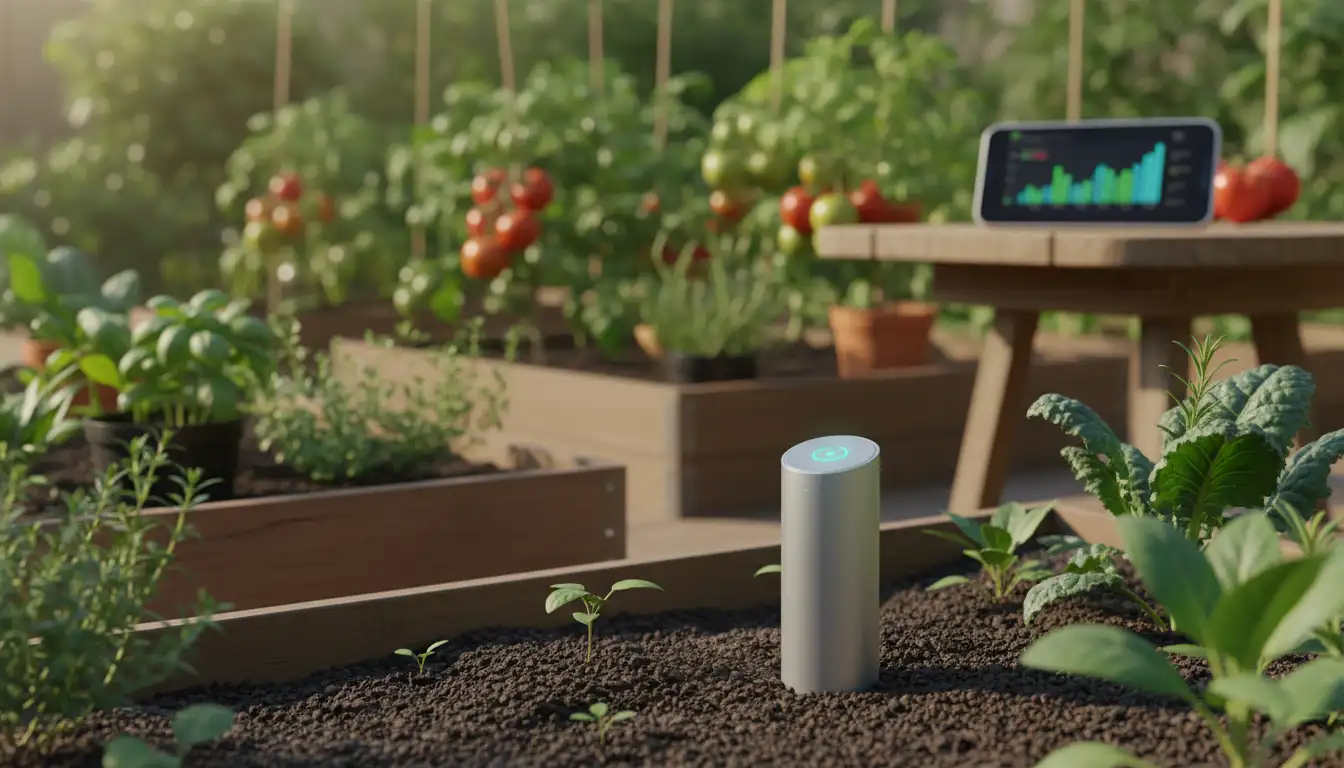

AI-Powered Plant Health Monitoring Sensors for Home Gardens
What Are AI Plant Health Monitoring Sensors?
AI-powered plant health monitoring sensors are smart devices that measure and analyze environmental conditions around your plants. They combine hardware sensors, wireless connectivity, and artificial intelligence to help you understand exactly what your plants need at any moment.
These devices track factors such as soil moisture, temperature, humidity, and light intensity. Advanced models can also monitor soil nutrients and pH levels. The collected data is processed by AI algorithms and turned into clear, actionable insights directly in a mobile app or web dashboard.
How AI Sensors Work in a Home Garden
In a home garden, AI sensors are usually placed in the soil near plant roots. They continuously gather data and send it wirelessly to your smartphone or tablet. The AI compares this information with optimal ranges for each plant type and then generates recommendations.
Instead of guessing when to water or where to place your plants, you receive precise guidance. If moisture is low, you get a watering alert. If light exposure is inadequate, the app suggests changing the plant’s location. This real-time feedback makes home gardening more efficient and less dependent on trial and error.
Key Parameters Monitored by Smart Garden Sensors
AI plant health monitoring sensors usually track several core parameters:
- Soil moisture: Prevents overwatering and underwatering by showing the real-time water level in the root zone.
- Light intensity and duration: Measures how much light your plants actually receive during the day.
- Temperature: Helps you protect plants from heat stress or cold damage.
- Humidity: Influences disease risk and plant transpiration rates.
- Soil nutrients and pH (in advanced models): Indicates whether the soil is balanced or needs organic amendments.
By combining these values, AI builds a complete picture of plant health and growth conditions in your home garden.
Benefits for Organic Home Gardening
For gardeners who care about organic and sustainable practices, AI sensors are especially valuable. Instead of using synthetic fertilizers and pesticides to fix problems, you focus on prevention through optimal conditions.
- Stable soil moisture reduces fungal diseases and root problems.
- Correct light levels improve photosynthesis and natural plant resistance.
- Balanced temperature and humidity create a stable microclimate that supports strong, healthy growth.
This proactive approach helps you rely more on compost, mulch, and natural amendments, rather than chemical solutions. As a result, your home garden becomes more eco‑friendly and supports biodiversity.
Early Detection of Plant Stress and Problems
One of the biggest advantages of AI-driven monitoring is early stress detection. Many plant problems start at the root or environmental level long before you see yellow leaves or spots.
AI can detect patterns such as:
- Constantly fluctuating moisture that stresses roots
- Humidity levels that favor mold and mildew
- Light conditions that are too weak or too intense for certain species
By alerting you in advance, the system allows you to react quickly and prevent small issues from becoming serious damage. Early intervention means healthier plants, higher yields, and less waste.
Making Gardening Easier for Beginners and Busy People
AI-powered plant health monitoring sensors lower the entry barrier for new gardeners and support those with busy lifestyles. Even if you have limited time or experience, the smart system provides clear, step-by-step guidance.
Typical features include:
- Plant profiles with specific care requirements
- Personalized watering and care schedules
- Seasonal tips based on local climate and plant type
You simply select the plant species in the app, and the AI tailors its recommendations. This is especially helpful in gardens with many different plants, such as herbs, leafy greens, flowers, and fruiting vegetables.
Data-Driven Learning From Your Garden
Over time, the data collected by AI sensors becomes a powerful learning tool. You can review charts of soil moisture, temperature, and light levels and connect them with plant performance.
For example, you may learn that:
- Your peppers thrive when soil stays within a narrow moisture range
- Your basil grows best with more morning light than afternoon sun
- Certain plants prefer slightly cooler or more humid conditions
This data-driven feedback helps you fine-tune your gardening routine each season, turning your home garden into a living, organic experiment guided by real numbers instead of guesswork.
Easy Installation and Smart Home Integration
Most AI plant health monitoring sensors are designed for quick installation:
- Wireless connection via Wi‑Fi or Bluetooth
- Battery or solar power for outdoor use
- Weather-resistant housing for garden conditions
You insert the sensor into the soil, connect it to the app, and monitoring begins automatically. Some systems also integrate with smart home devices and automated irrigation. When soil moisture drops below a predefined threshold, the system can trigger a drip irrigation line or a smart pump. This automation saves water, time, and effort while maintaining ideal conditions for plant health.
Sustainability, Privacy, and the Future of Smart Gardening
AI plant health monitoring supports sustainable gardening by using resources more efficiently:
- Optimized watering reduces water waste
- Fewer chemical interventions support soil life and beneficial insects
- Longer plant life cycles minimize replacement and waste
Reputable manufacturers also implement data encryption and transparent privacy options. While the data mainly reflects environmental conditions, responsible handling still contributes to user trust.
As AI models improve and hardware becomes more affordable, home gardeners can expect even more accurate predictions, better disease risk assessment, and smarter recommendations tailored to local climate changes. This evolution will make organic, data-driven gardening accessible to more people around the world.
Conclusion: Smarter, Healthier, and More Organic Home Gardens
AI-powered plant health monitoring sensors bring professional-level insight into everyday gardening. By tracking soil moisture, light, temperature, and humidity, they give you clear, real-time guidance on how to care for your plants. Early stress detection, personalized recommendations, and smart automation all support an organic, sustainable approach.
Instead of reacting to problems after they appear, you build a proactive and environmentally responsible gardening routine. Your plants become stronger, your harvests more reliable, and your home garden more enjoyable—powered by AI, but rooted in natural, organic growth.